


A little note before we begin...
You may have noticed something different about the name at the top of this email!
The Buffalo Herbalist is now Health Literate.
It’s still me, Agy!
I’ve been thinking about this change for a while now. As I’ve continued my doctoral studies, I’ve found myself increasingly drawn to physiology, health research, and science communication. My writing has naturally begun to reflect those interests, and I wanted a name that gave me a little more room to explore them.
Of course, herbal medicine isn’t going anywhere. It’s an important part of my background and something I’ll continue to write about. I’ve simply realized that there are so many other subjects I’m interested in exploring, and I didn’t want to feel limited by the name of my publication.
For those of you who’ve been here since The Buffalo Herbalist days, thank you for continuing to read my work. I’m looking forward to sharing this next chapter with you.
Now, onto today’s Field Notes!

Imagine going in for your annual physical, having some routine bloodwork done, and your doctor telling you that you’re ‘prediabetic’.
Welp, that can be a little concerning, right?
Most of us are familiar with type 2 diabetes, at least to some extent. We know it has something to do with blood sugar, insulin, and how our bodies regulate glucose. But what exactly does it mean to be prediabetic? Does it mean diabetes is inevitable? Are there symptoms we should be looking out for? And, perhaps most importantly, is there anything we can do about it?
In this issue:
What prediabetes means, and why it doesn’t always lead to type 2 diabetes
The three biomarkers used to identify prediabetes
What decades of research have revealed about diabetes prevention
How lifestyle interventions and access to preventive resources influence diabetes risk
HERBS! :) told you herbal medicine wasn’t going anywhere!
Additional reading:


What Is Prediabetes?
Prediabetes describes blood glucose levels that are higher than normal but haven’t reached the diagnostic threshold for type 2 diabetes. Now, despite what the name might suggest, being diagnosed with prediabetes doesn’t necessarily mean someone will eventually develop diabetes! Which is good! Some people progress, others remain within the prediabetic range, and some return to normal blood glucose levels. Interestingly, researchers have also found that the likelihood of progression can vary considerably depending on which diagnostic criteria are used (Meads et al., 2026).
Think about that for a moment. The term prediabetes almost makes it sound as though developing diabetes is simply the next step, yet there are several possible outcomes following a diagnosis.
So, how exactly is prediabetes diagnosed? The answer depends on which laboratory test is used.
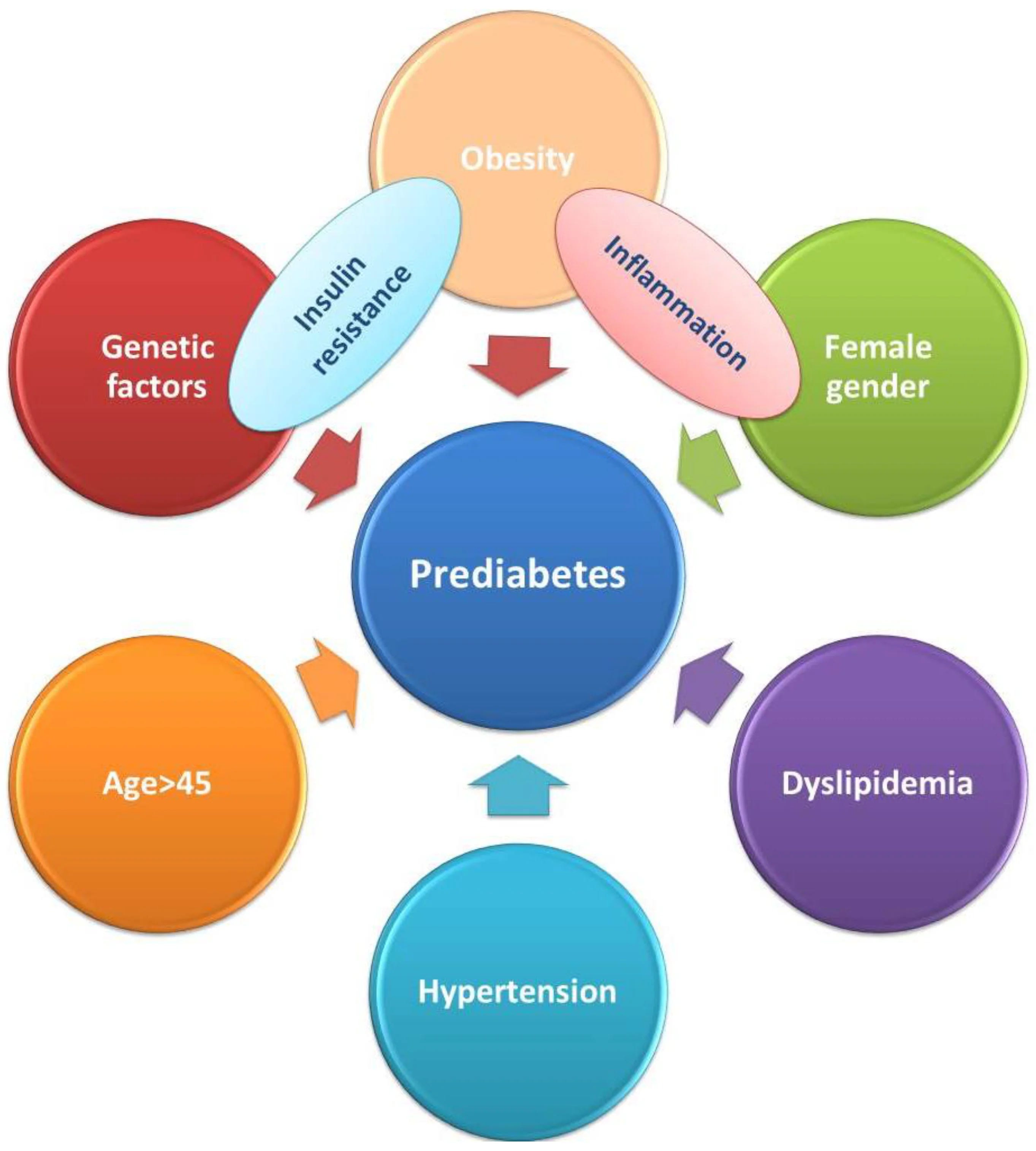
Risk factors associated with prediabetes.
Understanding the Numbers
There are three commonly used tests for identifying prediabetes:
Fasting plasma glucose (FPG)
Glycated hemoglobin (HbA1c),
Oral glucose tolerance test (OGTT).
Now, you might assume that all three are measuring essentially the same thing, however, each tells us something a little different about how our bodies regulate blood glucose. In fact, someone could meet the criteria for prediabetes on one test but not another (Echouffo-Tcheugui & Selvin, 2021).
I’ve chosen not to add reference ranges, because labs vary in terms of ranges and I don’t want to create misinformation!
