Hi! Another bite-sized herbal medicine goodness for you :)
In this issue:
What secretory IgA does at the mucosal barrier
Where your body manufactures it
How fiber, vitamin A, and ginger each turn up production
The plot twist about which ginger compounds did the work
I picked IgA off a list of antibody isotypes for a discussion post in my doctoral coursework, partly because (as you may have noticed by now) I have a slight obsession with how much our gut influences every other system in the body. As I was annotating the sources, I immediately knew I wanted to share this with you all. If you like this info and want me to over the other immunoglobulins, just let me know!

Where IgA Comes From
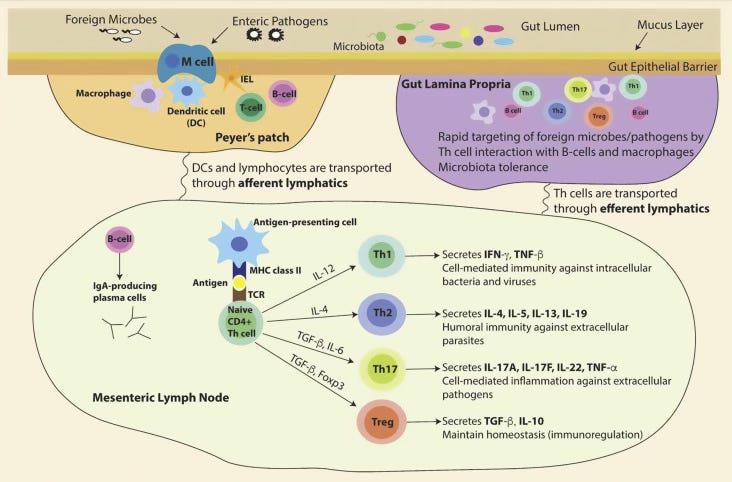
A surprising amount of your IgA is made in Peyer’s patches, which are clusters of lymphoid tissue tucked into the wall of the small intestine.
Min et al. (2023) describe the intestinal mucosa as holding more than 80% of the body’s activated B cells, which makes the gut the single largest antibody-producing structure you have! Inside the Peyer’s patches, dendritic cells release signaling molecules like IL-6 that tell B cells to mature into plasma cells and begin secreting IgA. The entire production line for your mucosal defense sits right there in the gut wall.