


Vitamin D deficiency is something most of us have heard of, usually mentioned in passing and almost always paired with a supplement recommendation. Feeling low in the winter? Vitamin D. Getting sick more often? Vitamin D. Tired, unmotivated, achy once the sun disappears? You know the drill.
Living in Buffalo, New York, I feel comfortable saying that many of us here are probably not getting enough. Our winters stretch long, the sun sits low in the sky for months at a time, and much of daily life happens indoors. Against that backdrop, extra supplementation can feel like a reasonable and even obvious solution.
And to be fair, the concern is real.
Globally, vitamin D deficiency is widespread. Large population studies suggest that a significant portion of adults fall below commonly used vitamin D thresholds. Even in the United States, roughly one in three people is considered deficient, with higher rates seen in women and in certain regions and seasons.
Most of these numbers come from blood tests measuring serum 25 hydroxyvitamin D. Depending on the source, levels below 20 ng per mL are labeled deficient, while values between 20 and 30 ng per mL are considered insufficient. Some guidelines set the bar higher. Others lower. There is no single, universally agreed upon definition, which is worth sitting with.
Because a low number can tell us something, but it rarely tells us the whole story.
Many people supplement for years without noticing meaningful changes in how they feel. Lab values improve, doses increase, yet fatigue lingers. Mood remains low. Illness still comes knocking. That disconnect is often framed as underdosing or inconsistency, but it invites a different question altogether.
What if vitamin D deficiency is not always about how much you are taking, but about how well your body can receive and respond to the signal?
A lab value does not explain why vitamin D runs low, how the body is using what it has, or whether more will actually help. It does not account for light exposure, immune demand, metabolism, digestion, or the broader environment shaping how vitamin D functions in the body.
This piece is not about dismissing vitamin D deficiency or pretending it does not matter. It is about slowing the conversation down. About moving past reflexive fixes and asking better questions.
Vitamin D deficiency, like so many things in the body, is rarely just about absence.
It is about context.

Why Vitamin D Runs Low in Modern Life
For most of human history, vitamin D was not something we supplemented. It was something we made, quietly and reliably, through regular contact with the sun.
Vitamin D synthesis begins when ultraviolet B light reaches the skin and interacts with a precursor molecule, setting off a chain of events that ultimately produces vitamin D. It is an elegant system, but it depends on very specific conditions. When those conditions shift, production slows, often without us noticing.
Not all sunlight carries the same information. The angle at which the sun reaches the earth determines how much UVB radiation actually makes it to the surface. When the sun sits low in the sky, as it does during winter months or early and late in the day, most UVB rays are filtered out before they ever reach the skin.
This is why vitamin D synthesis all but disappears during winter in temperate and northern regions, even on clear, bright days. It is not about temperature or cloud cover. It is geometry. Short stretches of midday summer sun can generate more vitamin D than hours spent outside in winter light, and as seasons change, vitamin D levels naturally fall. This is seasonal biology, not dysfunction.
Skin pigmentation adds another layer. Melanin protects the skin by absorbing ultraviolet radiation efficiently, which also means that people with darker skin require longer sun exposure to produce the same amount of vitamin D as those with lighter skin. In regions with consistent, intense sunlight, this works beautifully. When darker skin pigmentation is paired with higher latitude, indoor living, and modern sun avoidance, vitamin D synthesis can drop significantly.
Sunscreen, clothing, and cultural norms around skin coverage compound this effect. Even moderate sun protection blocks most UVB radiation. While this matters for skin health, it also reduces vitamin D production. Over time, these small barriers add up, which is why vitamin D deficiency appears not only in northern cities, but also in some of the sunniest places on earth.

The human body evolved alongside the outdoors. Modern life has quietly pulled us away from that relationship. Work, travel, and recreation now happen mostly inside. Even when we step outdoors, exposure is often brief or indirect. Glass blocks UVB entirely, meaning sunlight through windows does nothing to support vitamin D synthesis, no matter how bright it feels.
Age and body composition shape this picture further. As we get older, the skin’s capacity to produce vitamin D declines. Vitamin D is also fat soluble, meaning it can be sequestered in fat tissue, contributing to lower measurable levels in bodies with higher fat mass, even when intake appears adequate. This helps explain why deficiency is consistently associated with obesity and why supplementation does not always produce predictable changes.
Certain medications and conditions that impair fat absorption complicate vitamin D status as well. In these cases, deficiency reflects disrupted handling rather than simple lack of exposure.
When all of these factors are viewed together, the prevalence of vitamin D deficiency becomes less mysterious. Across the United States, Europe, the Middle East, India, Australia, and Asia, large portions of both children and adults fall below commonly used thresholds.
Seen this way, deficiency is not a personal failure or a sign that something has gone wrong. It is a predictable outcome of modern living layered onto seasonal biology.
Which is why the question is not only how to replace vitamin D, but how to support the systems that depend on it.
Vitamin D and Whole Body Regulation
Before we talk about deficiency, it helps to understand what vitamin D is responsible for maintaining in the first place. Not in a checklist way, but in a systems way.
Vitamin D acts less like a typical vitamin and more like a regulatory signal. It works through receptors that are spread throughout the body, allowing it to influence how tissues grow, repair, communicate, and respond to stress. Bone is only the most visible chapter of that story.
Bone, Structure, and the Architecture of Stability
Vitamin D’s most familiar role is in calcium and phosphorus balance. It helps the body absorb these minerals from the gut and directs them toward proper bone mineralization. When this signaling breaks down completely, the consequences are dramatic. In children, bones soften and deform. In adults, bone becomes undermineralized and structurally weak.
But bone health is not just about avoiding extremes.
Even when calcium intake is sufficient, vitamin D still influences how bone is built and maintained. Research shows that vitamin D affects osteoblast activity, bone turnover, and mineral deposition at a cellular level. When vitamin D signaling is altered, bone may form differently, even if classic deficiency diseases never appear.
What’s striking is that more vitamin D is not automatically better. Large trials consistently show that supplementing people who already have adequate vitamin D does not improve bone density or reduce fractures. In some cases, very high doses appear to do the opposite, increasing bone resorption and weakening structure over time. Bone responds best to vitamin D when it is part of a balanced system that includes minerals, mechanical load, and appropriate signaling, not when it is pushed in isolation.
Muscle Strength and Physical Confidence
Vitamin D also plays a quieter but important role in muscle tissue. Low vitamin D status has been linked to reduced muscle strength, particularly in the lower limbs, along with changes in muscle composition that affect stability and coordination.
Supplementation studies show small but meaningful improvements in muscle strength, especially in older adults and in those who begin with low vitamin D levels. These gains help explain why vitamin D deficiency has been associated with increased fall risk. Strong legs matter. Balance is not just neurological, it is structural.
Still, the pattern holds. Benefits appear most clearly when deficiency exists. High-dose supplementation does not reliably improve outcomes and, in some cases, increases fall risk. Muscle responds to vitamin D as a supportive signal, not a forceful intervention.
Blood Pressure, Vessels, and Circulation
Vitamin D interacts with the cardiovascular system through several pathways, including regulation of the renin–angiotensin–aldosterone system, a hormonal cascade that helps control blood pressure and fluid balance.
When vitamin D levels are low, this system tends to tilt toward constriction. Blood vessels narrow. Resistance increases. In people with both hypertension and vitamin D deficiency, restoring vitamin D status can modestly lower blood pressure, particularly when supplementation is steady and physiologic rather than given in large, infrequent doses.
At the same time, vitamin D supplementation does not act like a blood pressure medication. Large trials show little effect in people who are already vitamin D replete. Again, vitamin D seems to support balance rather than override it.
Immune Rhythm and Respiratory Defense
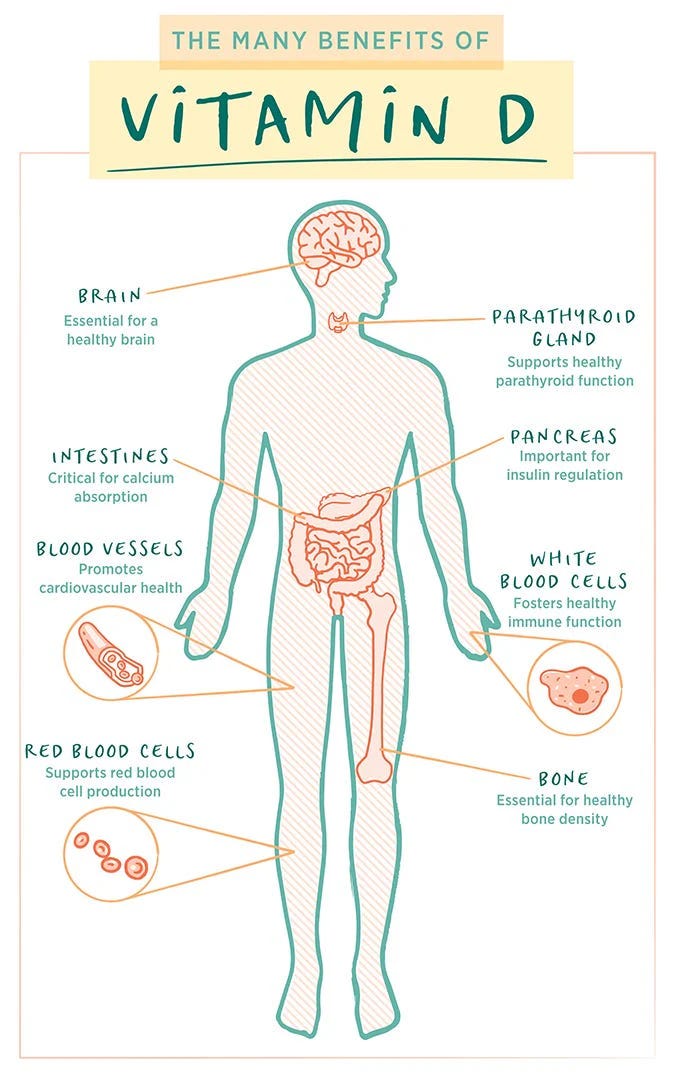
One of vitamin D’s most interesting roles lies in immune regulation. Nearly all immune cells carry vitamin D receptors, and many can activate vitamin D locally, allowing it to fine-tune immune responses right where they occur.
Vitamin D helps temper excessive inflammation while supporting antimicrobial defenses. In respiratory tissues, it reduces inflammatory signaling triggered by viral infection and supports barrier integrity. This helps explain why low vitamin D levels are associated with higher risk and severity of respiratory infections.
Supplementation studies consistently show the strongest benefits when vitamin D is given daily or weekly, and primarily in individuals who begin with low levels. Large bolus doses tend to underperform. The immune system appears to respond to vitamin D as a steady presence, not a surge.
Source Unknown
Metabolism and Blood Sugar Signaling
Vitamin D also intersects with glucose metabolism. In laboratory models, it influences insulin secretion and cellular glucose uptake. In humans, the picture is more selective.
Supplementation does not reliably improve blood sugar control across the board. However, people with low baseline vitamin D, lower body weight, or prediabetes appear more likely to benefit. In these groups, vitamin D supplementation modestly reduces progression to type 2 diabetes and supports metabolic stability.
In people with obesity, these effects are blunted, suggesting that vitamin D handling and tissue responsiveness may differ depending on metabolic context.
The Nervous System and Long-Term Resilience
Vitamin D receptors are widely expressed in the brain, particularly in regions involved in movement and memory. Vitamin D has been implicated in neuronal growth, oxidative stress reduction, and neuroprotection.
Lower vitamin D levels are associated with worse motor function in Parkinson’s disease and with cognitive decline in observational studies. Supplementation trials, however, are mixed. Where benefits appear, they are subtle and context-specific.
This pattern repeats across systems. Vitamin D seems to support resilience rather than reverse disease.
Immune Tolerance and Autoimmunity
Vitamin D plays a role in immune tolerance by shifting immune signaling away from chronic inflammation and toward regulation. Low vitamin D levels are commonly observed in autoimmune conditions, including multiple sclerosis, autoimmune thyroid disease, inflammatory bowel disease, and others.
Long-term supplementation has been shown to modestly reduce the risk of developing autoimmune disease, particularly in leaner individuals. High-dose protocols, however, have not consistently improved disease outcomes and may worsen them in some cases.
Vitamin D’s influence here appears preventative and regulatory, not corrective.
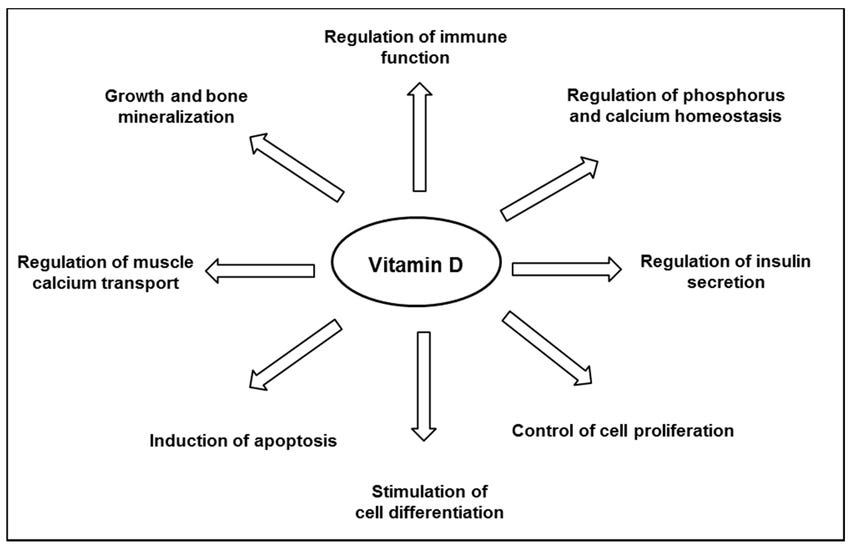
Major biological functions of vitamin D.
The Pattern That Emerges
Across bone, muscle, immunity, metabolism, and nervous system function, the same theme appears again and again.
Vitamin D does not behave like a simple nutrient that fixes problems when added. It behaves like a signal that supports coordination. Its effects depend on baseline status, tissue responsiveness, metabolic health, dosing pattern, and overall physiological demand.
Which brings us back to deficiency.
If vitamin D helps maintain structure, balance inflammation, support muscle strength, regulate immunity, and stabilize metabolism, then low vitamin D levels are not just about what is missing. They are about what the body is struggling to maintain.
That is where deficiency becomes meaningful.
What Vitamin D Deficiency Is Really Telling Us
Once we understand what vitamin D helps regulate, deficiency starts to look very different than it’s usually presented.
Most conversations treat vitamin D deficiency as a simple lack. A low number shows up on a lab report, and the solution seems obvious: take more. That approach makes sense if vitamin D only had one job. But it doesn’t. Vitamin D supports bone structure, muscle strength, immune balance, inflammation regulation, metabolic signaling, cardiovascular tone, and nervous system resilience. When a single compound touches that many systems, deficiency is rarely just about absence.
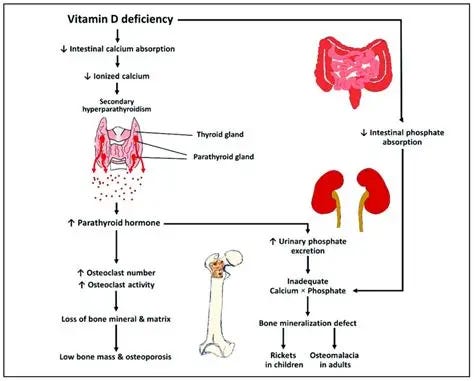
Overview of how vitamin D is produced, sourced, and metabolized in the body, with a focus on its role in skeletal health.
It’s Not Always About How Much You Take
For some people, low vitamin D reflects reduced sunlight exposure. This is especially true in northern climates and during winter months, when UVB rays simply don’t reach the skin at the right angle for synthesis. But sunlight is only one piece of the story.
Deficiency can also reflect increased demand. During periods of immune activation, chronic inflammation, metabolic stress, or recovery from illness, the body may be using more vitamin D than usual. In these situations, circulating levels drop not because intake is inadequate, but because utilization has increased. Vitamin D is being spent.
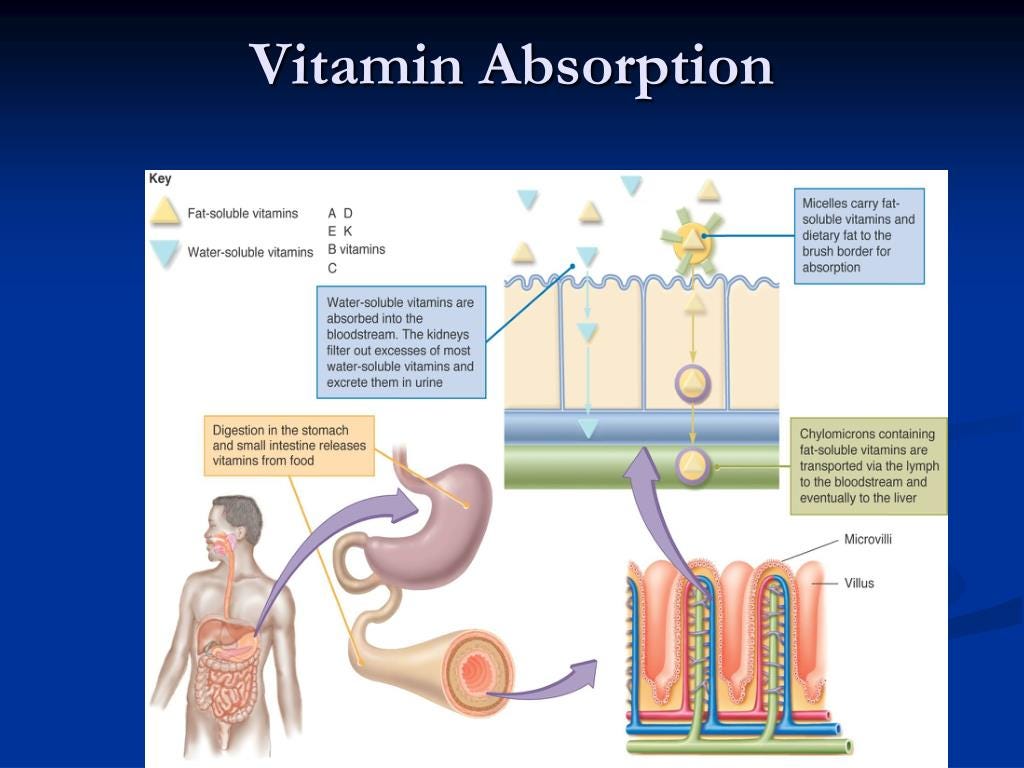
Vitamin D is also commonly prescribed as a supplement, yet its absorption in the gut is more complex than is often acknowledged. Research shows that vitamin D does not enter the body through a single, straightforward pathway. While some absorption occurs through passive diffusion, vitamin D also relies on membrane transporters in the intestinal lining, particularly those involved in cholesterol absorption.
Factors that influence fat digestion, bile flow, cholesterol transport, and intestinal health can all affect how much vitamin D actually makes it into circulation. Vitamin D is absorbed more efficiently when taken with a fat-containing meal, but absorption can still occur without fat. The system is flexible, but not immune to disruption.
This helps explain why two people can take the same dose of vitamin D and see very different results. The issue may not be intake, but absorption and handling upstream.
How the Body Handles the Signal
Even once vitamin D is absorbed, it still must be converted in the liver, activated in the kidneys, and recognized by receptors in target tissues. Disruption at any point along that pathway can contribute to low or fluctuating levels. In those cases, supplementation may improve lab values without fully restoring function.
This is why deficiency often exists on a spectrum.
Severe deficiency produces clear and recognizable consequences, particularly in bone and muscle. But most people today live in the gray zone. Their levels are low enough to affect resilience, recovery, and immune tone, but not low enough to trigger a diagnosis. What shows up instead are quieter patterns: fatigue that lingers, seasonal mood shifts, increased susceptibility to illness, slower recovery from stress.
It’s also important to say this plainly: not every low vitamin D level is pathological. Vitamin D naturally declines in winter. Seasonal dips are expected, especially in northern latitudes. Expecting summer levels year-round may not reflect biological reality.
When we shift the question from how do I raise this number to why might my body be struggling to absorb, convert, or use vitamin D right now, the conversation changes. Deficiency becomes information rather than a verdict. It points toward terrain, not just supplementation.
And that understanding allows us to move forward with clarity rather than reflex.
Source Unknown
The rest of this article is for paid subscribers.
In the sections that follow, I shift from understanding vitamin D deficiency to working with it through an herbal lens. We explore what it means to tend the terrain vitamin D depends on, with a closer look at digestion, absorption, metabolism, and the body’s relationship with light and season. I also highlight alfalfa and mushrooms as two plant allies that help us think beyond supplementation and toward whole body support.
If that sounds interesting, I’d love for you to consider upgrading your subscription. Your support allows me to continue sharing thoughtful, research informed herbal education like this.