


Do you find yourself feeling tired? Not just the kind of tired that comes after a rough night of sleep, but the kind that’s always there in the background.
Maybe there’s a fogginess that makes everything feel like static. Or a heavy, puffy feeling in your body that doesn’t quite go away.
And maybe the most frustrating part is that no matter what you do, the weight just will not budge. It’s like your body is holding on for reasons it won’t explain.
You’re not imagining it. And you’re not alone.
Hypothyroidism is one of the most common hormonal conditions today, and also one of the most misunderstood. It can slow everything down—your energy, digestion, thinking, and even your menstrual cycles. Some people have no idea anything is off until it shows up in their labs. Others get diagnosed, start medication, and still don’t feel better.
That’s because thyroid function doesn't operate in isolation. It’s deeply connected to every other system in the body, and most conventional approaches don’t account for that.
Thyroid hormones help regulate metabolism, temperature, brain function, skin health, and mood. When the thyroid isn’t functioning properly, the symptoms aren’t always obvious at first, but they tend to stack up over time. And for many women, these signs are often dismissed as stress, aging, or something to just live with.
Most providers rely on a single test, TSH, to assess thyroid health. While helpful, it doesn’t always tell the full story. There’s a difference between being in range and being in balance. I unpacked this more in my recent article on thyroid labs, where we explored what those numbers really mean and what they might be missing.
In this post, we’re going to dig deeper. You’ll learn what the thyroid actually does, how its hormones affect other systems, and why so many thyroid protocols fall flat. We’ll also look at how herbs, nutrition, and systems-based support can offer a more grounded and personalized approach.
Here’s what we’ll cover:
What the thyroid actually does
How your hormones influence metabolism, mood, and menstrual cycles
How herbs can support thyroid health through a whole-body lens
If you’ve been told everything looks fine but something still feels off, this is for you.
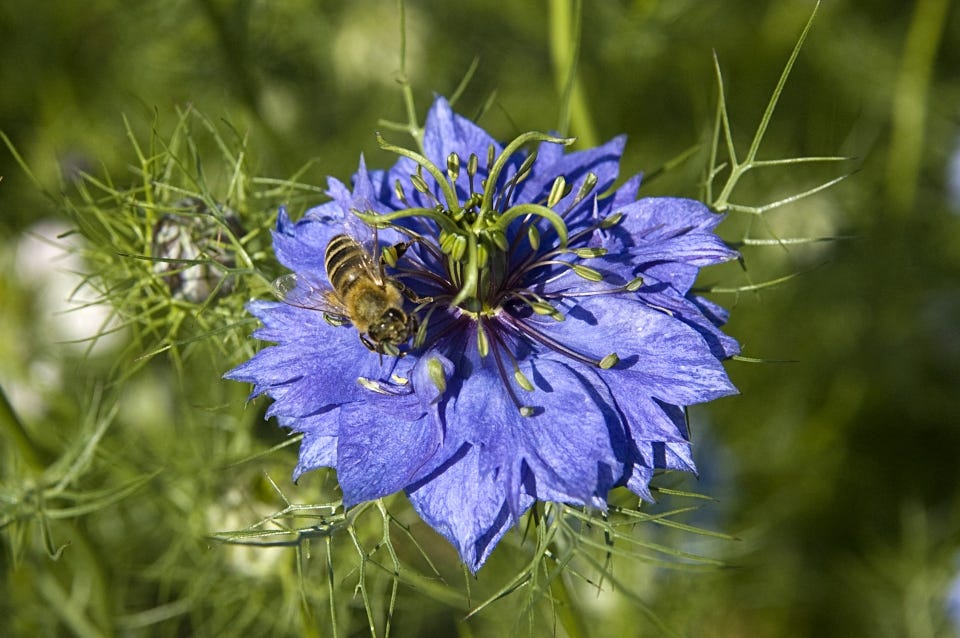
Nigella Sativa
Understanding Hypothyroidism: More Than Just a Slow Thyroid
When we talk about hypothyroidism, most people imagine fatigue, weight gain, and a sluggish metabolism. But this condition is far more complex and far more common than many realize.
It affects an estimated 5% of the U.S. population, with subclinical cases possibly affecting millions more. And while a quick blood test may offer a diagnosis, truly supporting someone with hypothyroidism often requires a deeper look.
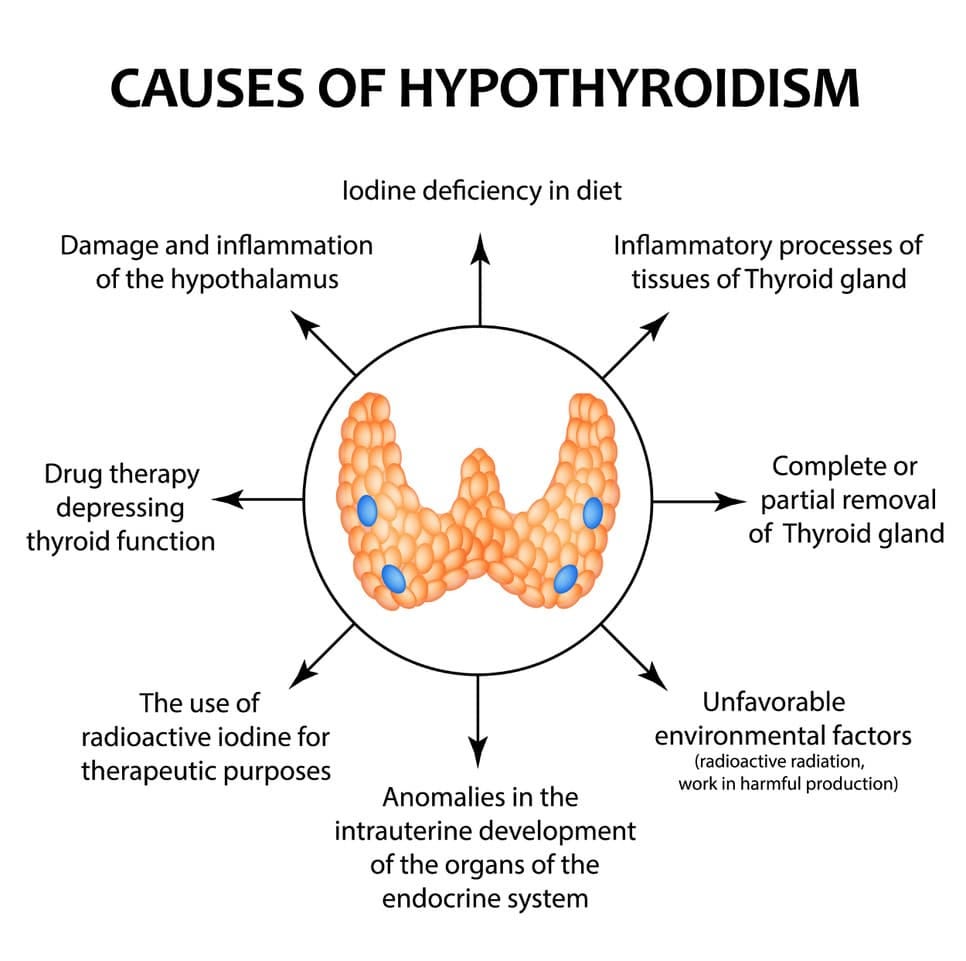
Causes of Hypothyroidism
What Is Hypothyroidism, Really?
At its core, hypothyroidism is a state of insufficient thyroid hormone in the body, but the reason this happens can vary. There are two main types:
Primary hypothyroidism, where the thyroid gland itself can’t produce enough hormone
Secondary (or central) hypothyroidism, which is less common and caused by issues in the brain—specifically, the pituitary or hypothalamus—where the signal to the thyroid is disrupted
In the United States, the most common cause is Hashimoto’s thyroiditis, an autoimmune condition in which the body attacks its own thyroid tissue. Globally, however, iodine deficiency remains the leading cause, especially in regions where dietary iodine is low or not fortified.
What makes hypothyroidism challenging is how varied the symptoms can be. Some people feel completely fine and only learn of their condition through routine blood work. Others experience profound fatigue, brain fog, cold intolerance, hair thinning, dry skin, constipation, or a general sense that their body is slowing down.
At its most extreme, hypothyroidism can lead to myxedema coma, a rare but life-threatening state of severe hormone deficiency.
Standard screening usually begins with a TSH (thyroid-stimulating hormone) test. In most cases of primary hypothyroidism, TSH levels are elevated, reflecting the pituitary’s effort to push the thyroid harder. Free T4 levels are typically low.
In central hypothyroidism, however, TSH may be low or normal, which can lead to misdiagnosis unless more comprehensive testing is done.
The good news is that hypothyroidism is relatively easy to diagnose with the right labs and can often be managed with medication. Still, many people don’t feel better on medication alone. That’s where nutritional strategies, lifestyle support, and herbal medicine may offer additional benefit—and that’s exactly what we’ll explore in the next sections.
What Hypothyroidism Feels Like: The Symptoms No One Warned You About
One of the most frustrating parts of living with hypothyroidism is how unpredictable it can be. For some people, the fatigue is relentless. Others feel mostly fine until one day they don’t. And then there are those whose labs raise red flags, even though they don’t feel anything out of the ordinary.
We’re often told to look for the usual suspects: weight gain, tiredness, constipation, dry skin, or cold hands and feet. And while those definitely show up, what often gets missed is how subtle or strange the symptoms can be. You might notice puffiness in your face, a voice that sounds raspier, or cycles that suddenly shift. Maybe you just feel off and can’t put your finger on why.
Some people deal with brain fog, mood changes, slowed digestion, or thinning hair around the scalp and brows. Others notice their muscles ache more, their heart rate feels sluggish, or they just can’t lose weight no matter what they try. There might be tingling in the hands or feet, swelling in the legs, or changes in reflexes that seem small until you look back and realize they were clues.
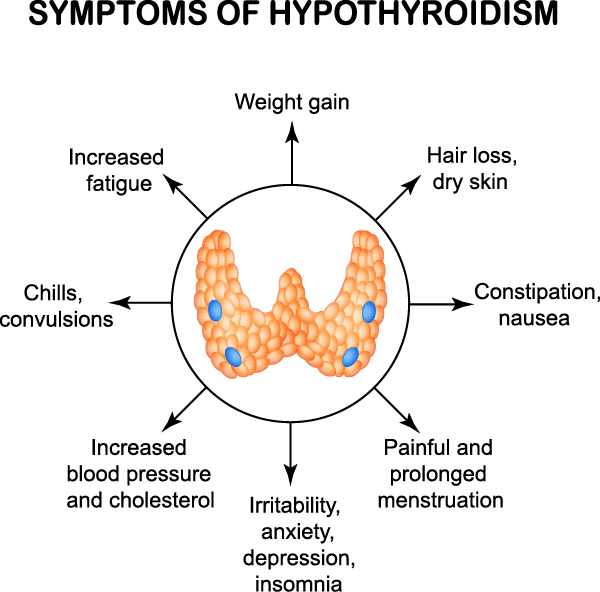
Symptoms of Hypothyroidism
And sometimes there are no symptoms at all.
In a study from an outpatient clinic in Oman, researchers followed over 40,000 patients across three years. Out of the 118 people diagnosed with thyroid disease, more than half had hypothyroidism—and 38 percent of them didn’t have any symptoms. Of those who did, fatigue and constipation were the most common. Physical signs like goiter or dry skin were rare.
That tells us something important: hypothyroidism doesn’t always show up in the ways we’ve been taught to expect.
Even in subclinical cases, where TSH is elevated but free T4 is still technically in range, there can still be an impact. You might not meet the criteria for treatment, but your body is already compensating. That’s often when people start to feel like they’re running on fumes or like their systems are out of sync. Sometimes it stays there. Other times, it progresses. Either way, it’s worth paying attention — and in my opinion, it’s worth it to start supporting your thyroid (with herbs and other lifestyle changes) before it progresses.
In Rare Cases: Myxedema and Severe Hypothyroidism
In more extreme situations, when hypothyroidism goes untreated for a long period, symptoms can become life-threatening. Myxedema coma is rare, but it’s serious. It can involve hypothermia, confusion, slowed breathing, and eventually, organ failure. While this isn’t something most people will ever face, it’s a reminder of just how essential thyroid hormones are to basic function.
How Thyroid Hormones Influence Metabolism, Mood, and Menstrual Cycles
Thyroid hormones might be small, but their reach is wide. Once they’re released into circulation, they don’t just act on the thyroid or the brain. They influence nearly every system in the body. This is why hypothyroidism doesn’t show up in just one way. It can impact your energy, your digestion, your mood, and your menstrual cycles.
These hormones act like messengers, helping your cells understand when to speed up or slow down. They affect how your body burns fuel, how your brain responds to stress, and how your reproductive system stays in rhythm.
Let’s take a closer look at three of the most noticeable areas this shows up: metabolism, mood, and menstrual cycles.
Metabolism: More Than Just Weight Gain
Most people think of metabolism as something that either works for or against them when trying to lose weight. But thyroid hormones play a much deeper role in how the body creates and uses energy, and how it responds to temperature, fuel, and stress.
Cellular Energy and Fuel Use
Thyroid hormones set the pace of cellular activity. They influence mitochondrial function, energy production, and how your body processes fuel sources like glucose, fat, and protein. This regulation happens through two key hormones: T4, the storage form, and T3, the active form that cells actually use. T4 is converted into T3 locally in tissues like the brain, liver, muscle, and fat.
An enzyme called type 2 deiodinase (D2) plays a major role in this conversion, especially in brown fat and skeletal muscle where thermogenesis, your body’s internal heat production, takes place.
Thermogenesis and Glucose Regulation
When thyroid hormone levels drop, the body slows down. This includes your core temperature, digestion, fat-burning pathways, and even how much glucose your liver produces. You might feel cold, bloated, sluggish, or like your body is conserving energy at every turn.
Thyroid hormones also regulate cholesterol and bile acid metabolism, which affects how your body digests fats and maintains metabolic balance. Even mild hypothyroidism can raise cholesterol levels and slow bile flow.
Hormonal and Nervous System Interactions
Thyroid hormones interact with other hormone systems too. They influence leptin, which helps regulate hunger and energy expenditure, and affect how sensitive your cells are to insulin. They also communicate with the adrenergic nervous system, which helps your body respond to physical and emotional stress.
All of this means that when thyroid hormones are low, the impact isn’t limited to weight. Your entire energy system becomes less efficient. Digestion slows, detoxification stalls, and it becomes harder for your body to burn fuel or regulate appetite. Many people feel this as fatigue, heaviness, and brain fog, even when they’re doing all the right things.

Mood and Brain Function: The Thyroid and Brain Connection
If you’ve ever felt emotionally flat, foggy, or like your motivation just disappeared, you’re not imagining it. Thyroid hormones influence more than metabolism—they play a major role in how we think, feel, and respond to stress.
Neurotransmitters and the HPT Axis
Thyroid hormones help regulate key neurotransmitters like serotonin and dopamine, which are essential for mood, focus, and emotional resilience. They also support the communication loop between the brain and the thyroid, known as the hypothalamic-pituitary-thyroid (HPT) axis.
When this system is disrupted, several things can shift. In people with depression, research has shown that the TSH response may be blunted, TRH levels in the brain may be elevated, and the conversion of T4 to T3 within brain tissue can be impaired.
Some researchers refer to this pattern as “brain hypothyroidism,” where hormone levels in the bloodstream appear normal but are not being converted or used properly in the brain.
Autoimmunity and Mood Disorders
Autoimmune thyroid disease is also being studied for its link to mood disorders. People with major depressive disorder are more likely to test positive for thyroid antibodies, even when their thyroid hormone levels are technically within range. These antibodies may interfere with how thyroid hormones function in the brain and could contribute to symptoms like low mood, anxiety, or difficulty concentrating.
Subclinical hypothyroidism, which doesn’t always produce clear symptoms, has been associated with higher rates of anxiety, depressive thoughts, and even increased risk of more severe mood disorders, particularly in women. In a large study of over 12,000 people, those with subclinical hypothyroidism were more than twice as likely to develop depression.
Other studies show that up to 60 percent of individuals with subclinical hypothyroidism report symptoms of depression. Among those already diagnosed with hypothyroidism, about one in three will experience clinically significant low mood.
This doesn’t mean every case of depression is caused by a thyroid issue. But if someone is struggling with persistent fatigue, low motivation, mental fog, or emotional disconnection, and those symptoms are not improving with therapy or medication, it is worth looking deeper. That includes a full thyroid panel with free T3, free T4, and antibody testing, along with a closer look at how the person is actually feeling day to day.

Menstrual Cycles and the Thyroid: A Critical Connection in Women’s Health
If your cycle has become irregular, heavier than usual, or just doesn’t feel like it used to, your thyroid might be involved. This connection is more common than most people realize, yet it’s often overlooked—both in conventional medicine and even in some holistic spaces.
Thyroid hormones don’t just control energy and metabolism. They also help regulate the rhythm of the menstrual cycle, support ovulation, and interact with sex hormones like estrogen and progesterone. When thyroid function slows down, that rhythm can shift. You might notice irregular periods, skipped cycles, heavier bleeding, or even the complete absence of menstruation.
The Brain-Ovary-Thyroid Axis
The thyroid and reproductive systems are linked through overlapping communication loops in the brain. The same part of the brain that manages thyroid function, the hypothalamus, also directs the release of reproductive hormones. So when thyroid hormone levels drop, it can interfere with how the brain signals the ovaries.
This can disrupt the release of gonadotropin-releasing hormone (GnRH), change prolactin levels, alter sex hormone-binding globulin (SHBG), and influence how much estrogen and progesterone your body makes. As a result, you might experience light cycles, heavy cycles, or none at all.
Terms like oligomenorrhea (infrequent periods), menorrhagia (heavy bleeding), and amenorrhea (absence of menstruation) are all seen more often in people with thyroid imbalances.
What the Research Shows
Recent studies back this up. In one cross-sectional study of women with irregular periods, about one in three had some form of thyroid dysfunction. The most common pattern was elevated TSH with symptoms like infrequent or prolonged cycles. Low free T4 levels were more often associated with heavier bleeding, while high levels of thyroid peroxidase antibodies (TPOAb) were frequently seen in those who had stopped menstruating altogether (Hashimotos).
This helps explain why thyroid screening is often a key part of evaluating unexplained menstrual changes. It also reminds us that subtle imbalances, like slightly elevated TSH or mild autoimmunity, can have real physiological effects even before labs fall outside the “normal” range.
Autoimmunity, Fertility, and Overlapping Conditions
Hashimoto’s thyroiditis, the leading cause of hypothyroidism, has also been linked to fertility challenges. TPO antibodies may interfere with ovulation, and in people with polycystic ovary syndrome (PCOS), thyroid imbalances are surprisingly common. Newer research suggests there may be a two-way relationship, where shifts in thyroid hormones and sex hormones can influence each other in complex, sometimes cyclical ways.
The encouraging news is that many of these changes improve with appropriate treatment. Studies show that cycles often become more regular and predictable once thyroid hormone levels are supported. If your cycles have been inconsistent, heavier, or just feel different, and there’s no obvious reason, it’s worth requesting a full thyroid panel. That includes TSH, free T3, free T4, and antibody testing.
Herbal Support for Hypothyroidism
Herbs won’t replace thyroid hormone, but they can absolutely support the body when thyroid function is low.
In Medical Herbalism, David Hoffmann reminds us that the role of herbal medicine isn’t to override the body’s natural processes. Instead, it’s about working alongside them, especially when systems like metabolism, circulation, or mood begin to struggle.
If someone has been diagnosed with hypothyroidism, they’re likely on hormone replacement. But many still don’t feel like themselves. Others may be dealing with early signs or subclinical changes that haven’t yet warranted medication.
In both cases, herbs can help ease the systemic effects of an underactive thyroid.
Note: Always check that for any contraindications before working with an herb — specifically any current medications being taken. St. John’s, Mugwort, and Valerian are among those that interfere with drug metabolism!
Traditional Allies for Sluggish Thyroid Function
Some of the herbs long used in Western herbalism for this pattern include:
Fucus vesiculosus (bladderwrack): a mineral-rich seaweed that may be helpful in true iodine deficiency. Best avoided in autoimmune cases unless iodine status has been carefully assessed.
Crataegus (hawthorn) and Ginkgo biloba: to support circulation, heart function, and tissue oxygenation.
Rumex crispus (yellow dock), Juglans cinerea (butternut), and other hepatic laxatives: for sluggish bowels and liver stagnation.
Humulus lupulus (hops), Valeriana officinalis (valerian), and other nervines: for restlessness, insomnia, or nervous system fatigue.
Hypericum perforatum (St. John’s Wort) and Artemisia vulgaris (mugwort): to support mood and endocrine tone, particularly where depression or cycle irregularities are involved.
The focus isn’t necessarily on “stimulating” the thyroid, but on improving how the body functions with a slower thyroid. That includes supporting circulation, digestion, the nervous system, and detoxification.
What the Research Is Saying
While clinical research is still catching up to traditional use, some herbs have shown promising effects on thyroid labs and tissue health in both animal models and early trials.
Nigella sativa (Black Seed)
This is currently the most researched herb in clinical studies for hypothyroidism. It may help reduce TSH and increase T4, with effects strongest in autoimmune thyroiditis. Its active compound, thymoquinone, is a potent antioxidant that appears to protect thyroid tissue from oxidative stress. Studies have shown improved hormone levels, reduced inflammation, and even cellular regeneration in the thyroid gland.
Withania somnifera (Ashwagandha)
Ashwagandha has been shown to improve T3 and T4 levels while lowering TSH in hypothyroid models. It’s also a stress-regulating adaptogen that may support conversion of T4 to T3 and modulate the HPT axis. Unlike stimulating herbs, ashwagandha is often well-tolerated in depleted, low-energy constitutions.
Moringa oleifera
Moringa is rich in nutrients and antioxidants. It’s been shown to improve oxidative stress and help rebalance thyroid hormone levels in animal studies, though we still need more human research.

Citrus flavonoids (naringenin, hesperetin)
Found in grapefruit and orange, these compounds appear to support the pituitary-thyroid axis. They’ve shown potential in increasing TSH and supporting T4 production in older animal models. Limited human research is available, but the endocrine effects of citrus bioflavonoids are gaining more attention.
Other Plants Worth Noting
Atractylodes macrocephala: traditionally used in Chinese medicine to support metabolism and energy. It appears to enhance thyroid receptor sensitivity and modulate glucose and fatty acid metabolism.
Scutellaria baicalensis (Chinese skullcap): shown to modulate TSH and deiodinase activity in hyperthyroid models, but may have broader regulatory effects.
Lycopus spp. (Bugleweed, Gypsywort): typically used in hyperthyroidism but interesting for its modulating effect on thyroid hormone conversion and central signaling.
Salvia rosmarinus (Rosemary): antioxidant-rich, with compounds that may inhibit autoantibody activity and protect the thyroid gland from oxidative stress.

Living with hypothyroidism can feel like walking through mud. Slow, confusing, and at times, invisible to those around you. But the more we understand w
hat the thyroid actually does and how it connects to the rest of the body, the more empowered we become to support it in meaningful ways. Whether you’re already on medication or just starting to piece things together, herbal medicine and systems-based support can help you feel more aligned with your body, not at odds with it.
Next time, we’ll explore Hashimoto’s thyroiditis, the autoimmune form of hypothyroidism that affects so many people. We’ll look at how it develops, what the research says, and how herbalism can offer gentle, whole-person support alongside conventional care.
If this article resonated with you, feel free to share it with someone who might need it. And if you haven’t joined yet, consider becoming a member of The Buffalo Herbalist Community to get access to full-length guides, materia medica, and exclusive resources to deepen your herbal studies.
Until next time,
— Agy | The Buffalo Herbalist
P.S. This Saturday's Library Drop will include last week’s study material, so you won’t miss a thing! Thank you for being patient with me while I was off being an equestrian!
Bibliography
Patil, N., Rehman, A., Anastasopoulou, C., & Jialal, I. (2024b, February 18). Hypothyroidism. StatPearls - NCBI Bookshelf. https://www.ncbi.nlm.nih.gov/books/NBK519536/
Zamwar, U. M., & Muneshwar, K. N. (2023). Epidemiology, types, causes, clinical presentation, diagnosis, and treatment of hypothyroidism. Cureus. https://doi.org/10.7759/cureus.46241
El-Shafie, K. T. (2003, April 1). CLINICAL PRESENTATION OF HYPOTHYROIDISM. https://pmc.ncbi.nlm.nih.gov/articles/PMC3425758/
P, H. H., G, S., K, P., Penumalla, S., & Kandimalla, R. (2024). Hypothyroidism and its Impact on Menstrual Irregularities in Reproductive-Age Women: a comprehensive analysis at a tertiary care center. Cureus. https://doi.org/10.7759/cureus.63158
Naz, M. S. G., Dovom, M. R., & Tehrani, F. R. (2020). The Menstrual Disturbances in Endocrine Disorders: A Narrative review. International Journal of Endocrinology and Metabolism, 18(4). https://doi.org/10.5812/ijem.106694
Jacobson, M. H., Howards, P. P., Darrow, L. A., Meadows, J. W., Kesner, J. S., Spencer, J. B., Terrell, M. L., & Marcus, M. (2018). Thyroid hormones and menstrual cycle function in a longitudinal cohort of premenopausal women. Paediatric and Perinatal Epidemiology, 32(3), 225–234. https://doi.org/10.1111/ppe.12462
Nuguru, S. P., Rachakonda, S., Sripathi, S., Khan, M. I., Patel, N., & Meda, R. T. (2022). Hypothyroidism and Depression: A Narrative review. Cureus. https://doi.org/10.7759/cureus.28201
Kuś, A., Kjaergaard, A. D., Marouli, E., Del Greco M, F., Sterenborg, R. B., Chaker, L., Peeters, R. P., Bednarczuk, T., Åsvold, B. O., Burgess, S., Deloukas, P., Teumer, A., Ellervik, C., & Medici, M. (2021). Thyroid Function and Mood Disorders: A Mendelian randomization study. Thyroid. https://doi.org/10.1089/thy.2020.0884
Mullur, R., Liu, Y., & Brent, G. A. (2014). Thyroid hormone regulation of metabolism. Physiological Reviews, 94(2), 355–382. https://doi.org/10.1152/physrev.00030.2013
Zarzour, R. H. A., Kamarulzaman, E. E., Saqallah, F. G., Zakaria, F., Asif, M., & Razak, K. N. A. (2022). Medicinal plants’ proposed nanocomposites for the management of endocrine disorders. Heliyon, 8(9), e10665. https://doi.org/10.1016/j.heliyon.2022.e10665
Hoffmann, D. (2003). Medical Herbalism: The Science and Practice of Herbal Medicine. Healing Arts Press.
👍🌹
This article was so informative and helpful. My daughters (20 & 23) have a complex history of Thyroid issues and now both are medically managed. I am 48 and my body and mind are changing. My girls think I should get my thyroid tested, but I wonder if it’s simply the natural changes of Peri-menopause. Could you talk more about the connection of thyroid issues as they relate to hormones as women age?