


Moringa has worn many titles. Superfood. Miracle tree. Nutrient powerhouse. In the wellness world it is praised to the point of cliché, but sometimes the media lands on a truth without realizing its depth. Even The New Yorker could not resist its eccentric charm, describing it as “tenacious, resilient, versatile, generous, and flat-out eccentric… Dr. Seussian,” a tree with “affably chaotic branches, which protrude like hands waving hello.” It is a fitting image. Moringa does have a strange, almost whimsical presence, and yet its gifts are not whimsical at all.
Moringa leaves are chock-full of vitamin C, calcium, potassium, and amino acids… more than seven times the vitamin C of oranges, four times the vitamin A of carrots, four times the calcium of cow’s milk, and three times the potassium of bananas, one Vogue feature noted, pointing also to flavonoids like quercetin and chlorogenic acid that influence blood sugar and histamine pathways. For once, the glossy-magazine praise is not entirely inflated. Moringa really is that nutrient dense, especially when eaten as a fresh, accessible food rather than an overpriced powder on a wellness shelf.
Then there is the idea, echoed by the Today Show, that “Moringa serves everyone, or it could serve everyone… it could be a step toward democratizing health supplements.” It is a compelling statement, and in some ways, it points toward something true. Moringa has the potential to nourish broadly. It can grow in harsh climates, feed under-nourished populations, and offer micronutrients where they are hardest to access. But “democratizing health” is not as simple as exporting a leaf and turning it into a superfood brand. Access, equity, sustainability, and cultural context matter. When the West discovers a plant that has fed communities for generations, the story can easily become distorted.
This article is not about miracle claims or marketing language. It is about what moringa actually is, what the research shows, how it supports nutrition in the places that need it most, and how we can speak about it with respect rather than hype. Moringa deserves more than headlines. It deserves context, history, scientific honesty, and a conversation about who benefits when a plant becomes popular.
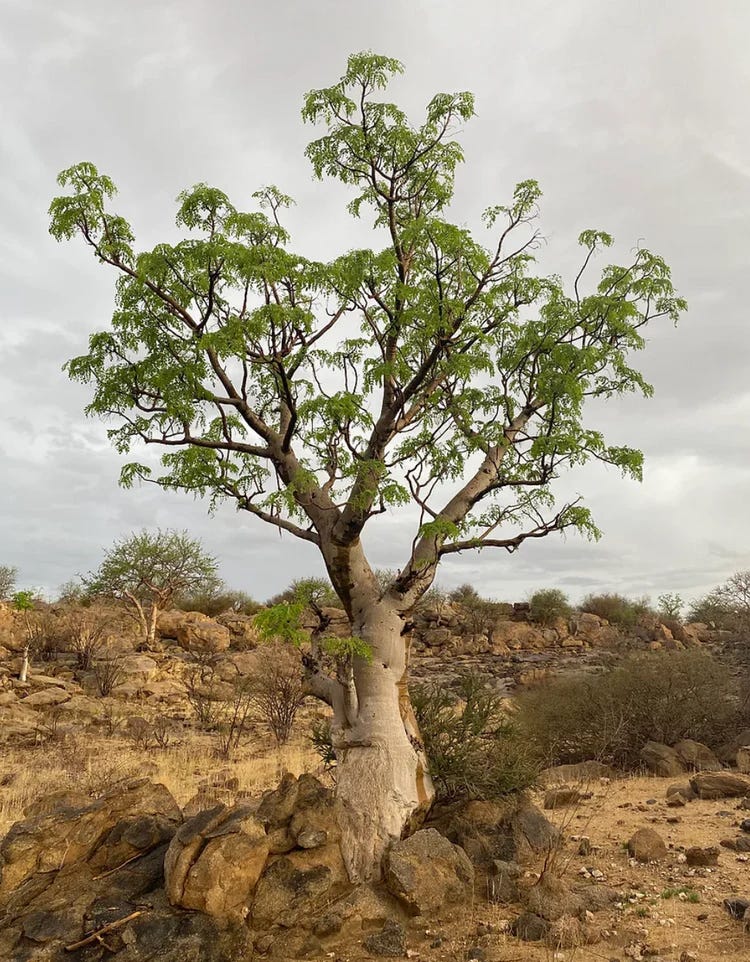
Moringa Tree - Source Unknown
What Do We Really Mean When We Say “Superfood”?
The Mayo Clinic states that the term superfood has no official definition in nutrition and is not recognized by any regulatory body. It is a marketing word that has simply become part of our cultural vocabulary, appearing on packaging, wellness sites, and magazine lists that promise extraordinary benefits from singular ingredients. It sounds scientific, but it was never born from science.
Registered dietitian Tara M. Schmidt of the Mayo Clinic explains that there are no standards a food must meet before it can be labeled a superfood. A product can advertise the idea of superior nutrition without offering anything remarkable. It is similar to how a food can boast “whole grains” on the front of the box while containing only a token amount in the actual recipe.
To be fair, many foods that receive superfood status are genuinely nutrient dense. Leafy greens, berries, nuts, seeds, beans, lentils, and cruciferous vegetables are consistently supported by research as protective and beneficial to long-term health. One review of 45 popular webpages identified 136 foods labeled as superfoods, with kale, spinach, salmon, blueberries, chia seeds, garlic, fermented dairy, and walnuts among the most frequently mentioned.
The issue is not with the foods themselves. It is the narrative that forms around them. The superfood label invites us to view nutrition as a hunt for magical ingredients rather than a daily pattern of accessible nourishment. It elevates certain plants to celebrity status, often because they can be packaged, sold, and marketed at a premium. It also distracts from a more important question. Who has consistent access to nutrient-dense food, and who does not.
This is the crossroads where moringa often appears. Western media calls it a superfood because its nutrition profile is exceptional, but that label shrinks the story. Moringa matters not because it is fashionable, but because it has the potential to support communities facing real nutrient gaps. Before it was added to smoothies and supplement blends, it was food. It was local. It was a dependable source of vitamins, minerals, and protein in places where options were limited.
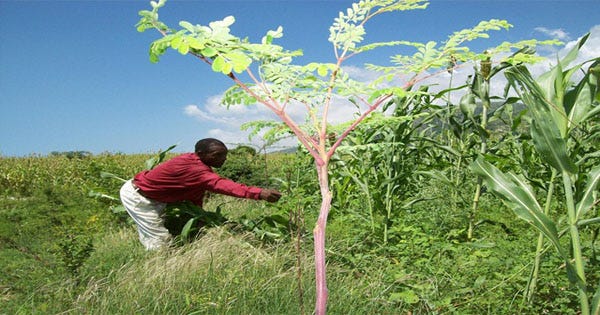
Moringa Tree - Afroculture.net
Before we go deeper, this is where I’ll pause the public portion of the article. The next section explores moringa’s remarkable nutritional profile and why this tree has been such a vital source of nourishment for so many communities.
We will look at its vitamin and mineral density, its role in addressing malnutrition, and how modern research supports what traditional cultures have known for generations.
From there, we will move into a detailed look at moringa’s pharmacology and the science behind its inflammation, metabolic, liver, and nervous system support. Finally, we will close with sourcing, sustainability, and the cultural considerations that matter if we choose to work with this plant today.
If this kind of herbalism resonates with you, and you want to keep learning through deeper dives, research-based guides, and culturally aware plant education, I invite you to become a paid subscriber. Your support makes it possible for me to continue this work with the time, care, and integrity it deserves.
