


You’ve probably seen Reishi somewhere by now. It’s made its way into mushroom coffees, tinctures, powders, capsules, gummies, and all kinds of products marketed for things like stress, sleep, immune health, and general wellness. Of course, Reishi didn’t suddenly appear when we collectively decided mushrooms belonged in coffee!
Known as Lingzhi in China and Reishi in Japan, these medicinal mushrooms have been used throughout East Asia for a very, very long time. Lingzhi has a documented history of medicinal use extending more than 2,000 years and became associated with health, longevity, spiritual potency, and even immortality within Chinese culture (Wachtel-Galor et al., 2011; Hennicke et al., 2016). Traditional Chinese texts also described several types of Lingzhi according to color, including red, black, blue, white, yellow, and purple forms, which were associated with different properties within traditional Chinese medicine (Wachtel-Galor et al., 2011).
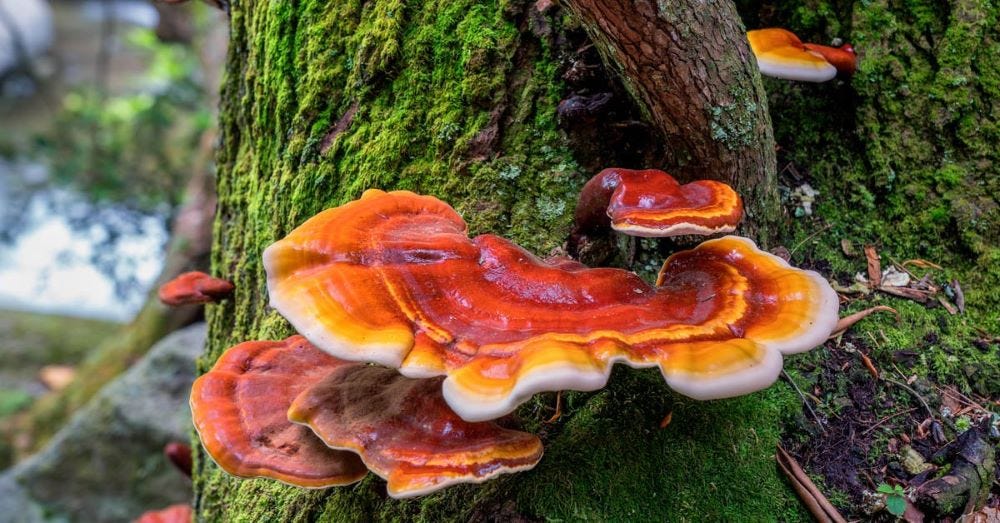
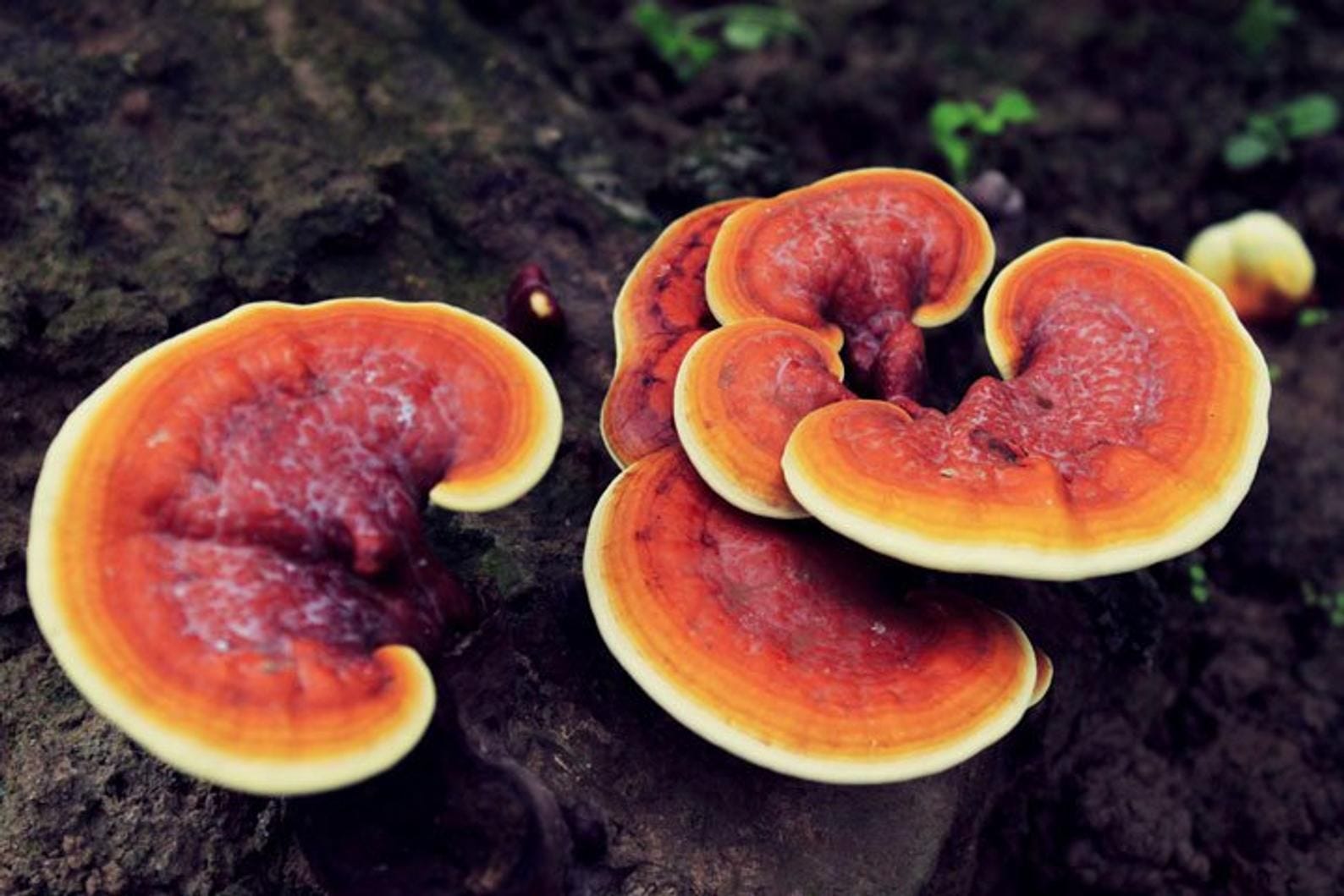
Reishi mushroom
So, What Mushroom Are We Talking About?
If you go looking for Reishi in books, supplement labels, or research papers, you’re going to see the name Ganoderma lucidum everywhere. The problem is that G. lucidum was originally described from specimens collected in England, and over time that name began being applied to morphologically similar Ganoderma mushrooms from other parts of the world, including the Lingzhi mushroom used in East Asia (Hennicke et al., 2016).
Once researchers began using molecular methods to study these mushrooms, Asian specimens that had been classified as G. lucidum separated from European G. lucidum. The widely cultivated Lingzhi mushroom in China was eventually described as Ganoderma lingzhi (Zhou et al., 2015). Zhou et al. (2015) examined 32 collections from Asia, Europe, and North America using morphology and four genetic regions and recovered 13 separate species within the G. lucidum complex, including G. lucidum, G. lingzhi, G. tsugae, G. multipileum, and several others.
This could seem like a taxonomy side quest until we start looking at the chemistry.
Hennicke et al. (2016) compared commercially cultivated strains of European G. lucidum and East Asian G. lingzhi. After confirming their identities using morphology and molecular phylogeny, the researchers analyzed ethanol extracts of the fruiting bodies and found substantial differences in their triterpenic acid profiles. The G. lingzhi extract contained considerably more triterpenic acids than the G. lucidum extract, and different ganoderic acids were identified in the two mushrooms.
Now we have a good reason to get a little nosy when we read a Reishi study. Which species was studied? Where did it come from? How was it identified? Did researchers use the fruiting body, mycelium, spores, or an isolated compound? What kind of extract did they use? These details can change what was present in the material being studied and, eventually, what conclusions we can draw from the results.
Even products sold under the same common name can differ in their composition, with factors such as fungal material, cultivation, and extraction influencing what ends up in the preparation (Wachtel-Galor et al., 2011). Throughout this article, I’m going to use Reishi when we’re talking about the mushroom broadly. When we look at individual studies, I’ll get more specific about the species and preparation whenever that information is available.
Apparently Reishi has already given us our first research rabbit hole, and we haven’t even gotten to the beta-glucans yet. :)

G. tsugae
Inside the Mushroom: Reishi’s Chemistry
If you’ve ever handled dried Reishi, you know this is not a mushroom you’re going to casually sauté with some garlic. It’s tough, woody, and depending on the species and preparation, incredibly bitter. There’s a lot going on chemically too, but I don’t think we need to memorize every compound anyone has ever isolated from Reishi. For the research we’re going to look at, there are two groups I want us to know: polysaccharides and triterpenoids (Wachtel-Galor et al., 2011).
Polysaccharides and Beta-Glucans
Polysaccharides are large carbohydrates made from chains of sugar molecules, and Reishi contains quite a collection of them. They’ve been isolated from the fruiting body, mycelium, and spores, as well as from the culture medium used to grow the mycelium. You’ll probably hear beta-glucans mentioned most often when medicinal mushrooms come up, but that term doesn’t capture every polysaccharide found in Reishi.
These compounds can differ in their molecular weight, branching patterns, solubility, and sugar composition (Wachtel-Galor et al., 2011).
This is where I start getting picky about the wording in research papers! If researchers isolate a particular polysaccharide fraction and observe an effect, I want to know what they isolated, how they prepared it, and what they tested it in. “Reishi polysaccharides did X” can sound much broader than the experiment itself.
Triterpenoids
The other big group is the triterpenoids, including the ganoderic acids that come up again and again in Reishi research. More than 100 triterpenoids had already been characterized from material identified as G. lucidum when Wachtel-Galor et al. (2011) reviewed the literature. They’re also responsible for that famous Reishi bitterness, which suddenly makes the whole “mushroom coffee” situation a little funnier to me.
Remember our taxonomy rabbit hole from approximately five minutes ago? It shows up in the chemistry too. Hennicke et al. (2016) compared fruiting-body extracts from G. lingzhi and G. lucidum and found substantial differences in their triterpenic acid profiles. The G. lingzhi extract contained considerably more triterpenic acids than the G. lucidum extract.
Preparation adds another variable. Polysaccharides are commonly extracted with hot water, while triterpenoids are commonly extracted using solvents such as ethanol (Wachtel-Galor et al., 2011). So if I see the words “Reishi extract” in a paper, I immediately want more information. What species? What part of the fungus? What extraction method? What was present in the final preparation?
And this isn’t me being unnecessarily fussy. Okay, maybe I’m a little unnecessarily fussy. :) Wachtel-Galor et al. (2011) describe an analysis of 11 commercial Lingzhi products in which polysaccharide concentrations ranged from 1.1% to 5.8%, while triterpene concentrations ranged from undetectable to 7.8%.
That is a pretty enormous amount of variation hiding underneath one little word: Reishi.
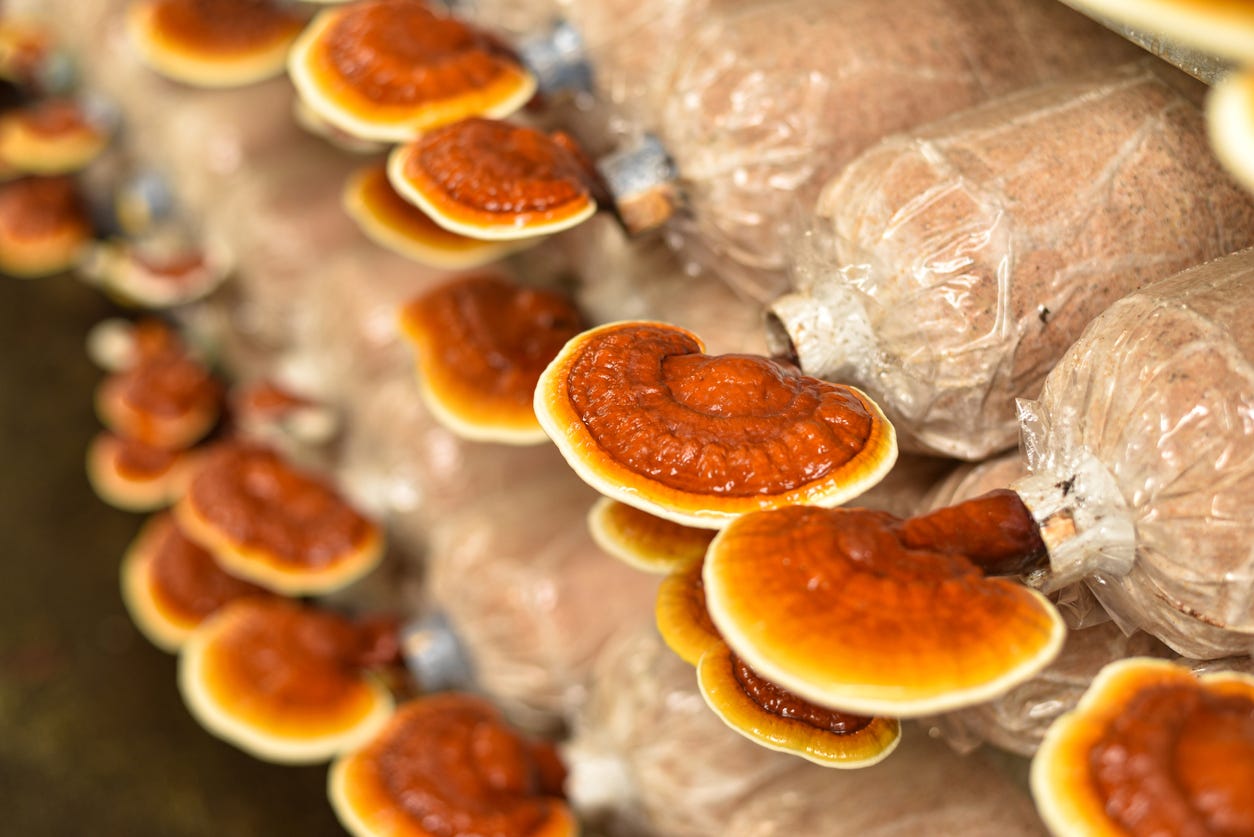
Reishi
What the Research Says: Reishi’s Role in Modern Health
For centuries, Reishi was taken on faith, used to strengthen the spirit, nourish Qi, and ward off disease. But today, scientists are asking a different question: what does this mushroom actually do inside the body? While most modern studies are still preclinical, many findings echo what traditional herbalists already sensed. Reishi doesn't work on just one pathway. It acts more like a conductor, supporting multiple systems and nudging the body toward balance.
Much of the research we have comes from cell studies and animal models, with only a few small human trials. So while Reishi is not a miracle cure, it remains one of the most promising herbal supports for immunity, inflammation, metabolic regulation, and chronic disease resilience.
Reishi and Cancer Research
Cancer is probably one of the areas where we need to be especially careful with Reishi because the research can sound incredibly impressive at first glance. Extracts and isolated constituents from Ganoderma have been studied in cancer cell lines and animal models, with reported effects involving cell-cycle arrest, apoptosis, angiogenesis, tumor growth, invasion, and metastasis (Wachtel-Galor et al., 2011).
That gives us quite a few potential mechanisms to investigate, but much of this work is preclinical. Killing a cancer cell in a dish or reducing tumor growth in a mouse gives researchers a reason to keep asking questions. It doesn’t tell us whether taking Reishi will produce the same effect in a person with cancer.
The human evidence is much smaller.
A Cochrane systematic review by Jin et al. (2016) identified five randomized controlled trials involving 373 participants. The studies evaluated G. lucidum in people with cancer and included outcomes such as tumor response, immune function, quality of life, and adverse effects. When G. lucidum was used alongside chemotherapy or radiotherapy, the pooled results suggested an improvement in treatment response compared with conventional treatment alone. The review also reported changes in several immune measures, including CD3, CD4, and CD8 lymphocyte percentages (Jin et al., 2016).
The results are encouraging, but they also need to be kept in context. Changes in immune markers, tumor response, and quality of life can each tell us something about how participants responded during the studies, but none of the five trials measured long-term survival (Jin et al., 2016). We therefore don’t know whether the reported effects translated into longer survival for people taking G. lucidum.
There were other limitations too. The trials were relatively small, all were conducted in China, and the review authors identified methodological and reporting problems that lowered the quality of the evidence. Jin et al. (2016) concluded that there wasn’t enough evidence to support G. lucidum as a first-line cancer treatment, although they found some evidence suggesting potential benefit when it was used alongside conventional treatment.
There’s a reason Reishi has attracted so much attention in cancer research. The preclinical findings are interesting, and the limited human research has produced some signals worth investigating further. We just don’t have enough clinical evidence to stretch those findings into claims about Reishi treating cancer..
Immune Modulation
“Immune support” is probably one of the claims you’ll see most often attached to Reishi, and there is research showing that its constituents can affect immune activity. Most of the evidence summarized by Wachtel-Galor et al. (2011), though, comes from cell culture and animal studies.
Polysaccharide-rich extracts and isolated polysaccharide fractions from G. lucidum have been shown to affect macrophages, natural killer (NK) cells, T and B lymphocytes, and dendritic cells in experimental models. Researchers have also reported changes in cytokines involved in immune signaling, including IL-1, IL-2, IL-6, IL-12, TNF-α, and IFN-γ (Wachtel-Galor et al., 2011).
Some of these experiments give us clues about what might be happening. In one study, macrophages and T lymphocytes exposed to a Reishi polysaccharide increased their production of TNF-α and IFN-γ. The culture medium from those immune cells was then able to inhibit the growth of cancer cells and induce apoptosis (Wachtel-Galor et al., 2011). In other words, the polysaccharide’s effect in that experiment appeared to involve the response of the immune cells themselves.
That gives us a more specific picture than simply saying Reishi “boosts immunity.” The experimental research suggests that Reishi polysaccharides can influence immune-cell activity and signaling, but evidence for what those effects look like in humans is much more limited (Wachtel-Galor et al., 2011).
Antioxidant Actions and Cellular Protection
Reishi is also commonly described as an antioxidant, and there is research behind that claim. Both polysaccharides and triterpenoids from G. lucidum have demonstrated antioxidant activity in laboratory studies (Wachtel-Galor et al., 2011). There’s even a little human data! In one study, plasma antioxidant capacity increased after participants consumed a G. lucidum extract (Wachtel-Galor et al., 2011).
Some of the experimental findings are a little weird, though. Hot-water extracts of G. lucidum protected cells against oxidative DNA damage in some studies, but the effect seems to depend quite a bit on what was being tested and how. In human lymphocytes, for example, a hot-water extract was protective at low concentrations, while higher concentrations increased hydrogen peroxide-mediated DNA damage (Wachtel-Galor et al., 2011).
And the extraction method seems to matter too. In premalignant bladder cells, an aqueous extract protected cellular DNA from oxidative damage, while an ethanol extract increased hydrogen peroxide production and DNA damage (Wachtel-Galor et al., 2011). Which is kind of fascinating? We have two extracts from the same mushroom producing very different effects in the same experimental model.
So perhaps calling Reishi an “antioxidant” doesn’t quite capture what’s happening here. Wachtel-Galor et al. (2011) concluded that G. lucidum may act as an antioxidant or pro-oxidant depending on its concentration and the environment in which it’s being studied. They also noted that a direct relationship between these antioxidant effects and Reishi’s proposed immune or anticancer activity hasn’t been established.


As you can probably tell from the citations, I pulled quite a bit of the background information for this article from the chapter on Reishi by Wachtel-Galor et al. (2011). It’s a really comprehensive resource and covers WAY more than I could reasonably fit here, including research on antiviral activity, digestive and liver health, the nervous system, and several other areas we didn’t get into.
I’m going to stop us here because I did not intend for this article to become my dissertation on Reishi lolol. If you’d like to keep reading, though, the full chapter is freely available online:
Wachtel-Galor, S., Yuen, J., Buswell, J. A., & Benzie, I. F. F. (2011). Ganoderma lucidum (Lingzhi or Reishi). Herbal Medicine - NCBI Bookshelf. https://www.ncbi.nlm.nih.gov/books/NBK92757/
How to Work with Reishi
After everything we’ve covered, you can probably see why I’m not a huge fan of treating every product labeled “Reishi” as interchangeable. Species, fungal material, and extraction method can all influence what ends up in the final preparation (Wachtel-Galor et al., 2011; Hennicke et al., 2016).
So, read the label! Look for the species rather than Reishi alone, and see whether the manufacturer tells you what part of the fungus was used. Is it the fruiting body? Mycelium? Spores? Is it a powdered mushroom or an extract? If it’s an extract, how was it prepared?
You don’t need to become a mushroom detective every time you buy something, I promise. :) I’d just want enough information on the label to have some idea of what’s actually in the product, especially after seeing how differently Reishi preparations can behave in the research.
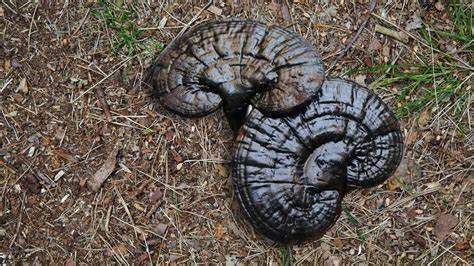
G. sinense - Black Reishi
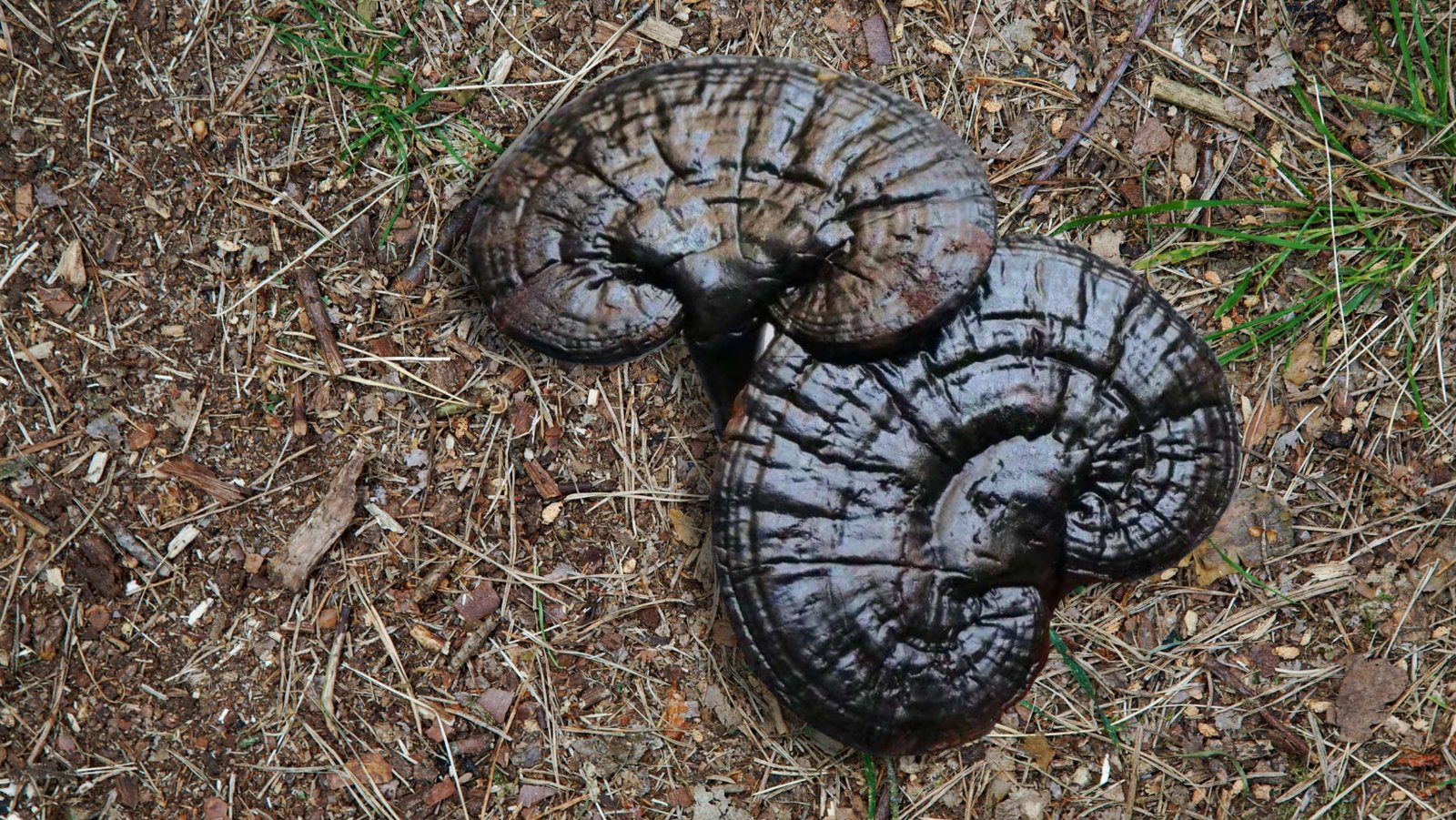
Reishi has been used for a very, very long time, and I think there’s something pretty incredible about getting to look at a mushroom with thousands of years of history through the lens of modern research.
There’s a lot we still don’t know. Much of the research is preclinical, the human evidence is limited in several areas, and even the word Reishi can hide quite a bit of variation in species, preparation, and chemistry. I think knowing all of that makes the mushroom more interesting, not less.
I hope this gave you a better sense of what we know about Reishi, what we’re still figuring out, and why I will now be taking a small vacation from reading papers about Ganoderma. :)
If you enjoyed this article, you can like, comment, or share it with someone else who might enjoy nerding out about medicinal mushrooms with us. Paid subscribers also have access to the growing PDF library and the rest of our herbal resources.
Until next time,
Agy | The Buffalo Herbalist
Bibliography
Wachtel-Galor, S., Yuen, J., Buswell, J. A., & Benzie, I. F. F. (2011). Ganoderma lucidum (Lingzhi or Reishi). Herbal Medicine - NCBI Bookshelf. https://www.ncbi.nlm.nih.gov/books/NBK92757/
Hennicke, F., Cheikh-Ali, Z., Liebisch, T., Maciá-Vicente, J. G., Bode, H. B., & Piepenbring, M. (2016). Distinguishing commercially grown Ganoderma lucidum from Ganoderma lingzhi from Europe and East Asia on the basis of morphology, molecular phylogeny, and triterpenic acid profiles. Phytochemistry, 127, 29–37. https://doi.org/10.1016/j.phytochem.2016.03.012
Hobbs, C. (2021). Christopher Hobbs’s Medicinal Mushrooms: The Essential Guide: Boost Immunity, Improve Memory, Fight Cancer, Stop Infection, and Expand Your Consciousness. Storey Publishing, LLC.
Jin, X., Beguerie, J. R., Sze, D. M., & Chan, G. C. (2016). Ganoderma lucidum (Reishi mushroom) for cancer treatment. Cochrane Database of Systematic Reviews, 2019(1), CD007731. https://doi.org/10.1002/14651858.cd007731.pub3
Zhou, L., Cao, Y., Wu, S., Vlasák, J., Li, D., Li, M., & Dai, Y. (2014). Global diversity of the Ganoderma lucidum complex (Ganodermataceae, Polyporales) inferred from morphology and multilocus phylogeny. Phytochemistry, 114, 7–15. https://doi.org/10.1016/j.phytochem.2014.09.023
Love this! Reminds me of the foraged chicken of the woods mushroom recipe I made inspired from my Appalachian Trail thru hike. check it out:
https://thesecretingredient.substack.com/p/what-my-great-grandfathers-memoir
Do you have a PDF for this mushroom?