


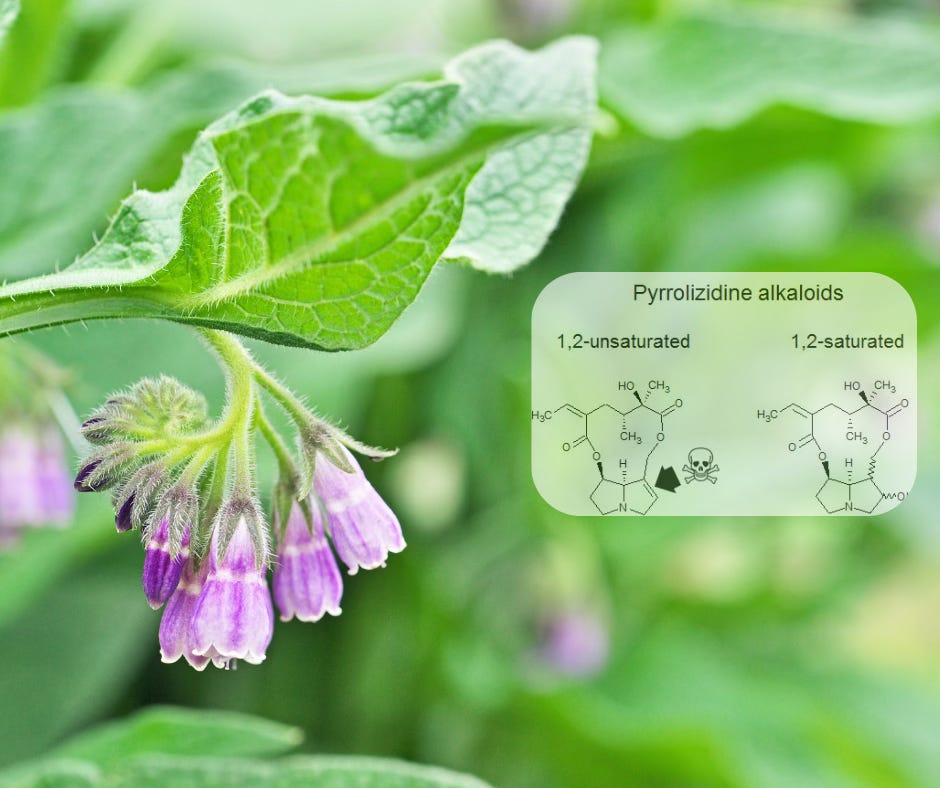
Somewhere early in your herbal education, usually around the time you’re learning about topicals and comfrey, you get handed a huge, glaring red STOP SIGN about ever taking the plant internally, along with some vague hand-waving about pyrrolizidine alkaloids. (How are you even supposed to pronounce that? Don’t ask me.)
We’re told it’s super toxic to the liver, just don’t consume it internally. Okay. Got it. External use only. You learn the same lesson and memorize the same buzzwords for coltsfoot and for borage, not reallllyyyy fully understanding why, but you’re not going to be the one to give someone a toxic spoonful, so you obediently oblige. As you should.
But this piece is for those of you who took the caution to heart and then also asked, bad how? To what? Why only internal ingestion? Those are the questions that separate someone who can repeat a warning from someone who actually understands the plant in front of them, and they happen to have real, knowable answers.
