


When herbalists say that weeds are medicine, dandelion is usually the first to come to mind. And rightfully so. She’s a golden lioness, bold and resilient, full of life. From the brightness of her petals to the deep strength of her roots, every part of dandelion carries medicine.
But have we paused to notice who’s growing quietly beside her?
Plantain doesn’t demand your attention. She doesn’t tower above the grasses or bloom in brilliant color. But if you’ve ever walked along a sidewalk, lingered in an overgrown garden, or wandered a trail after the rain, you’ve probably seen her. She’s the one keeping close to the ground, anchoring herself where others don’t dare to grow. And she’s been offering healing quietly and consistently for centuries.
Plantain is one of the first herbs many herbalists learn to identify. She shows up almost everywhere once the weather warms—across lawns, fields, and disturbed soils. And that’s part of her teaching. She reminds us that medicine doesn’t always need to be rare or exotic. Sometimes it’s right under our feet, waiting for us to slow down and notice.
The Plantago genus contains over 200 species worldwide, with the most familiar being Plantago major (broadleaf plantain), Plantago lanceolata (narrowleaf or ribwort plantain), and Plantago ovata, better known as psyllium. Each has its own botanical quirks, but their gifts are surprisingly consistent. In Traditional Chinese Medicine, several plantain species are used to support the urinary tract and clear heat. In Western folk medicine, plantain is a classic go-to for wound care, tissue repair, and internal irritation.
Plantago major is likely the one you’ve seen nestled into compacted earth. Its broad, rounded leaves form a basal rosette and are marked with strong parallel veins you can trace with your finger. It flowers on a tall, unassuming spike and produces thousands of tiny seeds that cling to feet, fur, and fabric. It prefers places where the soil has been disturbed, which I’ve always found meaningful. Plantain knows how to root into difficult ground and draw up exactly what it needs.
That’s the heart of her medicine. She’s cooling, soothing, and deeply restorative—especially for tissues that are raw, inflamed, or overworked. Whether chewed fresh and applied to a sting or simmered into tea for internal support, plantain works with quiet precision. And while she may not have the dramatic reputation of other herbs, she earns her place as one of the most reliable and generous plants in the herbalist’s toolkit.
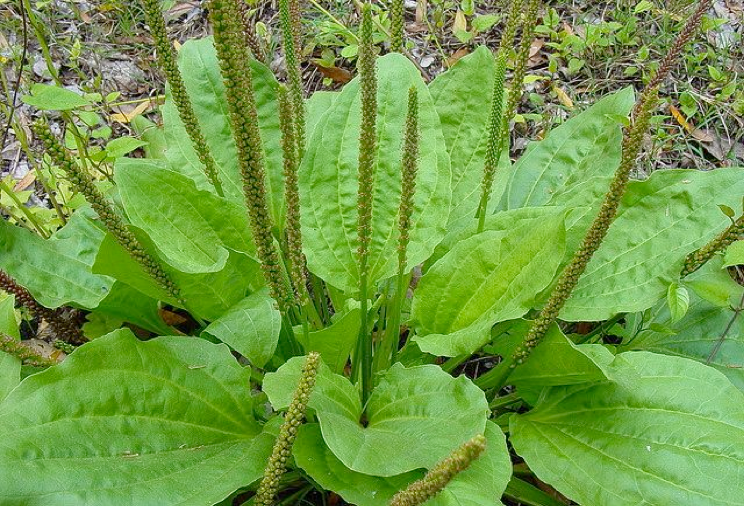
P. major
Plantain Through Time: A Legacy of Healing
Plantain has been walking beside us for a long time.
Pollen records suggest that Plantago major made its way into the Nordic regions nearly 4,000 years ago, arriving alongside the earliest cultivated fields. As human populations migrated, plantain followed, sometimes intentionally and sometimes simply by hitching a ride. In North America, Indigenous peoples took note of its sudden appearance along colonial routes and began calling it “White man’s footprint,” a name that speaks volumes about its uncanny ability to show up wherever the soil had been disturbed.
Its Latin name, Plantago, comes from planta, meaning the sole of the foot — a fitting image for a plant that follows in our tracks, quietly anchoring itself in the places we’ve altered.
Though often overlooked today as just another weed, P. major has a long and respected history in traditional medicine. In Scandinavia, it’s still known as groblad, meaning “healing leaf,” and remains one of the most common go-to remedies for minor wounds. Dioscorides, the Greek physician and herbalist, wrote about plantain in the first century in De Materia Medica, recommending the leaves for dog bites. Norse sagas mention its use among Vikings for treating battlefield injuries. During the Islamic Golden Age, physician and botanist Ibn al-Baitar echoed the Greeks in praising its wound-healing properties. And in medieval Denmark, Henrik Harpestreng wrote that plantain could “heal all that was torn,” advising its use with honey for wounds or boiled with butter to support internal repair.
The herb also found its way into Western European herbals. Shakespeare slips in a line about it in Romeo and Juliet when Romeo casually notes, “Your plantain leaf is excellent for that,” referring to a broken shin. In 1648, Simon Paulli’s Flora Danica described plantain as so familiar that even children knew how to use it. The veins were stripped from the leaf, and the soft green tissue applied directly to wounds. For minor cuts, squeezing the juice was often all that was needed. Just a year later, Nicholas Culpeper would assign plantain to the planet Venus and write that it could heal a wide range of “martial diseases,” those involving bleeding, heat, and trauma.
From Viking battlefields to backyard scrapes, plantain has stood quietly as a constant, healing presence. And the more we learn about it, the more it becomes clear — this is a plant that has never stopped showing up for us.
So yes, it’s a common plant. But calling it “just a weed” misses the point. Plantain is medicine. It's history. It’s a teacher in disguise.
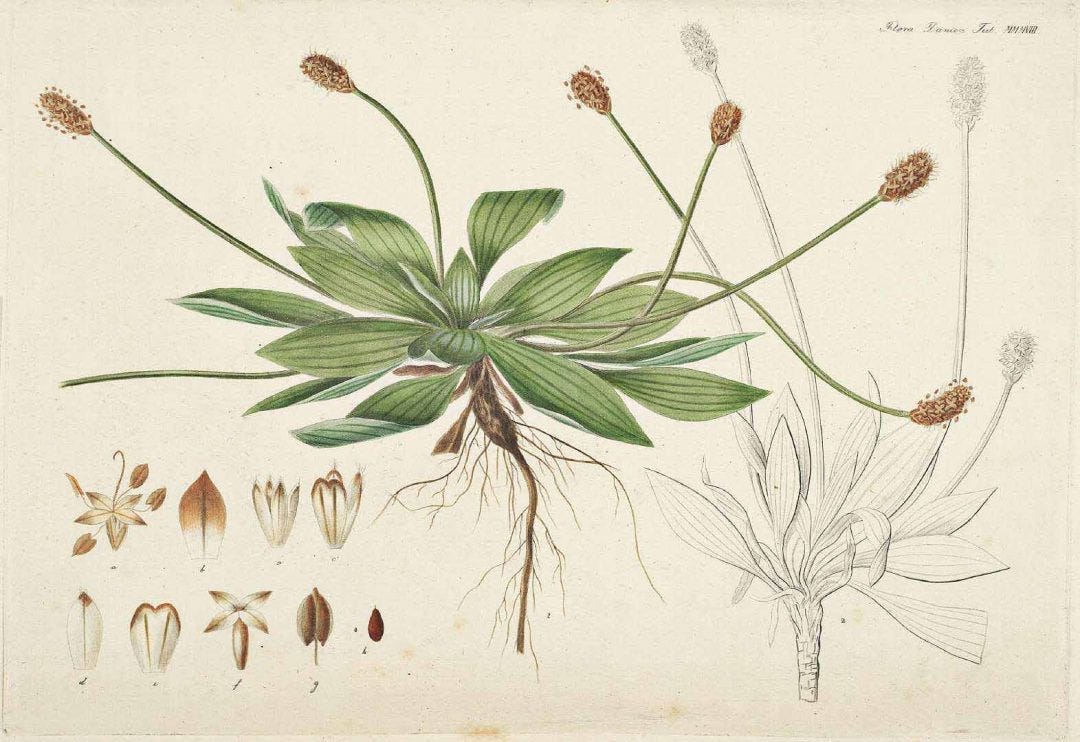
P. lanceolata depiction
Meet the Plantains: A Botanical Overview
So what exactly is plantain, beyond being that “weed” growing between sidewalk cracks?
The Plantago genus belongs to the Plantaginaceae family and includes over 200 species found all around the world. It’s an adaptable little herb, sometimes annual, sometimes perennial, with both stemmed and stemless forms. Plantain has been used across cultures in folk medicine, traditional healing systems, and modern functional foods.
Some species you might come across include Plantago major (broadleaf plantain), Plantago lanceolata (narrowleaf plantain), Plantago ovata (psyllium), Plantago asiatica, and Plantago depressa. In Traditional Chinese Medicine, plantains like P. asiatica or P. major are known as Cheqiancao and are used for concerns involving energy stagnation, urinary function, and heat-clearing. In Brazil, it’s called Transagem or Erva-de-orelha and is known for wound healing and anti-inflammatory uses. And then there's P. ovata, or psyllium, widely studied and used in gut health products like Metamucil to support digestion, cholesterol levels, and blood sugar regulation.
That said, we won’t be diving into all 200-plus species here. We’re going to keep things grounded and focus on the two you’re most likely to find in your own yard. In fact, if you’re reading this at home, take a look outside — there’s a good chance one of them is already growing near your feet.
Plantago major (Broadleaf Plantain)
This is the one you’ve likely seen around the neighborhood. The leaves grow in a basal rosette, wide and oval with deep, straight veins you can run your finger along. It’s a hardy perennial that usually stays under 15 cm tall, but the size can vary depending on where it’s growing. The flowers are small and greenish, clustered densely on tall, slender spikes that rise from the center. Each plant can produce up to 20,000 seeds. When wet, those seeds become sticky and cling to shoes, paws, and fur, making plantain a master traveler.
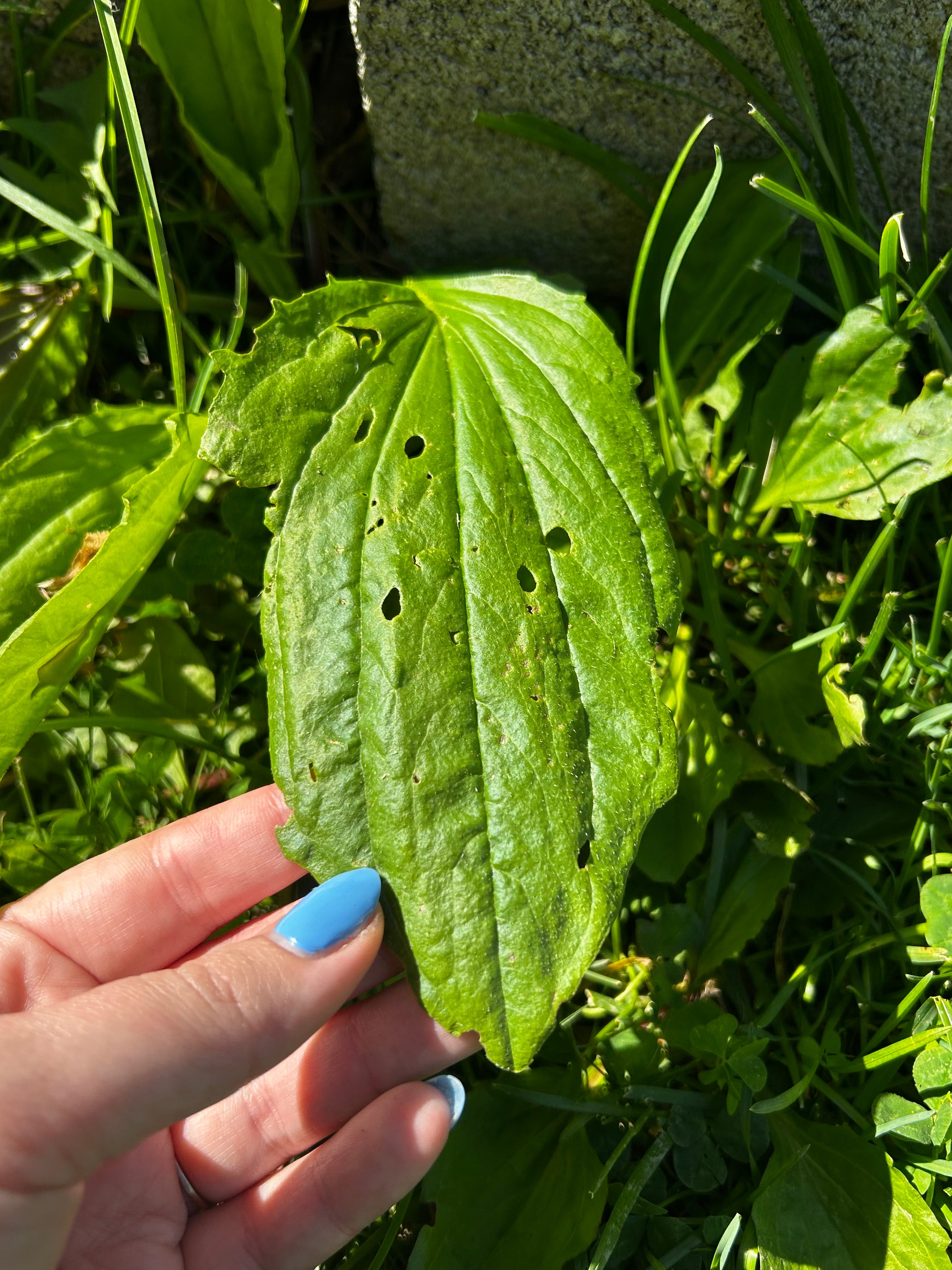
Plantago lanceolata (Narrowleaf Plantain)
This species looks a little different but carries much of the same medicine. Its leaves are long, narrow, and grow low to the ground in that same familiar rosette. The edges may be smooth or gently toothed. Like P. major, it produces a tall flowering spike with tiny, radially symmetrical white flowers and four stamens per bloom. It’s common across New England and much of North America, especially in meadows, walking paths, and anywhere the earth has been disturbed.
Whether you’re looking at broadleaf or narrowleaf, plantain is easy to identify once you know what to look for. Their leaves, rich in mucilage, tannins, and other healing compounds, are often the parts most used, though the seeds and roots also carry their own benefits. The beauty of plantain lies in its simplicity. It grows in the most overlooked places and offers its medicine without asking for much in return.
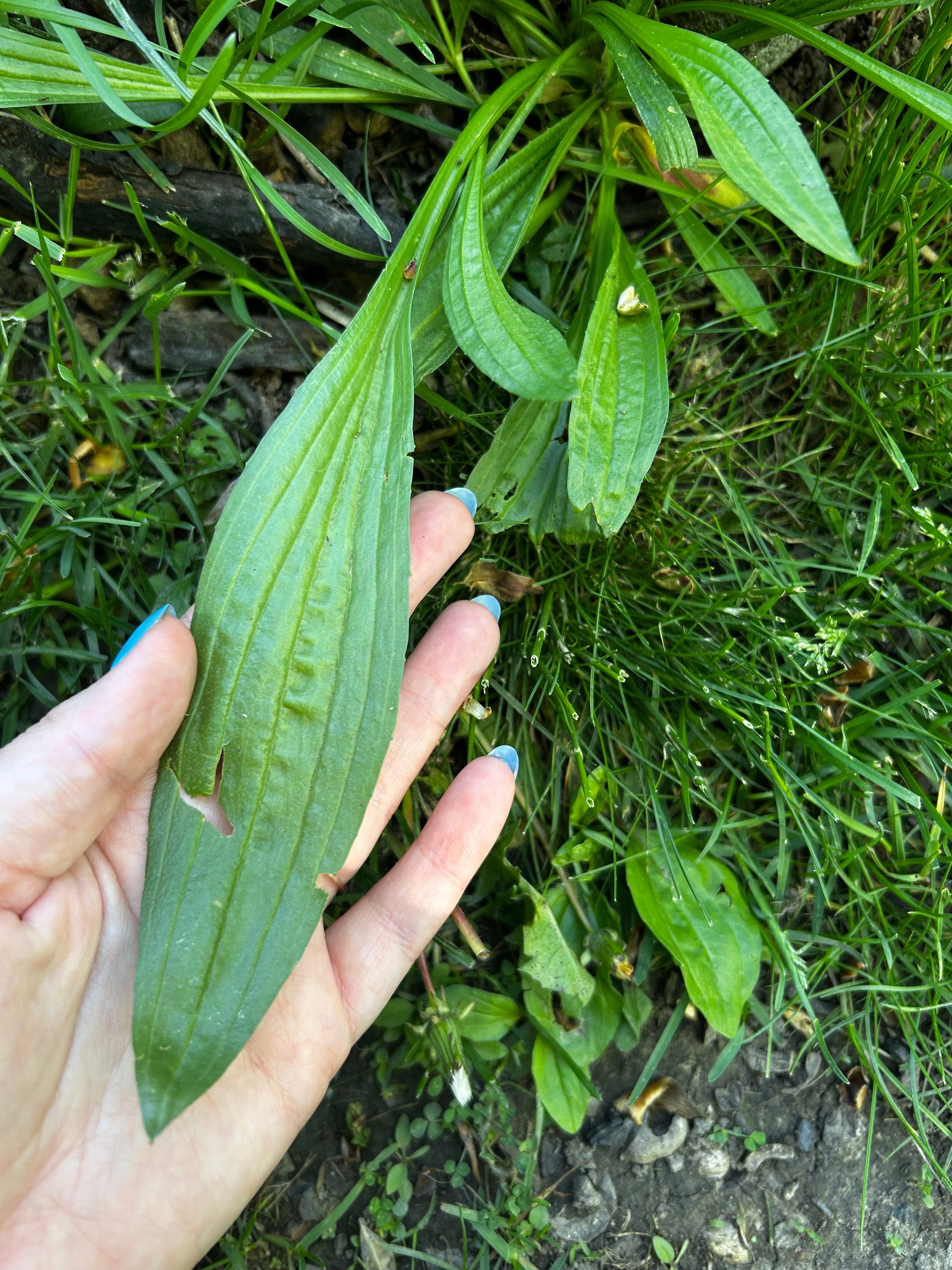
Plantain’s Energetics and Herbal Actions
Plantain’s medicine works quietly, but it runs deep.
Primary actions: vulnerary, expectorant, demulcent, anti-inflammatory, astringent, diuretic, and antimicrobial.
Energetically, the leaf is primarily cooling, moistening, softening, and astringent — a rare combination that allows it to both soothe and tone at the same time. The seed, on the other hand, is more moistening, rich in mucilage and often used to lubricate and support dry tissues, especially in the digestive tract.
In Western energetic terms, plantain is often used to address tissue states like irritation, atrophy, relaxation, and even depression when it presents as damp stagnation or internal putrefaction. It brings tone and clarity where things have gone slack or boggy, physically, emotionally, or spiritually.
Herbalist Matthew Wood describes plantain as cooling, moistening, softening (emollient), and astringent. And while this may seem contradictory at first, that’s part of its magic. It brings balance. It draws out while soothing. It tones while healing.
In Greek medicine, plantain was considered drying due to its ability to draw out pus, infection, and toxins. That remains one of the most common ways it’s used today. You’ve probably heard it called “the band-aid plant,” and for good reason. This is the herb you chew up and slap on a bug bite or scrape when you're out on a hike. In open wounds, it draws out irritants or venom while helping the tissue calm and repair. It’s a first-aid ally that doesn’t need much fanfare. It just gets to work.
Wood also highlights plantain’s use for dirty wounds, where it not only calms inflammation but acts as a pulling agent, helping draw out infection and debris. Its emollient properties soothe the tissues while its astringency supports their recovery.
Internally, plantain has a strong affinity for the respiratory system, particularly in cases of irritating coughs, bronchial infections, or pneumonia. It helps cool and moisten irritated mucosa but also gently dries and pulls excess mucus and fluid from the lungs. It’s especially indicated when the trachea or bronchi are inflamed and there’s an unproductive, irritable cough.
Plantain also supports the urinary system. It’s considered a “nourishing diuretic,” a term coined by herbalist William LeSassier. Rather than forcing fluid out of the body, plantain works gradually and supportively, strengthening kidney tone over time.
And finally, the seeds of Plantago psyllium are a staple in modern Western medicine as a source of fiber (via the husk) and mucilage (via the seed). They’re incredibly effective at supporting gut motility, easing constipation, and nourishing the mucous membranes of the GI tract. These seeds swell in contact with water, forming a soothing gel that helps tone and protect the intestines while improving elimination.
Plantain is a true tissue healer. Whether you’re applying it to a wound, drinking it for dry lungs, or taking the seeds to ease an inflamed gut, its energetics speak the same language: calm, draw, soothe, restore.
Plantain and Its Antimicrobial Power
Plantain’s reputation as a “band-aid plant” isn’t just folklore. Modern research is beginning to confirm what herbalists have known for centuries. The leaves and seeds of Plantago major are rich in compounds like plantamajoside, aucubin, flavonoids, phenols, tannins, and terpenoids—all of which show the ability to fight off a wide range of microbes, including some that are resistant to antibiotics.
Studies have shown Plantago major to be effective against common pathogens like Staphylococcus aureus, Escherichia coli, and Pseudomonas aeruginosa. Alcohol-based extracts, especially those made with ethanol and methanol, have shown notable antibacterial activity. Water and hydroalcoholic extracts have also been studied, particularly in relation to respiratory and oral pathogens like Streptococcus mutans, Candida albicans, and Fusobacterium nucleatum.
Plantain's seeds, particularly from Plantago psyllium, also appear to have antimicrobial properties, especially when prepared with alcohol or acetone-based solvents. These extracts were found to inhibit the growth of certain strains associated with digestive and oral infections.
Researchers attribute these effects to the plant’s phytochemicals, which seem to disrupt bacterial membranes, interfere with DNA and protein synthesis, and inhibit enzymes essential for microbial survival. Some studies have even explored using plantain in combination with silver or zinc nanoparticles, enhancing antibacterial effects by creating oxidative stress that breaks down bacterial cells.
What’s particularly interesting is the synergistic effect observed when plantain is combined with antibiotics. This has shown promise in fighting tougher, antibiotic-resistant strains like Acinetobacter baumannii, and suggests that plantain may have a place in more integrative or supportive antimicrobial approaches moving forward.
While most of this research has been conducted in vitro, meaning outside the human body, the results align beautifully with how plantain has been traditionally used—for wound care, infection, and tissue healing. It’s a powerful reminder that the medicine growing under our feet still holds relevance in a world that’s rapidly changing.
Plantain for Inflammation and Wound Healing
Plantain isn’t just a quick remedy for bug bites. It’s a powerful plant with a long history of calming inflammation and helping the body heal, inside and out. And now, modern research is starting to catch up with what traditional herbalists have known all along.
Soothing Inflammation
Studies have shown that Plantago major helps reduce inflammation in a wide range of situations: from irritated skin and inflamed gums to liver stress and gut inflammation. Extracts made from the leaves, using water, alcohol, or other natural solvents, have been tested in both lab and animal studies, and they consistently show a calming effect on the body’s inflammatory response.
Researchers have found that plantain reduces key inflammatory messengers in the body like TNF-α, IL-1β, and COX-2, all of which play a role in swelling, pain, and tissue damage. In one study, its anti-inflammatory effect was even compared to a common over-the-counter drug (indomethacin), and while not quite as strong, plantain still performed impressively.
What’s particularly interesting is that plantain’s ability to soothe inflammation seems to depend on how it’s prepared and at what dose. Water extracts appear to carry some unique, gentle compounds (possibly polysaccharides) that help calm sensitive tissues, especially in the mouth and gut. Alcohol-based extracts tend to carry more of the plant’s polyphenols and flavonoids, which are stronger anti-inflammatory agents.

P.major
Helping the Body Heal
Plantain has also been studied for its wound-healing effects, and the results are impressive. Whether applied as a gel, extract, or dressing, Plantago major helps:
Speed up wound closure
Support the growth of new tissue
Increase collagen production
Boost blood flow to the healing area
These effects have been seen in everything from burns and cuts to diabetic ulcers and even arthritic tissue damage.
In one clinical study, a gel made from 10% Plantago major leaf extract was applied to diabetic foot ulcers. After just two weeks, the wounds had healed significantly more than in the control group, and many patients experienced full closure. Other studies show that wounds treated with plantain not only closed faster but formed healthier, more complete skin tissue.
Its key compounds, including plantamajoside, aucubin, ursolic acid, and flavonoids like baicalein and hispidulin, are thought to work together to calm inflammation, fight off microbes, and support cell growth.
Some of them help reduce histamine and prostaglandins (which contribute to redness and swelling), while others directly encourage fibroblasts, the cells that help repair tissue, to get to work.
Researchers have even created plantain-infused dressings and sprays using advanced materials like nanofibers and microemulsions. These have shown strong healing benefits and are being explored as potential alternatives to standard treatments for infected wounds or antibiotic-resistant bacteria.
Bottom line?
Plantain supports the healing process from multiple angles. It calms the immune system’s overreaction, reduces pain and swelling, protects cells from oxidative damage, and encourages tissue regeneration. All from a plant you can find growing through sidewalk cracks.
It’s no wonder herbalists have leaned on this one for generations.
Medicine Beneath Our Feet
Plantain doesn’t clamor for attention. She doesn’t dazzle with color or perfume the air. And maybe that’s why we overlook her. In a world that rewards the loudest voice or the flashiest bloom, plantain teaches us the power of quiet presence.
She shows up where things have been trampled, disturbed, or left behind. She weaves herself into compacted soil and says, “This, too, can heal.” And maybe that’s the most important medicine of all — not just for the skin, lungs, or gut, but for how we move through the world.
What else are we walking past every day? What healing waits quietly in the corners of our lives, in the cracks of sidewalks, or the patches of wild at the edge of things?
If you take anything from this article, let it be this:
Healing doesn’t always come with a label. And some of the greatest healers go unnoticed, growing low to the ground.
So, the next time you see those ribbed leaves at your feet, don’t step over them.
Say hello.
You’ve just met one of herbalism’s oldest, wisest allies.
If you enjoyed this deep dive into plantain, I’ve created a printable PDF monograph exclusively for members of The Buffalo Herbalist Community. It’s designed to be a companion piece - something you can save, print, and return to as you continue learning.
Whether you're adding to your materia medica binder, building your field ID skills, or just love having herbal wisdom in your hands, this resource was made with you in mind.
Inside, you'll find:
• Botanical identification tips
• Herbal actions and energetics
• Traditional and modern uses
• Preparation methods
• A summary-style materia medica you can print and keep
Paid members of The Buffalo Herbalist Community get access to this monograph plus a growing collection of study guides, printable downloads, exclusive articles, and more. It’s all part of making herbal education more tangible, more rooted — and more yours.
You’ll find it after the Bibliography.
Until next time,
-Agy | The Buffalo Herbalist
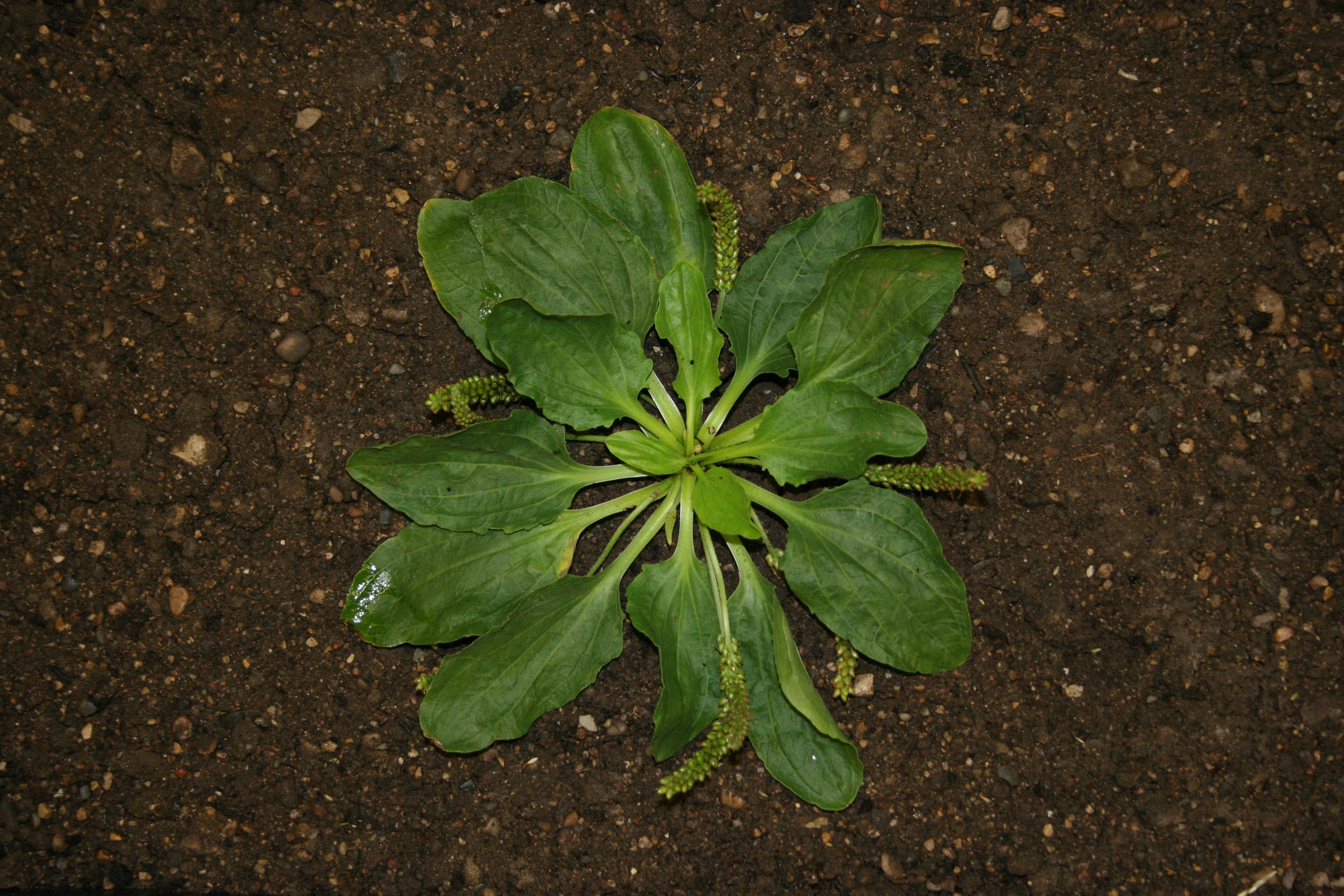
P. major
Bibliography
Zhakipbekov, K., Turgumbayeva, A., Issayeva, R., Kipchakbayeva, A., Kadyrbayeva, G., Tleubayeva, M., Akhayeva, T., Tastambek, K., Sainova, G., Serikbayeva, E., Tolenova, K., Makhatova, B., Anarbayeva, R., Shimirova, Z., & Tileuberdi, Y. (2023). Antimicrobial and Other Biomedical Properties of Extracts from Plantago major, Plantaginaceae. Pharmaceuticals, 16(8), 1092. https://doi.org/10.3390/ph16081092
Adom, M. B., Taher, M., Mutalabisin, M. F., Amri, M. S., Kudos, M. B. A., Sulaiman, M. W. a. W., Sengupta, P., & Susanti, D. (2017). Chemical constituents and medical benefits of Plantago major. Biomedicine & Pharmacotherapy, 96, 348–360. https://doi.org/10.1016/j.biopha.2017.09.152
Samuelsen, A. B. (2000). The traditional uses, chemical constituents and biological activities of Plantago major L. A review. Journal of Ethnopharmacology, 71(1–2), 1–21. https://doi.org/10.1016/s0378-8741(00)00212-9
Zhang, S., Hu, J., Sun, Y., Tan, H., Yin, J., Geng, F., & Nie, S. (2021). Review of structure and bioactivity of the Plantago (Plantaginaceae) polysaccharides. Food Chemistry X, 12, 100158. https://doi.org/10.1016/j.fochx.2021.100158
Plantago lanceolata (English plantain): Go Botany. (n.d.). https://gobotany.nativeplanttrust.org/species/plantago/lanceolata/
Hoffmann, D. (2003). Medical Herbalism: The Science and Practice of Herbal Medicine. Healing Arts Press.
Maier, K. (2021). Energetic Herbalism: A Guide to Sacred Plant Traditions Integrating Elements of Vitalism, Ayurveda, and Chinese Medicine. Chelsea Green Publishing.
Wood, M. (2008). The Earthwise Herbal, Volume I: A Complete Guide to Old World Medicinal Plants. North Atlantic Books
The Buffalo Herbalist Community - find your PDF study materials here:


