


Magnesium deficiency is something many of us have heard about, but few people really understand what it feels like inside the body. It rarely announces itself in a dramatic way. It tends to slip in quietly, settling into the nervous system, the muscles, the heart, the breath. Most people describe it as a kind of fraying at the edges. Sleep feels lighter. The mind feels a little less steady. The body holds tension in places that used to soften on their own. Small things feel bigger than they should.
As herbalists, we see these patterns all the time.
They show up in clients who are overwhelmed or overstretched. They show up in people who live mostly on processed food or who forget to drink water until late afternoon. They show up in the people who carry the weight of everyone else. Stress alone can burn through magnesium at a speed the body struggles to keep up with. Modern life does not always make space for replenishment.
Magnesium supports more than three hundred pathways in the body, so when levels begin to slide, the signs can scatter across multiple systems. The nervous system becomes more reactive. Muscles tighten. Blood sugar shifts more easily. The heart beats a little harder under pressure. None of these signs are specific on their own, which is why magnesium deficiency often goes unnoticed for far too long.
This is where herbalism offers something unique. We do not look for single symptoms or chase single nutrients. We look for patterns. We look for the story the body is trying to tell. When someone describes restless sleep, tension that does not release, irritability they cannot explain, or a feeling of running on fumes, magnesium deficiency may be part of that landscape. The goal is to understand the terrain rather than the isolated symptom.
Working with magnesium through plants is both practical and nourishing. It is not about replacing medical treatment or ignoring supplementation when it is appropriate. It is about remembering that the body responds to whole plants in ways that reach beyond a single mineral. This is a chance to look at magnesium deficiency through a deeper, more compassionate lens. A lens that honors physiology and also honors the lived experience of being a person who feels depleted.
This article is an invitation into that space. Let us look closely at what magnesium deficiency really is, why it is so common today, and how we as herbalists can support the body with steadiness and care.

A Brief Return to Magnesium
Before we talk about deficiency, I want to come back to what magnesium actually does inside the body. We mention this mineral often, yet its presence is so foundational that it becomes almost invisible. Magnesium supports hundreds of biochemical processes. It steadies the rhythm of the heart. It helps blood vessels stay flexible and responsive. It guides enzymes as they create energy, repair tissues, and keep the nervous system from tipping into overwhelm. When magnesium is available in the right amounts, the entire system moves with more ease. There is a softness to the way the body responds to the world.
How the Body Welcomes and Stores Magnesium
Most magnesium begins its journey in the small intestine, where the body quietly absorbs what it can. This process depends on more than diet alone. It is shaped by gut health, vitamin D status, and the general state of digestion. When the body is nourished and the gut environment is healthy, absorption feels smooth. When digestion is irritated or inflamed, magnesium has a harder time finding its way inward.
Once absorbed, magnesium settles itself throughout the tissues. The bones hold the largest portion. Muscles and organs hold nearly all the rest. Only a tiny amount circulates in the blood. This is why blood tests so often miss the reality of someone’s magnesium status. The deeper story is happening inside cells, stored in places we cannot easily measure.
How the Body Keeps Magnesium in Balance
The kidneys carry most of the responsibility for maintaining magnesium balance. They filter it constantly and decide, moment by moment, how much to keep and how much to release. Hormones help shape this rhythm. Parathyroid hormone encourages the kidneys to hold onto magnesium. Calcitonin supports that retention. Vitamin D improves absorption in the gut. Magnesium also dances closely with potassium and calcium, which means that changes in magnesium levels can shift the entire electrolyte landscape.
Even the body’s acid-base balance affects magnesium. In more acidic states, the body tends to release magnesium through the urine. In more alkaline states, it holds onto it. Every part of this system reminds us that magnesium homeostasis is not static. It responds to stress, digestion, hormones, hydration, and the pace at which someone is moving through their daily life.
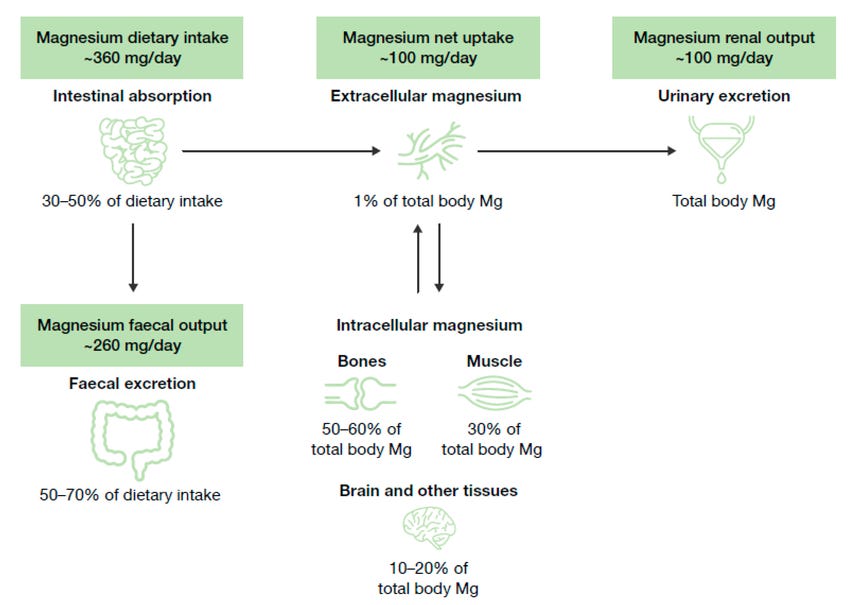
Magnesium Homeostasis
When the Well Runs Low: Understanding Magnesium Deficiency
Magnesium deficiency is far more common than most people realize, yet it often moves quietly in the background. A review stated that “hypomagnesemia is a relatively common occurrence in clinical medicine,” and that it often goes unrecognized simply because clinicians are not routinely checking for it. Magnesium levels are rarely evaluated, and many do not realize how many different physiological states can trigger either deficiency or excess.
Older estimates suggested that marginal magnesium deficiency affected 15–20% of people in developed countries. More recent data show that 10–30% of the general population has subclinical magnesium deficiency when serum levels fall below 0.80 mmol/L.
A national survey in 2006 found low serum magnesium in 36.3% of women and 31% of men in Mexico, and the authors noted a “significant prevalence of deficiencies.”
Other global data suggest that up to 20% of the population may have low serum magnesium at any given time. A systematic review of 37 articles also found that magnesium deficiency is a widespread concern in older adults.
Some of the highest rates appear in specific populations.
One study found magnesium deficiency in 84% of postmenopausal women with osteoporosis. Another reported that 42% of otherwise healthy university students in Brazil had subnormal magnesium status, with average daily intake around 215 mg. Magnesium depletion was found in 75% of patients with poorly controlled type 2 diabetes when measured through serum levels, and in 30.8% when looking at intracellular levels.
What makes this more complex is that magnesium deficiency does not always show up on a standard blood test. One study states that “the magnesium content of the plasma is an unreliable guide to body stores,” emphasizing that muscle tissue gives a much clearer picture of true magnesium status.
Another found that even when serum magnesium looks normal in people with hypertension or heart disease, tissue levels of magnesium and potassium are often significantly depleted. Muscle biopsy revealed deficiency in about 50% of these patients. Oral magnesium supplementation helped restore healthier potassium and magnesium status.
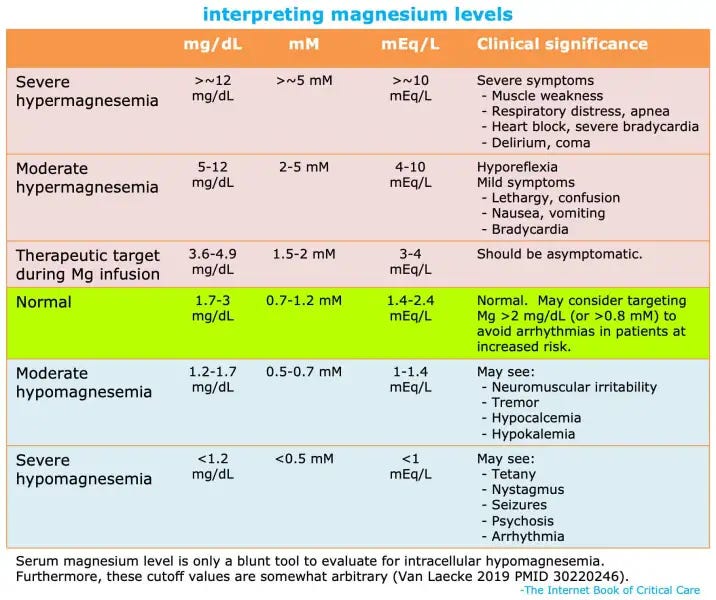
Magnesium Levels
This brings us to an important distinction:
There are two forms of nutrient deficiency.
Frank deficiency, which causes clear, obvious symptoms (like scurvy).
Subclinical deficiency, which slowly alters physiology without presenting a single dramatic sign.
Subclinical magnesium deficiency is the one that concerns us most. It is much harder to detect, often missed by routine labs, and strongly associated with chronic diseases, including cardiovascular disease and increased early mortality. Some researchers have even suggested that subclinical magnesium deficiency should be considered a public health crisis.
Why Magnesium Slips So Easily
There are many reasons magnesium stores begin to fall. Some are medical, such as kidney impairment, alcohol overuse, or malabsorption conditions like Crohn’s disease, ulcerative colitis, celiac disease, or chronic gastroenteritis. Because magnesium is absorbed in both the small intestine and the colon, any damage to these areas can disrupt uptake.
Other conditions also contribute: renal tubular acidosis, diabetic acidosis, prolonged diuresis, acute pancreatitis, hyperparathyroidism, and primary aldosteronism. A meta-analysis of 13 studies and nearly 5,500 participants found significantly lower magnesium levels in individuals with metabolic syndrome. Children with type 1 diabetes also show intracellular magnesium deficiency, likely due to osmotic diuresis and damage to the renal tubules. Patients with type 2 diabetes often have lower magnesium compared with healthy controls (0.79 mmol/L vs 0.88 mmol/L).
Even well-intended supplementation can play a role. Supplementing with calcium may reduce magnesium absorption. High vitamin D intake can increase calcium absorption to the point that it depletes magnesium and raises the risk of calcification. Certain medications, especially diuretics, also contribute to magnesium loss.
Athletes are another at-risk group. More than 42% of young athletes in one study were magnesium-deficient based on retention after an oral load test. Physical activity increases urinary and sweat losses, and at least 15 mg of magnesium is lost in sweat each day, often more in heat or intense training. One study states that “athletes suffer from a magnesium deficiency, partially due to physical exercise.”
All of this paints a consistent picture:
Modern life pulls magnesium from the body more easily than most of us can replenish.
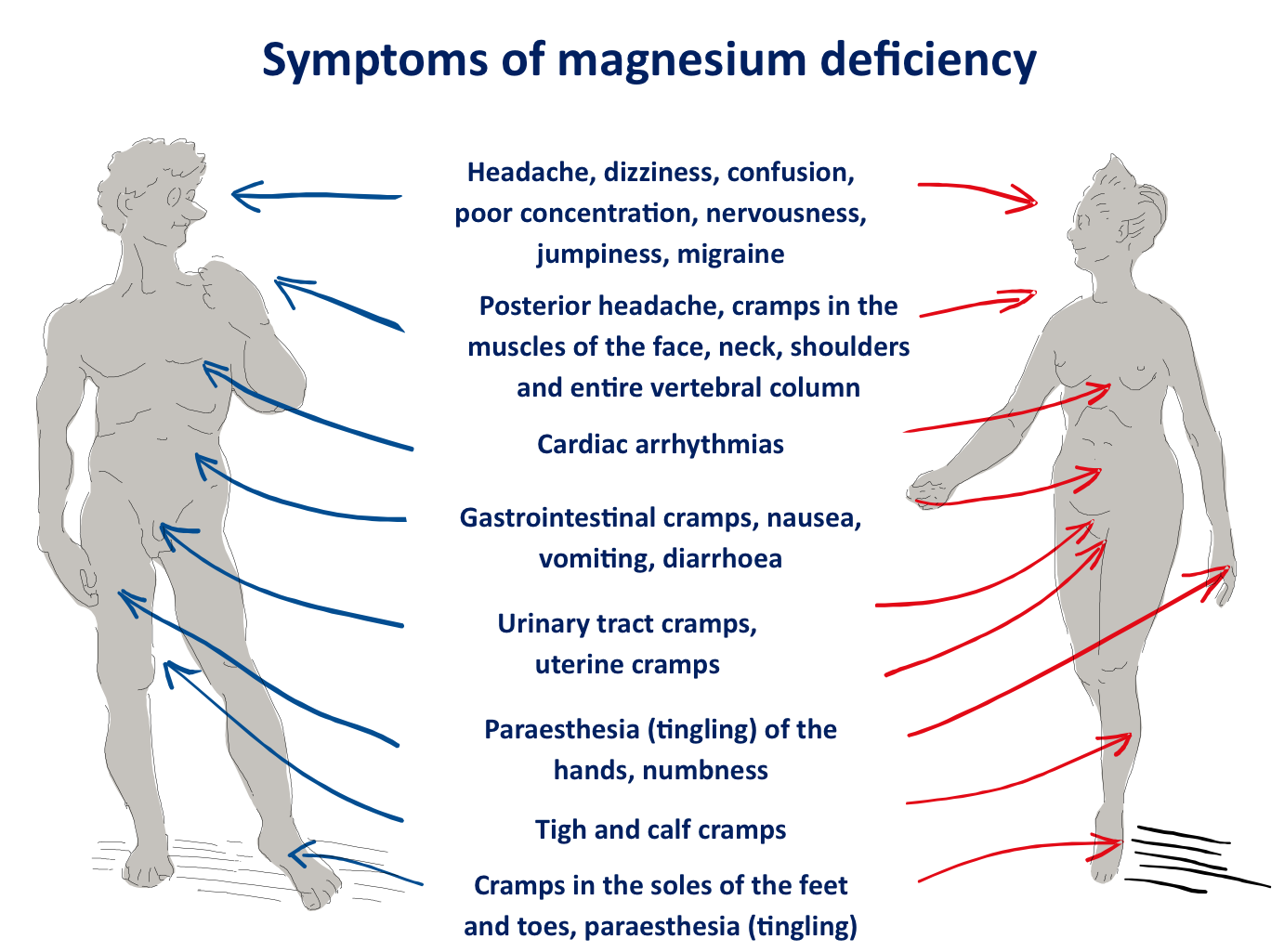
Symptoms of Magnesium Deficiency
How Magnesium Deficiency Shows Up in the Body: An Herbalist’s View
Magnesium deficiency rarely announces itself in a neat or linear way. It moves through the body as a pattern rather than a single symptom, and this is where herbalists have a real advantage. We are trained to notice the subtle shifts that unfold when someone is slowly slipping out of balance. We listen for the story underneath the surface.
When magnesium begins to run low, it tends to show up in the nervous system first. People describe sleep that feels light or easily interrupted. They describe a mind that grips onto worries instead of letting them pass. They describe irritability that feels unfamiliar or out of proportion. All of this is the body asking for steadiness, for a quieter internal rhythm, for the mineral that helps the brain and stress system find their baseline.
Muscles often speak next. Tightness that lingers. Cramps that appear without warning. A sense of holding tension even during rest. Magnesium is needed for muscles to release after they contract, so when someone says they feel wound up or unable to unwind, magnesium becomes a likely part of the picture.
The heart can also tell us something. Magnesium supports healthy rhythm, vascular tone and the way the cardiovascular system handles daily pressure. When levels drop, some people notice that their heart feels more reactive than usual. Not alarming, simply more sensitive. Others may notice that their blood pressure shifts in ways it never used to.
Blood sugar patterns are another clue. Magnesium plays a role in insulin sensitivity, and when the body is running low, people may experience more cravings, quicker crashes, or shakiness between meals. None of these changes point to magnesium on their own, but they become meaningful when placed within a larger pattern.
Do you see how this is slowly becoming a look at the whole person rather than levels on a lab test?

Seeing the Pattern Rather Than the Part
And then there is the overall tone of a person’s life. People with chronically low magnesium often describe feeling worn down or stretched thin. They are functional, but there is a sense that their reserve has been running lower than it should. Their body is managing, but it is working harder than necessary because one of its foundational minerals is not consistently available. They are constantly wondering, “What is wrong with me?”.
This is the kind of landscape herbalists pay attention to.
Instead of isolating one symptom, we look at the whole pattern. Instead of relying entirely on a lab value, we listen to the lived experience. When all of these threads weave together, magnesium deficiency becomes easier to recognize.
Magnesium depletion is also made worse by the realities of modern life. High stress, irregular eating, highly processed foods, long workdays, caffeine, alcohol, and certain medications all contribute to magnesium loss or poor absorption. The body can only be resilient when the raw materials for that resilience are present.
When you begin to notice this particular signature in your clients or yourself, the next step is not to diagnose (because we can’t do that!!) but to support.
This is where plant medicine begins to shine.
A More Complete Path Toward Repletion
Herbalism approaches magnesium deficiency by tending the systems that shape it. Stress, digestion, sleep and nourishment all influence how much magnesium the body holds and how quickly it loses it. By pairing magnesium-rich plants with nervines, adaptogens, bitters and restorative tonics, we help the body reclaim balance from multiple angles.
This is not about isolating a nutrient. It is about rebuilding the terrain that allows the body to use magnesium in the ways it truly needs.

How Herbalists Approach Magnesium Deficiency
Before we zoom in on deficiency itself, it helps to remember that magnesium rarely functions as an isolated nutrient in plant medicine.
In whole herbs, magnesium arrives alongside fibers, minerals, polyphenols, and compounds that shape digestion, absorption, and nervous system tone. This is why plant-based magnesium support often feels more nourishing and sustainable. It works with physiology rather than around it.
Last article we explored nettle, spearmint, and cacao, three plants that naturally offer magnesium while also supporting broader patterns like tension, low-grade fatigue, and stress recovery. Rather than repeat those details here, you can revisit them below.
👉 Magnesium Rich Herbs: Nourishment Through Nettle, Spearmint, and Cacao
With that foundation, we can now step into a deeper look at what happens when magnesium levels begin to slip and why herbalists encounter this pattern so frequently.
How Stress Pulls on Magnesium
Magnesium plays an essential role in regulating the stress response. It influences glutamatergic and GABAergic signaling, smooth muscle relaxation, vascular tone, and HPA axis stability. When the body encounters stress, magnesium is one of the first minerals to shift.
Acute Stress and the First Physiological Shift
Research shows that acute stress causes magnesium to move from inside the cells into the bloodstream. This has been documented repeatedly in animal studies. Cats exposed to catecholamines, potassium poisoning, or blood withdrawal showed an immediate rise in serum magnesium. Noise-stressed guinea pigs and rats displayed the same pattern.
This increase is temporary. After the initial response, the body begins to lose magnesium through the kidneys. The result is a net loss.
When Stress Becomes Chronic
Chronic stress has a different signature. Magnesium continues to mobilize, but the body cannot keep up with the demand. Reserves in bone and soft tissue thin over time, and the mineral that usually helps temper excitatory pathways becomes less available.
Human research echoes this.
Magnesium levels drop during prolonged exam periods, chronic noise exposure, sleep restriction, and ongoing psychological stress. One study found increased urinary magnesium loss that continued for nearly two days after the stressor ended. This suggests that the body keeps burning through magnesium long after the stress stimulus is gone.
Herbalists often see the clinical expressions of this physiology. Restless sleep. Muscle tension that does not release on its own. Irritability without a clear cause. A sense of wearing thin at the edges. These are common flags for a system that has been using more magnesium than it can replace.
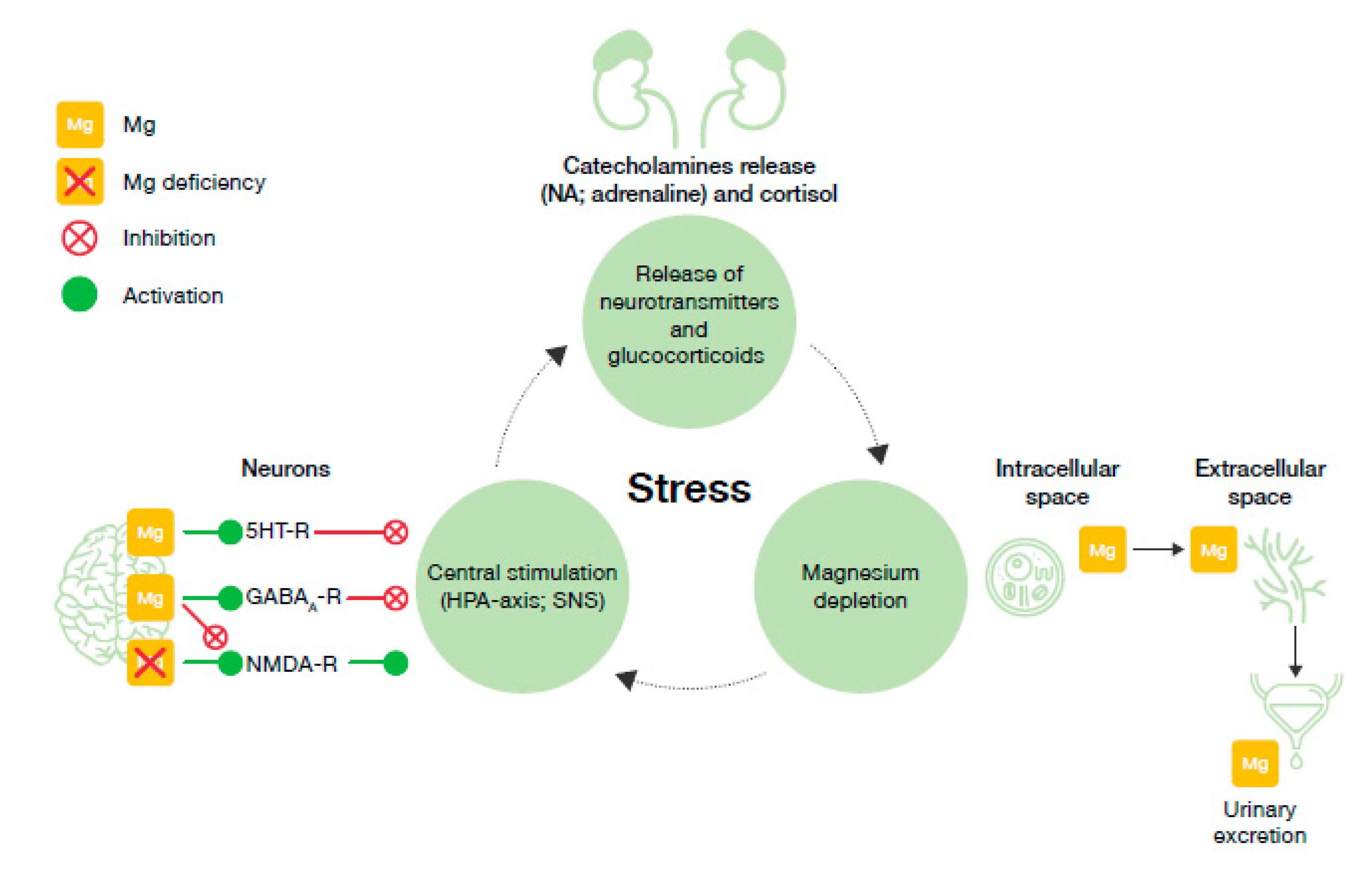
The vicious circle of stress and magnesium
Returning to Herbal Supports When Deficiency Patterns Appear
Herbal energetics and magnesium physiology overlap in meaningful ways. Herbs that calm the nervous system, soften muscular tension, support digestion, or nourish the cardiovascular system often serve people experiencing magnesium deficiency patterns.
Here are some examples commonly used in this context:
Oatstraw (Avena sativa) for nervous system nourishment and gentle mineral support
Linden (Tilia spp.) for emotional overwhelm and cardiovascular ease
Chamomile (Matricaria chamomilla or Chamaemelum nobile) for irritability linked with digestive tension
Skullcap (Scutellaria lateriflora) for chronic muscular holding or wired-tired patterns
Tulsi (Ocimum tenuiflorum) for mental resilience and stress regulation
Hawthorn (Crataegus spp.) for heart-related strain and pressure
Reishi (Ganoderma lucidum) for deeper systemic depletion or long-term stress recovery
These herbs do more than offer minerals. They create internal conditions that help the body use magnesium effectively. When the nervous system softens, digestion improves. When digestion improves, mineral absorption improves. When absorption improves, the stress response becomes more stable. This is how herbalism supports systems rather than single endpoints.

How the Body Absorbs Magnesium
Magnesium absorption is dynamic and responds to the internal environment. The body uses two pathways: a passive paracellular route and an active transcellular pathway involving TRPM6 and TRPM7 channels. Both can be influenced by diet, digestive health, and the form in which magnesium is consumed.
TRPM6 and TRPM7 channels are also affected by genetic modifications - but for the sake of ‘simplicity’ I will not be covering that here, but I encourage you to read up on it.
What Inhibits Absorption
Several compounds bind magnesium or interfere with its movement through the gut. These do not block magnesium completely, but they reduce efficiency.
High doses of competing minerals
Cellulose and lignin
Hemicellulose
Phytates
Oxalates
These compounds are common in plant foods, which is one reason diversity in the diet matters. When the same set of foods appears day after day, absorption patterns become predictable and sometimes less favorable.
What Enhances Absorption
Other compounds support magnesium uptake through both the passive and active pathways.
Dietary protein
Medium-chain triglycerides
Resistant starch
Oligosaccharides
Inulin
These tend to improve the intestinal environment and increase the availability of magnesium at the cellular interface.
Another important detail is the dose itself. Smaller, repeated exposures produce better absorption than one large dose. This is one reason herbal infusions, broths, and plant-rich meals often support magnesium status so effectively.
The specific magnesium salt plays a smaller role than many assume. While some organic salts show slightly better absorption under controlled conditions, other studies find no meaningful difference. The person’s physiology, digestive function, stress load, and dietary background shape absorption far more than the form of supplementation.
This perspective helps herbalists understand why someone may take magnesium and still feel depleted. The terrain, not the capsule, often dictates the outcome.
Before we go deeper, this is where the rest of the article continues for paid readers.
If you’re already supporting this work, thank you, truly. You make it possible for me to write pieces like this that blend physiology, herbal energetics and real clinical thinking.
Inside the full article we explore:
• how magnesium is actually absorbed in the body and why some people remain deficient even with supplementation
• the digestive terrain that has to be in place for minerals to move inward
• the herbs that strengthen mineral uptake and calm the stress patterns that waste magnesium
• the research on how stress depletes magnesium and what that means for herbal practice
• circulation and why it matters for mineral “delivery”
• a closing reflection that pulls these threads into a practical framework for herbalists
Paid subscribers also receive access to my full herbal library, research backed deep-dives, all PDFs, clinical-style guides, and the more technical writing that I save for the inner circle of this community.
If you’d like to join us, I’d love to have you.