


This is probably the most common question I see across online platforms and forums. People who are just beginning their herbal studies want to build a home apothecary, and that impulse makes complete sense. The beauty of herbalism lives in the hands-on work. It is practical. It invites you to engage, to learn by doing, and to take an active role in your own health.
This is also where things can become murky.
Often, the question is posed to complete strangers. People who know nothing about the person asking beyond a username and a small profile photo are asked to name the “best” herbs to keep on hand. The intention is sincere, but the framing misses something essential.
Herbs do not exist in a vacuum. And neither do people.
Another essential aspect of herbal practice is personalization. Herbalism has always been individualized. What one person reaches for again and again is often shaped by their own body, patterns, and lived experience.
With the best intentions, someone might recommend the herbs that anchored their early practice. Maybe that looks like feverfew, blue vervain, and milky oats. Another person might swear by cleavers, calendula, echinacea, and mugwort. Someone else might suggest chamomile, gentian, milk thistle, and burdock as non-negotiables.
And this is where the pattern starts to emerge.
The first person may live with migraines or chronic muscle tension. The second may feel their best when lymphatic movement is well supported. The third might be navigating ongoing digestive stress. None of these recommendations are wrong. They are simply contextual.
The problem is that context rarely translates across a comment thread.
If you do not experience chronic migraines, persistent lymphatic stagnation, or regular gastrointestinal distress, stocking your apothecary around those plants may not make much sense. Those herbs could be helpful someday, but that is very different from choosing them as foundational allies.
This article is meant to be a guide you can return to. It walks you through a body system–based way of thinking so you can choose herbs that fit your physiology, your patterns, and your life. The herbs in my own apothecary differ from those in my fiancé’s, even though we share a home. That distinction reflects the heart of this approach.
Note for readers:
At the end of this article, paid subscribers will find Mapping Your Home Apothecary, a reflective planning guide designed to help you translate this systems-based way of thinking into practice.
Rather than offering a checklist of herbs, the guide walks you through noticing patterns, identifying the systems that ask for support most often, and clarifying what kind of herbal support actually fits your body and your life right now.
It is meant to be returned to over time, not completed in one sitting, and to support the same embodied, physiology-informed approach explored throughout this article.
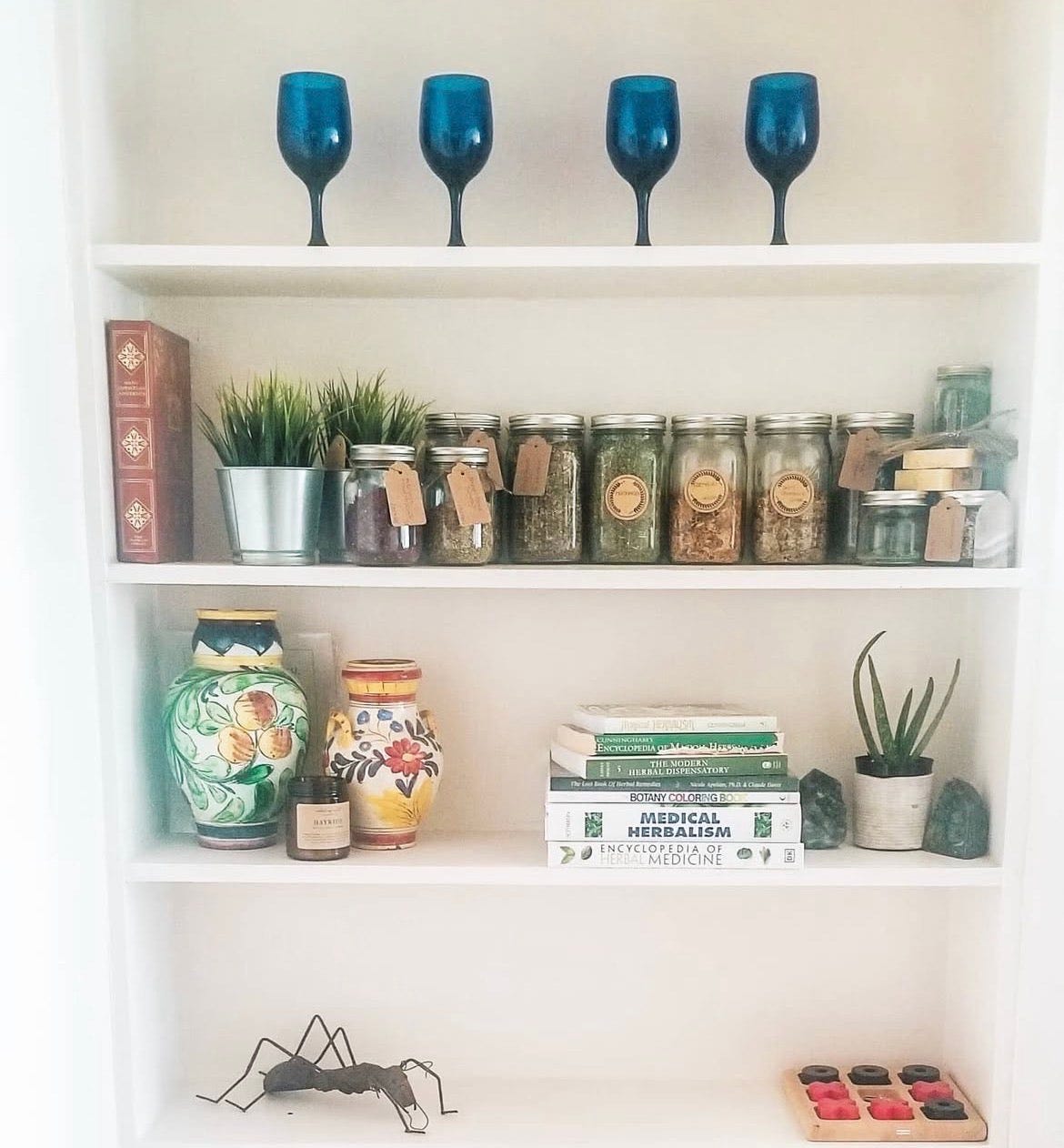
The beginnings of my own apothecary in 2020
From Symptoms to Systems
Herbal medicine does not work by isolating a single compound and aiming it at a single target. Plants are complex by nature. Their constituents act together, influencing multiple pathways in the body at the same time. This layered, synergistic activity is part of what makes herbal medicine so well suited for bodies, which are themselves complex and interconnected.
That complexity matters, because it changes how we approach care.
Herbalism is not meant to function as a symptom-covering practice. We are not reaching for herbs as botanical stand-ins for pharmaceuticals, trying to quiet a single complaint and move on. If that were the goal, there would be little reason to look beyond conventional medicine, which already does that job quite efficiently.
Instead, herbalism invites a wider view.
The focus shifts away from isolated complaints and toward patterns. Anxiety, bloating, frequent colds, or poor sleep are not treated as separate problems to suppress, but as signals pointing toward systems that may be under strain, under-resourced, or repeatedly asked to compensate.
When you begin to think this way, different questions naturally come into focus:
Which systems tend to ask for support again and again?
Where does stress land first in my body?
What tends to fall out of balance when I am under pressure?
For one person, stress may consistently show up in the nervous system, disrupting sleep or increasing muscle tension. For another, it may move straight into digestion, affecting appetite, motility, or absorption. For someone else, immune resilience or inflammatory tone may be the first thing to falter. These recurring themes are far more useful than any single symptom.
A home apothecary built from this perspective looks very different. Herbs are chosen to support the systems that tend to carry the most weight in your body, not to prepare for every hypothetical scenario.
This is what makes an apothecary feel steady, intuitive, and genuinely supportive rather than crowded and overwhelming and unfortunately a waste of money.

Embodiment in Practice
When you read the previous section, I’m willing to bet a few things immediately came to mind.
Maybe digestion tends to feel off after larger meals. Maybe headaches reliably show up when the barometric pressure shifts. Maybe sleep is the first thing to fall apart when life gets busy. And at some point, you may have wondered whether these are the kinds of things a home apothecary should actually be built around.
They are.
This is where herbalism starts to feel embodied. It steps out of theory and into lived experience. Instead of focusing on what happens once in a while, this part of the practice asks you to notice what your body does consistently.
When people start building an apothecary, immune remedies often come first. Cold and flu support feels practical and familiar. For some households, that makes a lot of sense. For others, it may not. Patterns matter here. What shows up again and again deserves more attention than what rarely does.
In my own case, frequent colds or influenza simply are not a recurring pattern. That doesn’t make immune support irrelevant, but it does mean it doesn’t take up much space on my shelf. For someone who tends to get sick easily or struggles to bounce back, immune-focused herbs may be foundational. Neither approach is better than the other. The difference is the body you are working with.
Looking Beneath the Symptom
Once you start noticing these patterns, it’s very easy for the mind to jump straight to symptoms. Headaches turn into a search for pain relief. Digestive discomfort becomes something to quiet or suppress.
This is where I want you to pause.
Instead of organizing your thinking around symptoms alone, take a small step back and look for what might be driving them.
If digestive discomfort is a regular visitor, what tends to sit underneath it? Sluggish digestion, low stomach acid, poor bile flow, constipation, diarrhea, stress, or food timing often play a role.
If headaches show up often, are they tied to dehydration, muscle tension in the neck and jaw, sleep disruption, barometric pressure sensitivity, electrolyte balance, or chronic stress?
If sleep feels fragile, is it difficulty winding down, waking during the night, blood sugar swings, nervous system depletion, or something else entirely?
If colds are frequent, is the immune system actually under-supported, or are stress, poor recovery, nutrient depletion, or sleep debt doing most of the work?
When you begin to see what sits beneath the surface, choosing herbs becomes much clearer. You’re no longer trying to prepare for every possible complaint. You’re choosing herbs that support the systems your body leans on most.
That is the difference between collecting herbs and actually practicing herbalism.
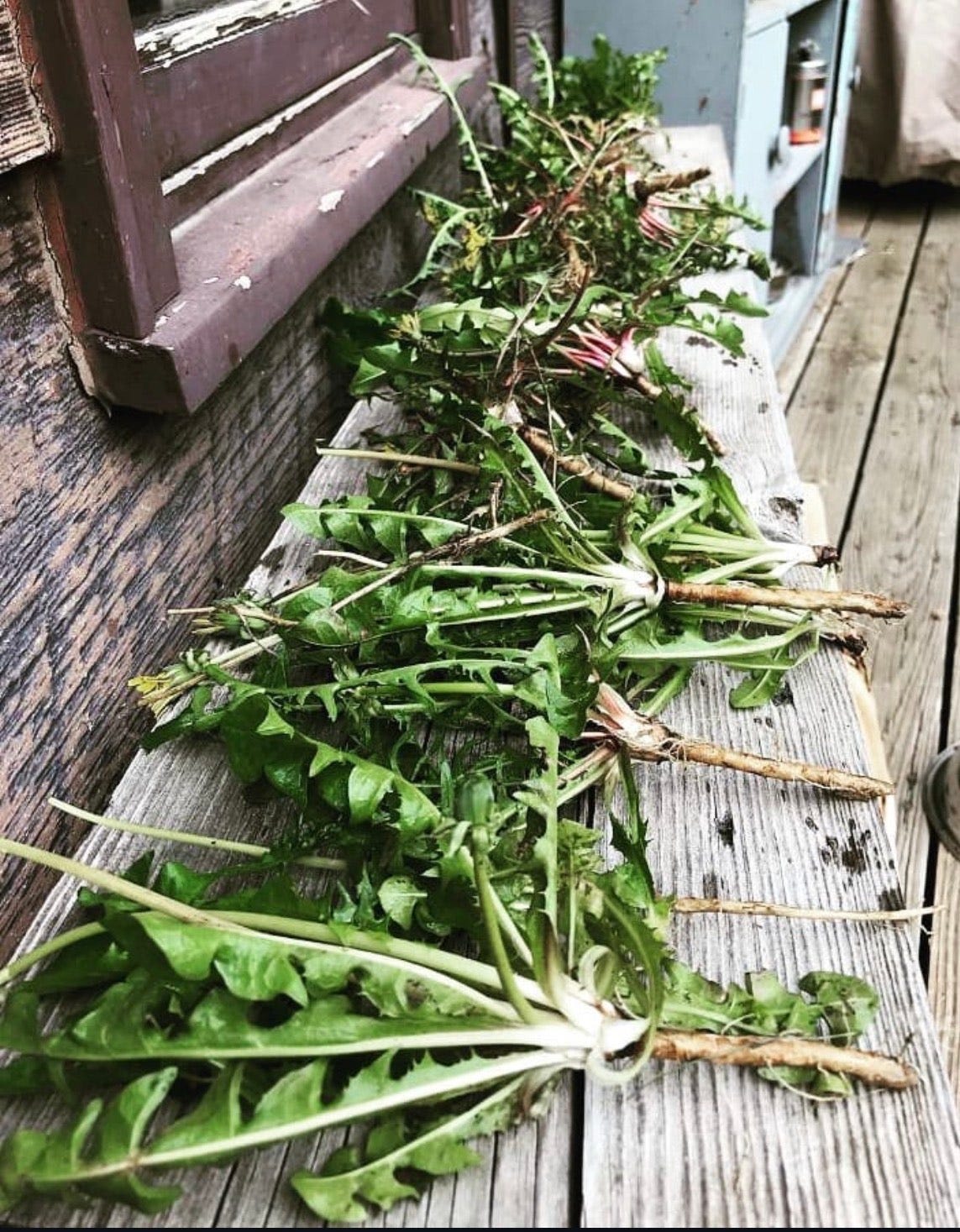
A bunch of dandelions harvested by my mama :)
Listening to the Digestive System
Let’s say digestion is one of the systems that consistently asks for attention.
This often reveals itself less through isolated moments and more through pattern. Stress tends to arrive in the gut first. Appetite shifts subtly. Meals linger longer than expected. Digestion slows when routines change or when the nervous system is carrying more demand. Over time, these experiences stop feeling random and begin to feel familiar.
Understanding physiology helps these patterns make sense.
Digestion is meant to unfold as a coordinated sequence rather than a collection of separate events. The nervous system settles into a rest-and-digest state. Gastric secretions are released. The stomach breaks food down mechanically and chemically. Bile supports fat digestion. Motility moves food along at an appropriate pace. Each phase supports the next, creating rhythm and continuity across the system.
When that rhythm becomes uneven, the body adapts. Sensations arise not as errors, but as communication, offering information about where support may be helpful.
When Digestion Loses Its Rhythm
Bloating and post-meal heaviness often reflect slower digestive signaling or underactive secretions. In these situations, herbs traditionally classified as bitters, such as dandelion root or burdock root, have been used to support digestion upstream. Their role is not to target a single sensation, but to encourage gastric secretions, bile flow, and overall digestive tone so the process can unfold with more ease.
Digestion that changes noticeably during periods of stress often points toward nervous system involvement. When the body remains in a heightened state of vigilance, digestive coordination can become less consistent. Herbs like chamomile are frequently useful here, not because they act on digestion in isolation, but because they support the gut–brain axis. By encouraging nervous system settling, they help digestion regain its natural timing without forcing stimulation.

Motility patterns add another layer of information. When digestion alternates between sluggishness and urgency, the focus shifts toward regulation. At times, short-term stimulation may be appropriate, which helps explain the traditional use of stimulant laxatives like senna. In other cases, loose or watery stools benefit from astringent herbs rich in tannins, which support tissue tone and fluid balance. Red raspberry leaf is a classic example, valued for its ability to strengthen and steady tissue without overriding normal function.
Inflammation brings a different quality to digestive support. When sensitivity, irritation, or tissue stress is present, digestion often benefits from gentler forms of care. Herbs such as meadowsweet or marshmallow root have traditionally been used to soothe mucosal tissue and support recovery. This kind of support creates space for healing while broader digestive patterns continue to be addressed.
Listening to Tissue Signals
This is where pathophysiology becomes especially informative.
Rather than matching an herb to a symptom, attention turns toward the digestive process itself.
Is secretion asking for support?
Does stress interfere with coordination?
Is motility uneven?
Is tissue sensitivity part of the picture?
As these distinctions become clearer, herb selection follows with greater precision. The apothecary begins to reflect digestive function as a whole rather than a collection of isolated complaints. Herbs are chosen to support digestion at its foundation, working upstream in alignment with physiology and lived experience.
This is how understanding physiology and pathophysiology deepens herbal practice. The apothecary becomes a reflection of how digestion actually works, shaped by observation, familiarity, and intention.

Bringing It Back to Your Apothecary
By this point, the question itself may feel a little different. Not “What herbs should I have?” but “How do I decide what belongs in my apothecary?”
A well-built home apothecary is not a collection of popular herbs or a reflection of someone else’s needs.
It is shaped by your patterns, the systems that ask for support again and again, the places stress tends to land, and the ways your body compensates under pressure.
When you understand how a system works and what tends to disrupt it for you, herb choice stops feeling overwhelming. You are no longer trying to prepare for every possible scenario. Instead, you are choosing herbs you understand, herbs you will actually reach for, and herbs that support your body in ways that make sense.
This is also why two people living in the same home can have very different apothecaries.
Different bodies tell different stories.
Different systems carry the load.
This is where restraint becomes a skill. A smaller apothecary, built with intention, often serves far better than a crowded shelf of “just in case” remedies. Familiarity matters. Knowing how a handful of herbs feel in your body matters. Confidence grows not from quantity, but from relationship.
If you feel the urge to organize, map, or clarify what this looks like for you, that impulse is intentional. I’ve created a planning guide for paid subscribers that walks you through this process step by step. It mirrors the questions explored here and helps you identify your primary systems, recurring patterns, and the kinds of herbal support that actually fit your life. Not as a checklist or a shopping list, but as a way to think like an herbalist. Because once you know how to choose, the apothecary begins to take shape on its own.
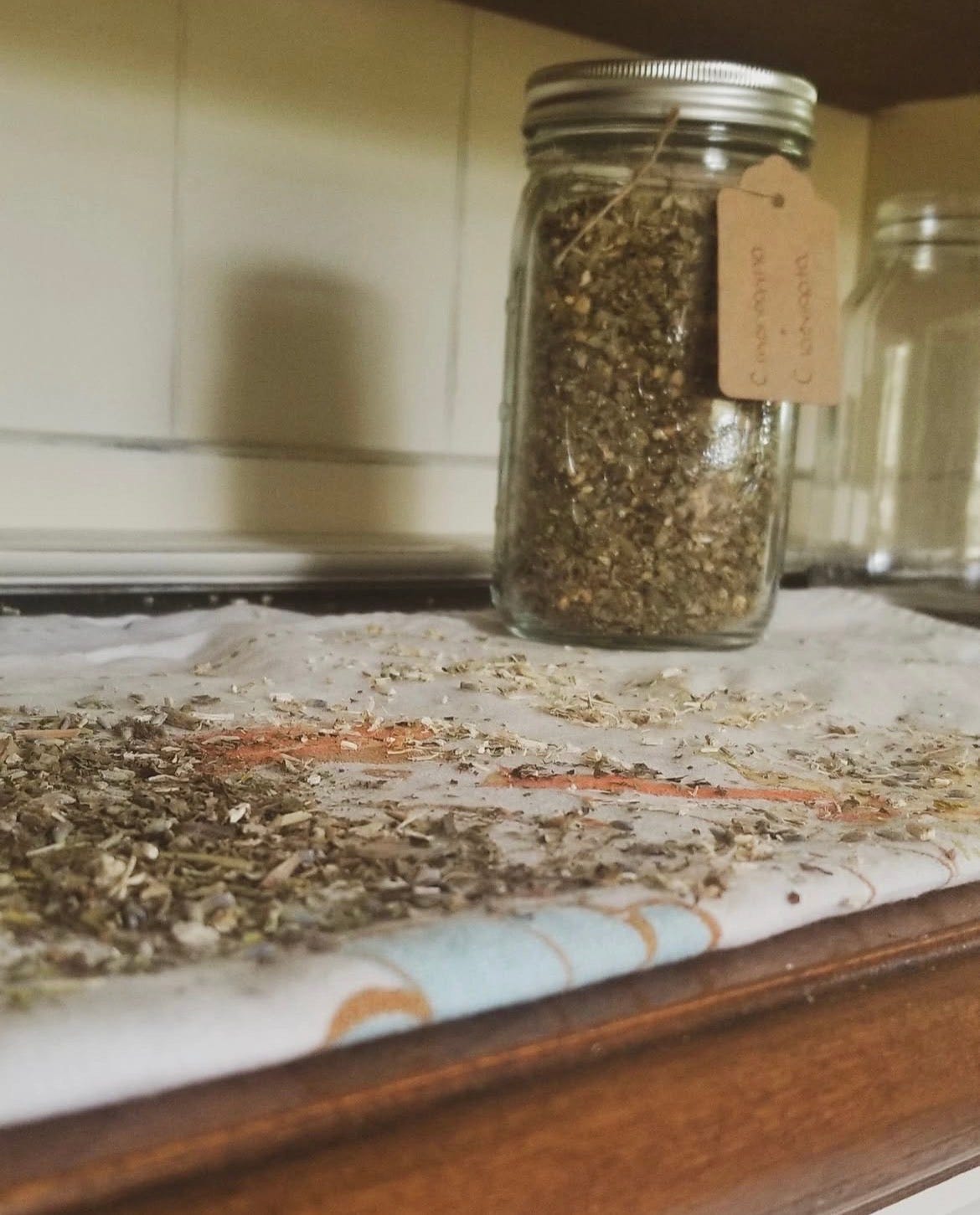
Photo from my own collection
What this ultimately invites is a different pace. One that values familiarity over accumulation, and observation over urgency. An apothecary built this way grows slowly, shaped by lived experience rather than external expectation. You come to know a small number of plants well. You notice how they feel in your body. You learn when to reach for them, and just as importantly, when not to.
This way of working doesn’t end at the shelf. It carries into how you look at plants more broadly, how you listen to your body, and how you approach herbalism as a practice rather than a collection of remedies.
Each herb becomes less of a solution and more of a relationship. Each choice becomes less reactive and more informed. Over time, this kind of attentiveness reshapes how you engage with health, seasons, and even uncertainty.
Herbalism practiced this way becomes quieter and more grounded. It weaves itself into daily life through small, thoughtful decisions rather than dramatic interventions. The practice deepens as your understanding of your own rhythms deepens, and it evolves as your life does. There is no finished version to arrive at, only an ongoing conversation between you, your body, and the plants you work with.
Again, or those who want to bring this reflection into something tangible, paid subscribers will find the planning guide just below. It’s there to help you return to these questions over time and shape an apothecary that truly belongs to you.
Until next time,
— Agy | The Buffalo Herbalist

Ps: Paid subscribers can find the Mapping Your Home Apothecary Guide here: