


You find herbalism and it feels like finding a door you didn’t know existed.
Suddenly there is this whole world. Plants that have been in relationship with humans for centuries. Real stories. Real mechanisms. Real research. A way of thinking about the body that feels more whole than anything you encountered in a doctor’s office.
And then you start learning about specific herbs and it gets even better.
St. John’s Wort for depression. Actual clinical trials. Effect sizes that rival SSRIs in mild to moderate cases. No sexual side effects. No withdrawal. Something that grows in a field and has been used since the ancient Greeks and now has peer-reviewed literature behind it.
Of course you want to tell everyone. Of course you do. A natural option for one of the most common and most undertreated conditions affecting people right now? You want to shout it from the rooftops.
And you should. The evidence is real. The mechanism is understood. It works.
But there is something else in the literature that gets a lot less airtime in herbal education circles. St. John’s Wort can also render certain prescription medications completely ineffective. In some cases, it drops drug levels low enough to cause organ rejection in transplant patients, unintended pregnancy in women on oral contraceptives, and treatment failure in people on HIV antiretrovirals.
This is not a fringe concern buried in obscure pharmacology journals. It is documented, reproducible, and happening to real people who had no idea it was possible.
Something is happening in the liver that most people learning herbalism have never been taught.

The Stats
Before we go further, I want to put some numbers on the table because I think they matter for understanding why this conversation is so urgent.
Approximately 66% of American adults are currently taking at least one prescription medication. For adults over 40, that number climbs even higher. At the same time, roughly 4 in 10 Americans now use some form of complementary or alternative medicine, including herbs and botanical supplements, and that number has increased steadily over the past two decades.
Do the math. A significant portion of the people reaching for herbs are also taking prescriptions. Not instead of them. Alongside them. And most of them are not telling their doctors, either because they don’t think to mention it, because they don’t think it matters, or because they are afraid of being dismissed.
I am in this overlap. I take a prescription medication and I use herbs. I am not writing this from some ideological position with medicine on one side and plants on the other. I am writing from inside the gray area, which is exactly where most of us actually live.
That gray area deserves good information. So, here is what we are going to do today.
I am going to teach you how the body actually metabolizes compounds so you can understand what is happening mechanistically, not just memorize a list of things to avoid.
We are going to talk about a family of enzymes in your liver responsible for processing roughly 75% of everything you consume.
We are going to talk about what happens when an herb speeds that process up or slows it down.
And then I am going to hand you cheat sheets: commonly used herbs, commonly prescribed medications, and the interactions you need to know about.
This is for you, and your mother who takes a statin and just started ashwagandha. And your friend who is on antidepressants and heard that St. John’s Wort is a more natural option.
This is for everyone living in the gray area who deserves more than “just be careful.”

How Your Body Actually Handles What You Put into It
Most people think of taking a supplement or a medication as a simple transaction. You swallow something, it goes to work, and eventually it leaves. The reality is considerably more interesting than that, and understanding it changes how you think about everything that follows.
The body processes every compound it encounters through four sequential stages: Absorption, Distribution, Metabolism, and Excretion. Together these are called ADME, and CYP450 enzymes live inside the third stage.
But what happens before metabolism arrives shapes everything about how significant that stage actually is. To make this concrete, we are going to follow a single glass of grapefruit juice through the system, because grapefruit is arguably the most famous drug interaction story in all of pharmacology, and most people who know the warning have no idea why it exists.
What actually happens the moment you swallow something?
Absorption is the process by which a compound crosses body membranes and enters the bloodstream. For anything taken by mouth, this journey begins in the gastrointestinal tract. As grapefruit juice moves through the gut, its active compounds, particularly a group called furanocoumarins, begin crossing the intestinal wall and entering circulation.
But something happens here that most people never learn about.
Before grapefruit juice or any orally consumed compound reaches the general circulation, it passes through the portal vein directly into the liver, where the body’s biotransformation machinery gets an early look at it. The intestinal wall itself also contains CYP3A4 enzymes that begin processing compounds on the way through. By the time anything you swallow reaches the rest of your body, it has already run a metabolic gauntlet.
This early processing is called first-pass metabolism, and it is why the dose that arrives at a target tissue is often a fraction of what you originally consumed.
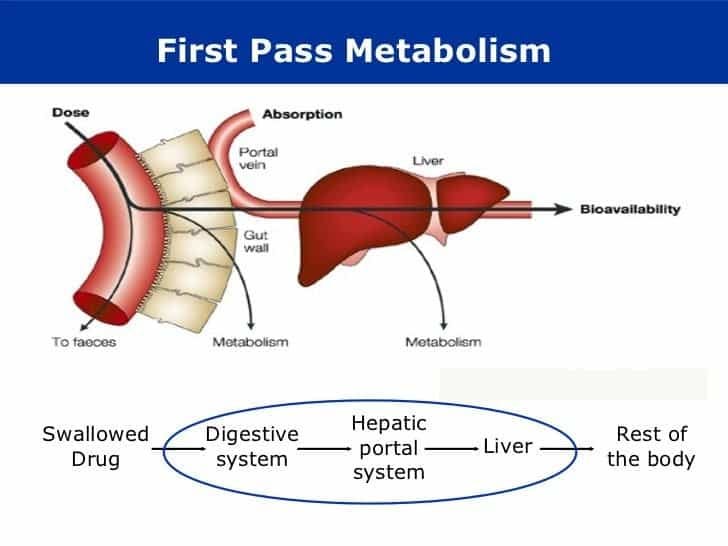
In the case of grapefruit, the furanocoumarins do something unusual at this stage. Rather than being metabolized and cleared, they permanently disable the CYP3A4 enzymes in the intestinal wall on their way through, binding irreversibly and knocking those enzymes out of commission until the body produces new ones.
The liver’s CYP3A4 remains intact, but intestinal CYP3A4 is gone for up to 24 hours from a single glass. That loss of first-pass processing is why medications taken alongside grapefruit can reach the bloodstream at dramatically higher concentrations than intended.
Distribution is what happens next.
Once a compound enters the bloodstream it travels toward its target tissues, but the journey is not straightforward. How well a compound distributes depends on how porous the capillary walls are in a given tissue, whether specialized transport proteins are present to carry it across membranes, and how strongly it binds to proteins in the blood.
Compounds that bind tightly to plasma proteins are held in reserve, essentially parked and unavailable, until they are released. Lipophilic compounds have a particular tendency to accumulate in fat tissue, which means they can persist and slowly release back into circulation long after dosing stops.
Metabolism is where CYP450 enzymes do the majority of their work. The liver’s primary goal at this stage is biotransformation: converting lipophilic compounds into water-soluble forms the body can actually eliminate. This process can deactivate a compound, activate a prodrug into its working form, or occasionally produce a metabolite with entirely different properties than the original. In the grapefruit scenario, medications that would normally be partially cleared by intestinal CYP3A4 during absorption arrive at the liver in higher concentrations than usual, and even with hepatic CYP3A4 working normally, the total drug exposure is significantly elevated.
How does the body finally get rid of it?
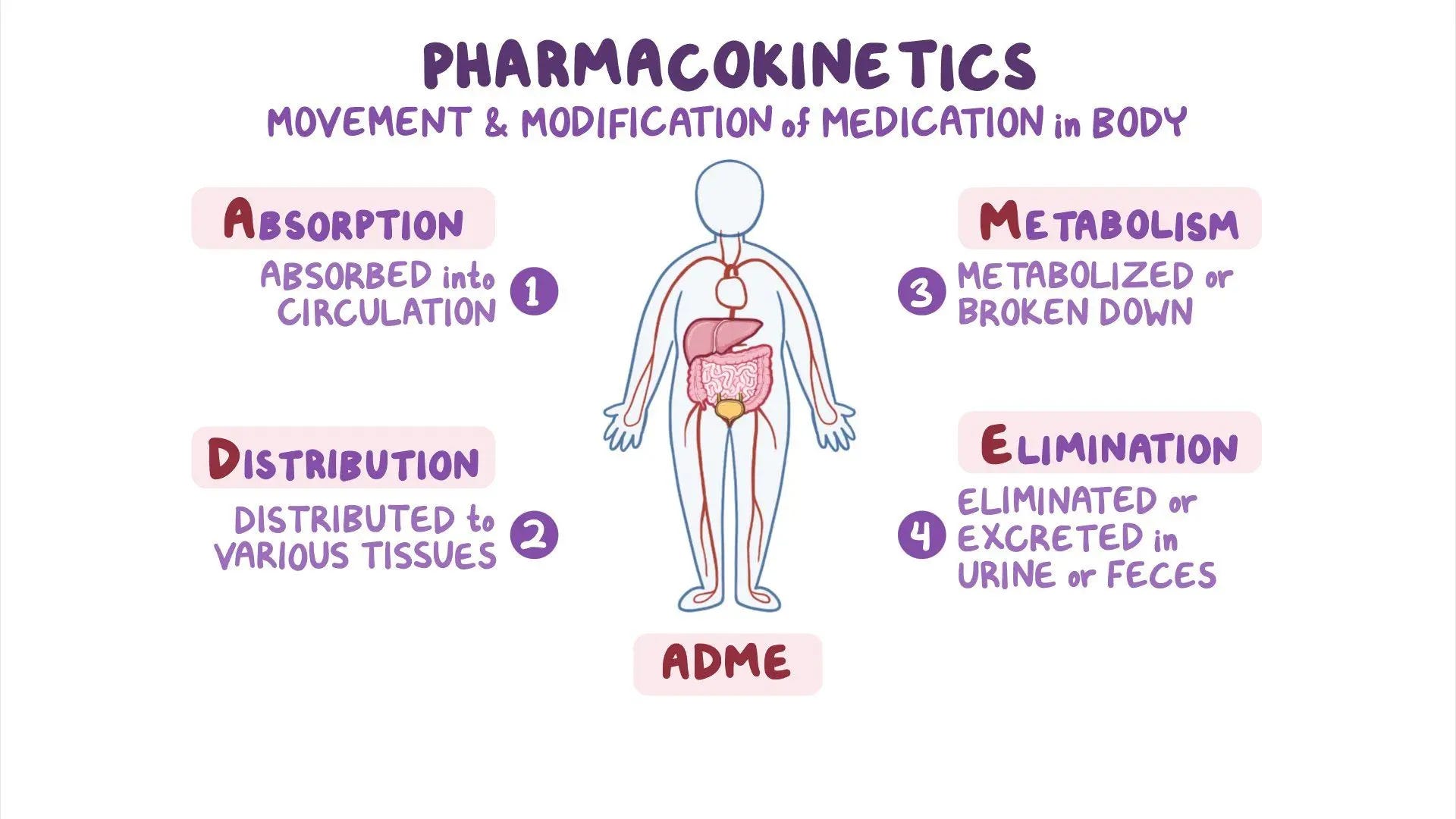
Excretion is the final stage, and the answer depends almost entirely on what happened during metabolism.
Water-soluble compounds are cleared efficiently through urine or bile.
Lipophilic compounds, without prior biotransformation into water-soluble forms, tend to be reabsorbed rather than excreted, accumulating in the body with repeated exposure.
This is the fundamental reason metabolism matters so much. It is what makes excretion possible for the majority of biologically active compounds, whether pharmaceutical or botanical.
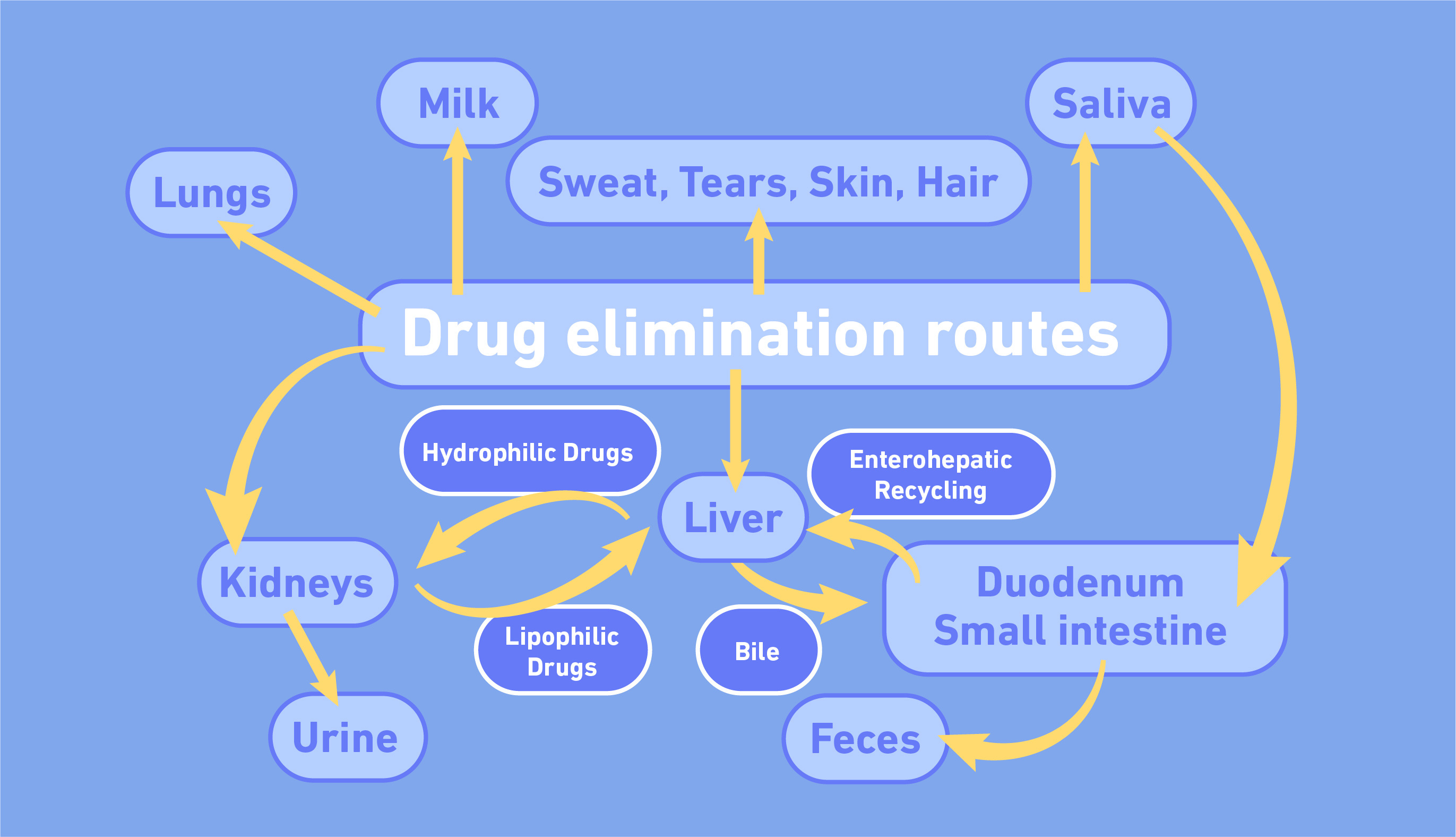
What ADME makes clear is that the body is not passively receiving what you give it. Every stage involves active processing, routing, and transformation. CYP450 enzymes are embedded in a dynamic system where what happens at absorption influences what arrives at metabolism, and what happens at metabolism determines what the body can actually eliminate. Disrupt any part of that system and the effects move through all the others.
The grapefruit story is a perfect illustration of this because the disruption happens at absorption, before metabolism even begins, and the consequences show up as elevated drug levels that the prescribing physician never accounted for. No dose change occurred. No new medication was added. One glass of juice altered the first-pass process and shifted the entire pharmacokinetic picture.
This is the system that herbs are operating in every time your client takes them alongside a medication.

What Is the CYP450 System, Actually?
Here is something nobody tells you when you start learning about herbs and health: your liver has a filing system.
Not literally, but functionally, yes.
Inside your liver cells, there is a family of enzymes whose entire job is to process the things you put into your body. Drugs, herbs, hormones, environmental toxins, that third cup of coffee. Everything that gets absorbed into your bloodstream eventually shows up at this processing center, and these enzymes decide what to do with it.
This family is called the cytochrome P450 enzymes, CYP450 for short. And before your eyes glaze over at the name, stay with me, because this is genuinely fascinating once you see what it does.
The name comes from how these enzymes were first identified. When researchers bound them to carbon monoxide and measured how they absorbed light, the absorption peaked at 450 nanometers, and the name stuck. What matters for our purposes is not where the name came from but what these enzymes actually do, which is biotransformation.
Your body is built to run on water-soluble compounds, things that can move through the bloodstream and be filtered out through your kidneys or excreted through bile. Most of the interesting compounds you encounter, including the active constituents in herbs and the active ingredients in medications, are lipophilic, meaning they dissolve in fat and want to hang around in your tissues rather than move through your system cleanly. CYP450 enzymes convert them into water-soluble forms that your body can actually eliminate.
According to Zhao et al. (2021), these enzymes account for approximately 75% of all drug metabolism in the human body. Your genome encodes 57 functional CYP enzymes, but a much smaller group does most of the work.
Enzymes from the CYP1, CYP2, and CYP3 families handle around 80% of all clinically used medications, and one enzyme within that group, CYP3A4, is responsible for metabolizing roughly 50% of drugs in common use all by itself. Fifty percent. One enzyme.
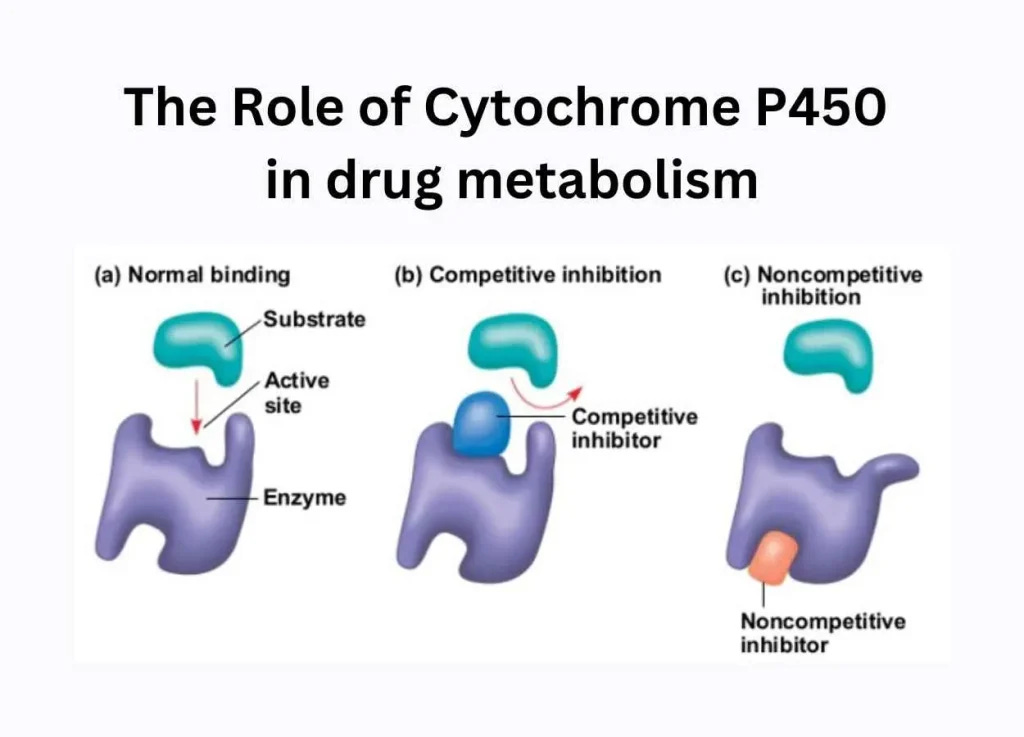
Depending on the compound, CYP450 metabolism can do one of three things:
It can deactivate a compound, which is what happens with most drugs after they have done their job.
It can activate a compound, which is how certain medications work at all, because they are designed as inactive precursors that require the liver to convert them into their active form.
Or it can generate a toxic metabolite, a byproduct that causes harm in a way the original compound did not.
Which of those three things happens depends entirely on the compound, the enzyme doing the processing, and the environment that enzyme is operating in.
And here is the part that changes how you think about all of this.
These enzymes are not fixed. Their activity shifts constantly in response to what is happening inside a person’s body.
Genetics establish a baseline, but chronic inflammation, disease states, gut microbiome composition, age, and the herbs and foods a person is consuming all shape how actively these enzymes are working on any given day.
Two people can take the same herb alongside the same medication and have completely different outcomes, not because one of them did something wrong, but because their CYP450 landscape is different.
That complexity is worth understanding. Practitioners who know the system can work with it, and that is exactly what this reference is designed to help you do.
What Happens When Something Goes Wrong
The CYP450 system runs quietly in the background, doing its job without any signal that it is working. You do not feel your liver metabolizing your medication. You do not notice when that process speeds up or slows down. Which is exactly why understanding what can disrupt it matters so much, because by the time something goes wrong, it can already be serious.
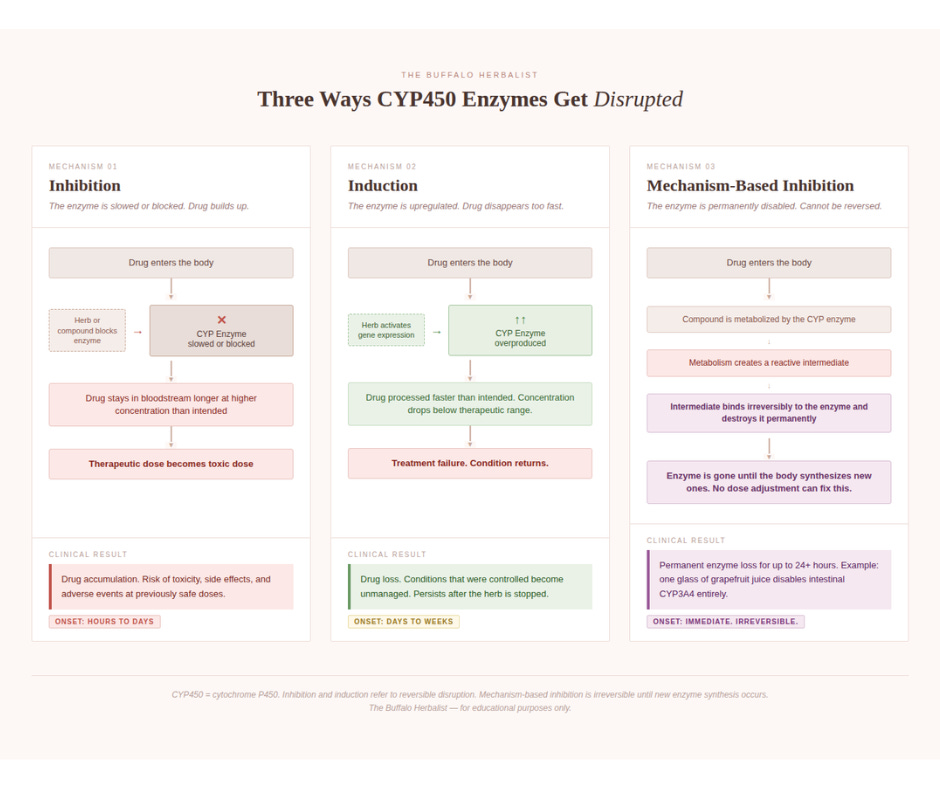
CYP450 enzymes can be disrupted in three ways, and each has distinct clinical consequences.
Inhibition: A compound slows or blocks the activity of a CYP enzyme. The drug that enzyme was supposed to process stays in the bloodstream longer and at higher concentrations than intended. The prescribing physician calibrated the dose assuming a certain rate of metabolism. Inhibit that metabolism and what was a therapeutic dose can become a toxic one. This can happen quickly, sometimes within hours of the first dose of the offending compound.
Induction: An inducer increases the production of a CYP enzyme by upregulating the gene expression responsible for making it. The drug gets processed faster than intended and its concentration in the bloodstream drops below therapeutic levels. A client whose condition was well-managed suddenly experiences treatment failure. Their blood stops clotting properly. Their antiretroviral levels fall. Their cancer treatment loses efficacy. Induction tends to develop more slowly than inhibition, building over days to weeks, and it persists after the herb is stopped. Stopping the herb does not immediately resolve the interaction.
Mechanism-Based Inhibition: A more permanent version of inhibition. The enzyme metabolizes a compound and in doing so generates a reactive intermediate that binds to the enzyme irreversibly, disabling it permanently. The enzyme is out of commission until the body produces new ones, and there is no way to reverse it by adjusting timing or dose. This is exactly what grapefruit does to intestinal CYP3A4. The furanocoumarins bind irreversibly, the enzyme is disabled, and the effect persists for up to 24 hours after a single glass regardless of what medications are taken in that window.
The reason all of this matters specifically in the context of herbal practice is that herbs are almost never pharmacokinetically neutral.
They contain dozens of bioactive compounds, and many of those compounds are substrates, inhibitors, or inducers of CYP enzymes.
The herb does not know it is interfering with a medication, and the liver does not distinguish between a pharmaceutical and a botanical. It processes what arrives, and it responds to what changes the environment it is working in.
The Five Enzymes You Need to Know
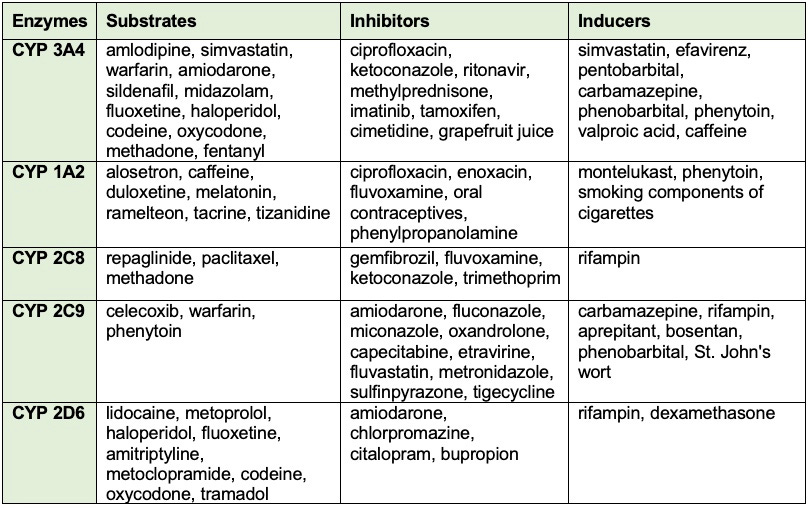
Your genome encodes 57 functional CYP enzymes.
You do not need to know most of them. What you need to know are the five that carry the majority of the clinical burden, because these are the ones where herb-drug interactions become emergencies.
CYP3A4: Metabolizes approximately 50% of all clinically used drugs
CYP3A4 operates in two locations: the liver and the lining of the small intestine. That second location matters enormously, because it means compounds can be partially metabolized before they even reach the bloodstream. By the time a drug clears the intestinal wall and arrives at the liver, CYP3A4 may have already taken a first pass at it.
Substrates: Statins, benzodiazepines, immunosuppressants, calcium channel blockers, oral contraceptives, chemotherapy agents, HIV antiretrovirals
When herbalists talk about clinically significant herb-drug interactions, CYP3A4 is almost always part of the conversation.
CYP2D6: Metabolizes approximately 20 to 25% of commonly prescribed medications
CYP2D6 is genetically the most variable of the major enzymes. Around 5 to 10% of people of European descent carry non-functional CYP2D6 alleles, making them poor metabolizers who process substrates very slowly regardless of any herbal influence. At the other end, ultra-rapid metabolizers carry extra gene copies and process substrates so quickly that standard doses may never reach therapeutic levels. Every person walking into your practice is somewhere on that spectrum, and you cannot tell where by looking at them.
Substrates: Most antidepressants, antipsychotics, beta-blockers, codeine, tamoxifen
CYP2C9: Narrow therapeutic window. Small disruptions have large consequences.
CYP2C9 is the primary enzyme responsible for metabolizing warfarin, which has one of the narrowest therapeutic windows of any drug in common clinical use. The margin between a therapeutic dose and a dangerous one is so small that even modest CYP2C9 disruption can shift a stable patient into bleeding or clotting territory within days. Genetic variation in CYP2C9 also explains why warfarin dosing is notoriously individual. Two people on the same dose can have dramatically different plasma levels, and that variability only compounds when herbs enter the picture.
Substrates: Warfarin, phenytoin, NSAIDs, losartan, sulfonylurea diabetes medications
CYP2C19: Poor metabolizer status: 15 to 20% in East Asian populations versus 2 to 5% in Caucasian populations
CYP2C19 handles proton pump inhibitors, clopidogrel, several antidepressants, and diazepam. Clopidogrel deserves special attention because, like tamoxifen, it is a prodrug. It requires CYP2C19 to generate the active metabolite that actually prevents blood clots. Inhibiting CYP2C19 in someone taking clopidogrel does not raise drug levels the way most inhibition scenarios do. It reduces the drug’s effectiveness, quietly and without symptoms, until the moment it fails. Ethnic background is a relevant clinical consideration here, and worth asking about at intake.
Substrates: Clopidogrel, proton pump inhibitors, several antidepressants, diazepam
CYP1A2: Heavy smokers have nearly double the CYP1A2 activity of non-smokers
CYP1A2 is uniquely sensitive to lifestyle factors. Compounds in tobacco smoke induce the enzyme significantly, which means a client on clozapine who smokes has drug levels calibrated to that elevated enzyme activity. When they stop smoking, CYP1A2 activity normalizes, drug metabolism slows, and clozapine levels can rise into toxic range without any change in dose. The drug did not change. The person’s habits changed, and the enzyme responded. Always ask about smoking status, and always ask again if it has changed.
Substrates: Clozapine, olanzapine, theophylline, caffeine, several beta-blockers
You now have the full mechanistic picture. You understand what this system is, how it becomes disrupted, and why a small handful of enzymes end up carrying so much clinical weight.
What comes next is where that knowledge steps out of theory and into real practice.
In the continuation of this piece, I walk through two detailed clinical scenarios that show how CYP450 interactions actually unfold in the kinds of situations herbalists see every day. One centers on a well-loved antidepressant herb and the quiet risk it can pose for someone with a transplanted organ. The other follows a familiar cold-and-flu staple and a woman undergoing breast cancer treatment who feels perfectly fine while something important is shifting beneath the surface.
There is also a full section on why the same herb can cause a meaningful interaction in one person and barely register in another, because every body brings its own chemistry, genetics, and medication landscape into the room.
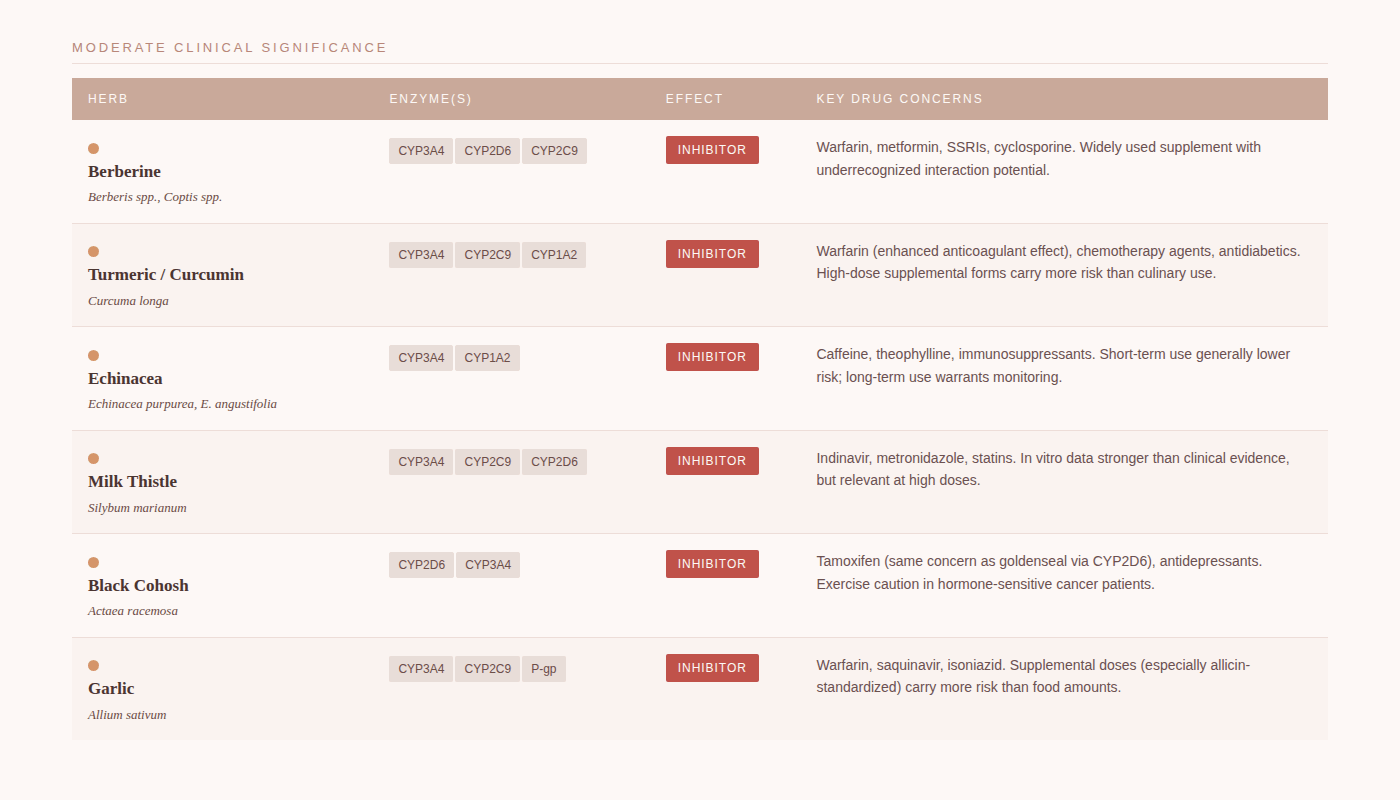
Paid subscribers also receive the printable clinical bundle that goes with this article. It includes more than twenty clinically relevant herbs with significance ratings, the drug categories worth flagging at intake, and a decision framework designed to live on your desk rather than in a forgotten download folder.
Here is a preview of what’s inside.
If this article has already changed how you think about safety and practice, the next section is where that understanding turns into something you can actively use. You’re very welcome to join us there.