Hi all!
The kava article is still on its way. Part of the delay is that I’ve been rethinking how I do research, prompted by a new Substack feature called the paid subscriber perk. Mine is an invitation to “borrow my notes”: with each article, paid subscribers will receive a PDF of my refined research notes, linked directly at the end of the post, because nobody needs a scavenger hunt.
(If you scroll down, you’ll find my notes for this article!)
Preparing notes for someone else to read has changed how I read. I find myself slowing down, paying closer attention to which details I’d want you to carry into your own reading, and asking more often why a particular finding matters.
That slower way of reading shaped this piece. It grew out of a recent assignment exploring Hashimoto’s thyroiditis and the complementary interventions that have been studied for its management. Paper after paper measured success the same way, through changes in thyroid hormone levels and antibody concentrations. Many of the results were encouraging. Still, I kept returning to a question the data rarely answered: OKAY, good job, acupuncture, BUT how did the patient feel?
You can hand me a laboratory report that looks pristine, and I can still feel like hot garbage that’s been rolling around the streets for three to four business days. Lab values are enormously useful, but they are stand-ins for something harder to measure, and a stand-in can improve while the experience it’s meant to reflect stays exactly the same.
The thyroid literature has been grappling with this very problem. A subset of people with Hashimoto’s continue to experience fatigue, brain fog, cold intolerance, low mood, and sluggish digestion even when their thyroid hormone levels sit comfortably within the normal range.
None of this is an argument against levothyroxine, which remains appropriate and effective for a great many people. (Please don’t adjust your thyroid medication based on something you read on Substack, this included.)
What interests me is the space between two statements we often treat as interchangeable, “your labs are normal” and “you are well,” and what it might look like to take that space seriously.
In this piece:
What it means to have normal thyroid labs while still experiencing symptoms
Why TSH reflects the pituitary more than the rest of the body
How T4 is converted to T3, and what happens when conversion falls short
The possible role of ongoing autoimmunity
How food, coffee, and supplements affect levothyroxine absorption
What the complementary research measured, and what it left out
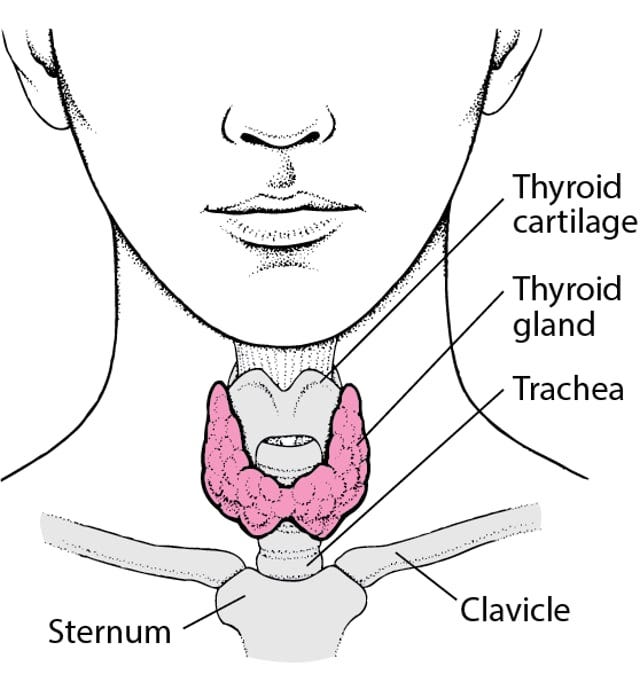
Location of the thyroid gland
What Do the Labs Tell Us?
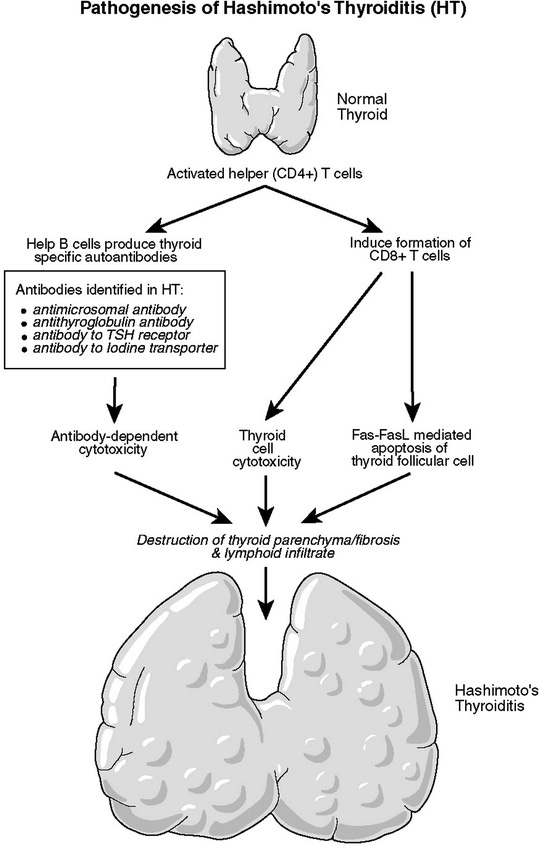
Hashimoto’s thyroiditis (also called chronic autoimmune or chronic lymphocytic thyroiditis) is a condition in which the immune system gradually damages the thyroid gland. Lymphocytes, a type of white blood cell, move into the thyroid tissue, and over time the gland can become fibrotic (scarred) and atrophied (shrunken) (Zhang et al., 2025). Both immune cells and antibodies contribute to that damage (Luo et al., 2024). It’s the most common cause of hypothyroidism, an underactive thyroid, in countries with adequate iodine intake, and it affects women at least ten times more often than men (Luo et al., 2024; Zhang et al., 2025). (Yet another category we’re winning, ladies. Lucky us.)
The lab values that come up throughout this piece:
TSH (thyroid-stimulating hormone): released by the pituitary gland in the brain to tell the thyroid how much hormone to make. When thyroid hormone runs low, TSH rises.
T4 (thyroxine): the main hormone the thyroid produces. “Free T4” is the portion circulating unbound in the blood and available to tissues.
T3 (triiodothyronine): the active form of thyroid hormone. Most of it is made from T4 outside the thyroid.
TPOAb and TgAb: antibodies against thyroid peroxidase and thyroglobulin, two proteins the thyroid uses to make hormone. Their presence tells us the immune system is targeting the thyroid.
These antibodies can show up long before thyroid function declines. Higher titers (the concentration of antibodies in the blood) are associated with greater thyroid damage, which keeps the immune system engaged, a self-reinforcing cycle that may eventually lead to hypothyroidism (Luo et al., 2024).
Once hypothyroidism develops, the standard treatment is levothyroxine (often abbreviated LT4), a synthetic version of T4 (Delgadillo & Agrawal, 2026). It’s typically started when TSH stays elevated or when symptoms appear, and for most people it brings hormone levels back into range and relieves symptoms. Clinicians describe this state as euthyroid, meaning thyroid hormone levels fall within the normal range.
However, for an estimated 5 to 10% of people with Hashimoto’s, fatigue, weight gain, cold intolerance, constipation, and depression persist even after TSH and free T4 return to normal (Zhang et al., 2025). Hormone replacement alone doesn’t seem to resolve these symptoms (Luo et al., 2024), and some people on long-term levothyroxine continue to report trouble with memory, focus, and overall well-being, often with antibody levels that remain elevated.
Five to ten percent can sound modest. Considering how common Hashimoto’s is, though, it represents a lot of people whose lab results and lived experience are telling two different stories. I think that discrepancy deserves to be taken seriously on its own terms.