


Open Instagram on any given Tuesday and someone is selling you a detox. A charcoal latte that will “draw out toxins.” A seven-day juice cleanse that will “reset your system.” A supplement stack wrapped in sage green packaging that promises to “flush” your liver like you’d flush a radiator. The language is confident. The branding is beautiful.
Buuuut, almost none of it has anything to do with how your body actually processes and eliminates harmful compounds.
The detox industry is a billion-dollar answer to a question it never actually asked.
What does detoxification mean?
What is being detoxed?
Through what mechanism?
By what enzyme system, in what organ, through which exit route?
These are not complicated questions. They have real answers. But the answers live in biochemistry textbooks, and biochemistry textbooks do not sell well on Shopify. Even though I think that they should. (If you sell textbooks on Shopify lmk.)
So, the word “detox” got stripped of its physiology. It became a marketing category, a mood, a seasonal ritual wedged somewhere between New Year’s resolutions and swimsuit season. Something you do for seven days in January with a packet of powders and a vague sense of virtue.
In the process, something important got buried.
Your body already runs a detoxification system. It is sophisticated, self-regulating, and relentless. It operates every second of every day, in every hepatocyte, through enzymatic pathways that most wellness influencers could not name if you spotted them the first three letters. No supplement activates it. No cleanse kickstarts it. It lives, primarily, in your liver.
This is an article about what hepatic detoxification actually looks like at the molecular level. It is also an article about a plant. But the plant comes second. You need to understand the machinery before you can appreciate what dandelion root is actually doing inside of it.

The Liver as a Chemical Processing Facility
Your liver is the largest internal organ in your body, and it is one of the most metabolically active tissues in existence. It sits just below your diaphragm, tucked behind your lower ribs on the right side, and it processes roughly 1.5 liters of blood every minute.
Most people think of the liver as a filter. Something that catches bad things the way a coffee filter catches grounds. This is a fine mental model if you have never thought about it further. But it falls apart the moment you try to use it to make real decisions about your health. Your liver is a biochemical processing plant. Its primary job in the context of detoxification is to take fat-soluble compounds and transform them into water-soluble compounds so they can be excreted through bile and urine.
This is the whole game. Fat-soluble substances accumulate in tissue. They park themselves in cell membranes and adipose tissue and stay there. Water-soluble substances dissolve into body fluids and leave. The liver is the bridge between those two states.
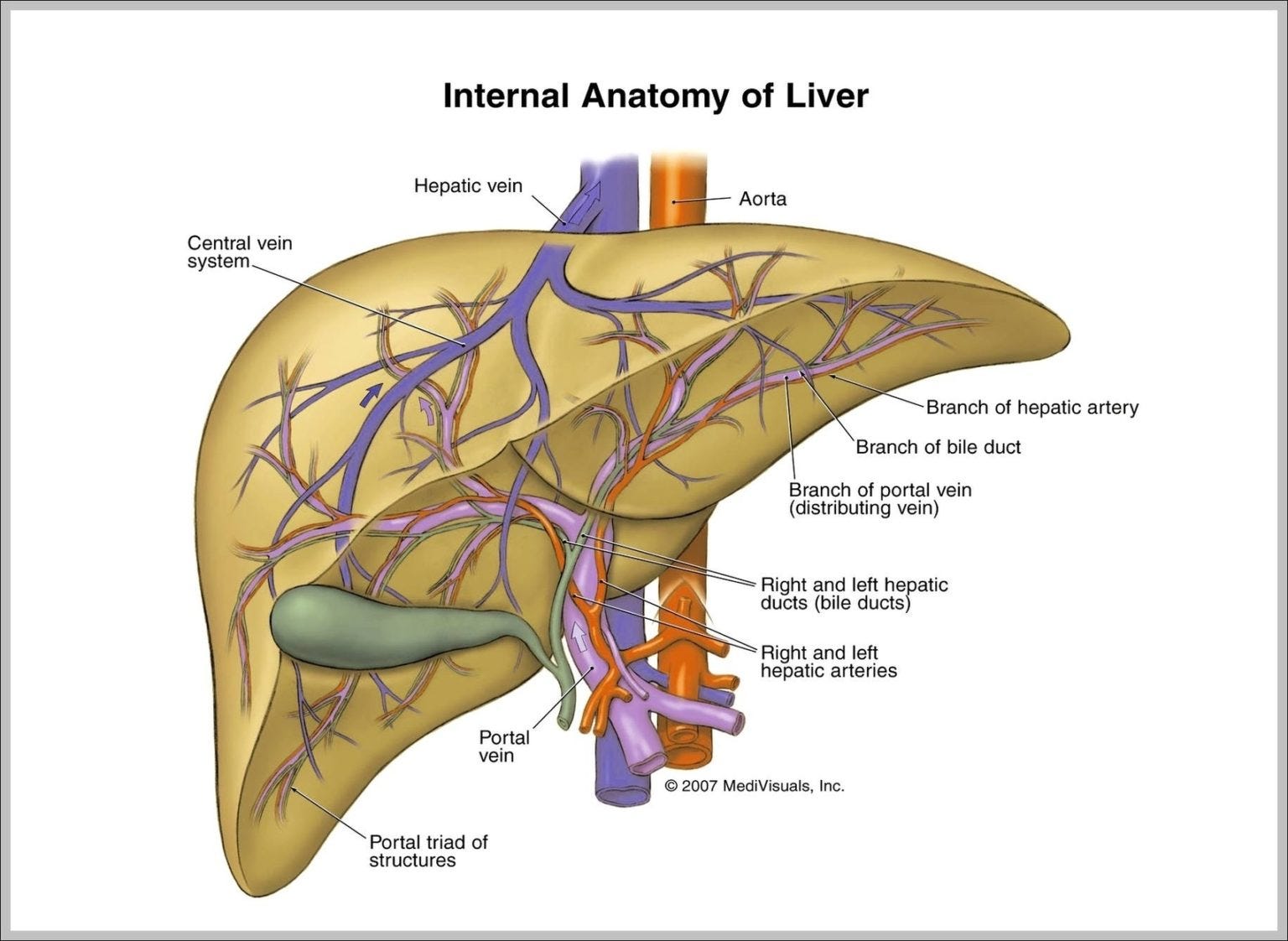
The working units of this system are hepatocytes, the functional cells of the liver, arranged in hexagonal plates called lobules. Blood flows through tiny channels called sinusoids, making direct contact with hepatocyte surfaces. Bile, the detoxification vehicle, collects in tiny canals called bile canaliculi that run between hepatocytes and drain toward the gallbladder and intestine. The whole architecture maximizes contact between blood and liver cells so that processing can happen fast and continuously.
And what exactly is being processed? The word “toxins” gets thrown around like confetti in wellness marketing, but it has a real meaning.
Your liver handles endogenous waste: spent hormones like estrogen and cortisol, bilirubin from red blood cell breakdown, ammonia from protein metabolism. It also handles exogenous compounds: pharmaceutical drugs, alcohol, pesticide residues, heavy metals, food additives, environmental pollutants.
The liver does not care whether a molecule arrived through a deliberate choice or an accident. Natural, synthetic, organic, processed.
It sees chemistry and it processes chemistry.
That processing happens in three phases.
Phase I: Biotransformation
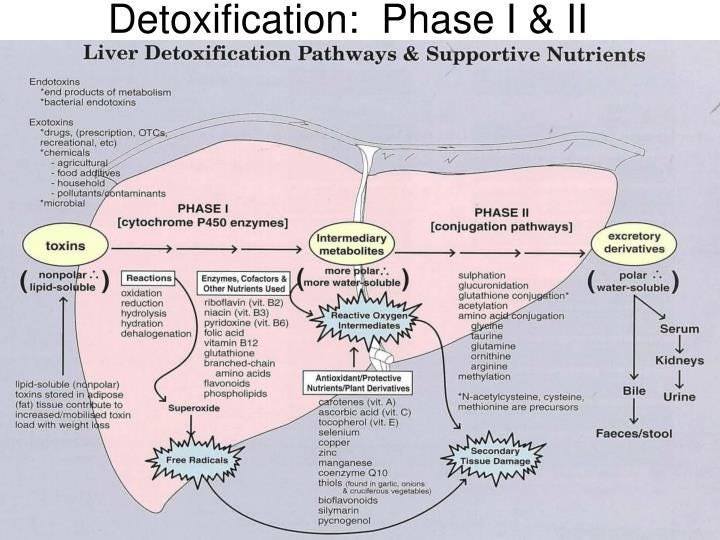
Phase I is the first hand on the assembly line. It is run primarily by a superfamily of enzymes called cytochrome P450, and if you’ve read my earlier work on herb-drug interactions, this family is already familiar to you. There are over 50 CYP450 enzymes in humans, concentrated in the endoplasmic reticulum of hepatocytes, and they perform three basic operations: oxidation, reduction, and hydrolysis. Their job is to modify the chemical structure of a compound so it becomes a suitable target for Phase II.
Most wellness content leaves this part out. Phase I does not make a compound safer. In many cases, it makes a compound more reactive and more dangerous than it was before processing began. The intermediate metabolites that Phase I produces are biologically active, capable of damaging DNA, generating free radicals, and inflicting more harm on the hepatocyte than the original substance ever did.
Think of it like stripping paint off a wall. The wall looked fine before, maybe a little dingy. But the process of stripping it exposes raw, reactive material underneath that is temporarily more vulnerable than the finished surface was. That raw wall needs to be sealed quickly, or it will deteriorate.
Phase II is the sealant.
How Herbs Interact With Medications: The CYP450 System

You find herbalism and it feels like finding a door you didn’t know existed.
Phase II: Conjugation
Phase II enzymes take those reactive intermediates from Phase I and attach a water-soluble molecule to them. This is called conjugation. It is the step that actually renders a compound safe and excretable.
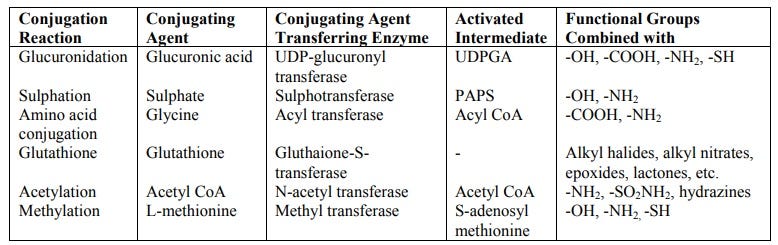
There are six major conjugation pathways, and each one uses a specific molecular tag.
Glucuronidation attaches a glucuronic acid molecule and is the most common conjugation pathway in the human body.
Sulfation attaches a sulfate group, particularly important for steroid hormones and some drugs.
Glutathione conjugation uses the tripeptide glutathione to neutralize highly reactive intermediates, and this pathway is your liver’s most powerful defense against oxidative damage.
Acetylation adds an acetyl group, primarily handling aromatic amines and certain drugs.
Amino acid conjugation uses glycine, taurine, or glutamine to tag compounds like benzoic acid for excretion.
Methylation attaches a methyl group, playing a central role in processing hormones, neurotransmitters, and histamine.
Six pathways. All of them running simultaneously. And every single one of them requires specific nutrients to function.
Glucuronidation needs UDP-glucuronic acid, synthesized from glucose. Sulfation needs sulfur-containing amino acids like cysteine and methionine. Glutathione conjugation needs glutathione, which the body builds from glycine, cysteine, and glutamic acid. Acetylation needs acetyl-CoA, sourced from B vitamins and metabolized carbohydrates. Amino acid conjugation draws directly from its namesake substrates: glycine, taurine, and glutamine. Methylation needs methyl donors like folate, B12, and betaine.
This is the actual substrate story of detoxification.
The whole game is fueling.
A liver that is nutritionally depleted, running on low protein intake, inadequate B vitamins, or insufficient sulfur-containing amino acids will have Phase II pathways that cannot keep pace with Phase I output. Those reactive intermediates from Phase I accumulate, damaging hepatocytes and generating oxidative stress until the person feels terrible, which the wellness industry then tells them means they need another cleanse.
The solution was always a properly fueled Phase II system.
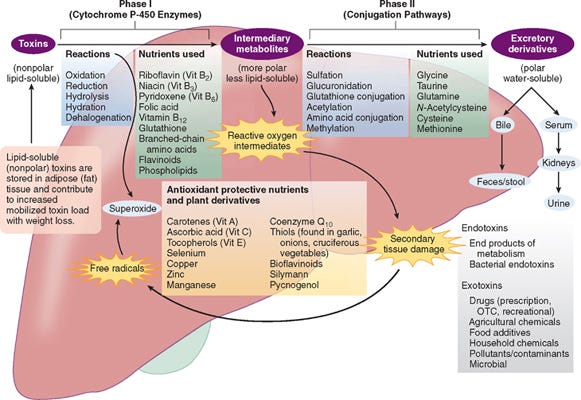
Take a look back at the graphic within the Phase I section and turn your attention to the “nutrients used” boxes. I’ll share a similar graphic here. A whole food, balanced diet is the best support for your liver.
Phase III: Transport and Elimination
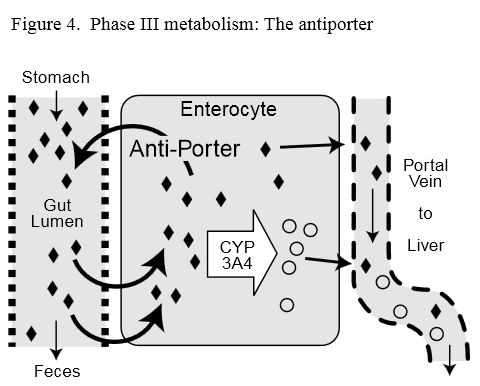
Phase II made the compound water-soluble. Phase III gets it out of the cell and out of the body. This is the export system, and it relies on transporter proteins embedded in the membranes of hepatocytes. The major players here are P-glycoprotein and the multidrug resistance-associated proteins (MRPs), particularly MRP2.
These transporters actively pump conjugated metabolites out of the hepatocyte and into one of two destinations: bile or blood.
Compounds exported into bile travel to the gallbladder, concentrate there, and are released into the small intestine during digestion. From there, they move through the intestinal tract bound to dietary fiber and are excreted in stool. This is one of the reasons fiber actually matters for detoxification, and I mean physiologically, not as a wellness platitude. Fiber binds bile-conjugated metabolites in the gut and physically escorts them out of the body. (More on fiber in an upcoming article)
Compounds exported into blood travel to the kidneys and are excreted in urine. This is the other half of the elimination equation, and it is why adequate hydration and kidney function are legitimate players in detox physiology.
There is one more piece of this system that most people never learn about, and it is one of the wildest feedback loops in human physiology.
Some conjugated compounds that enter the intestine via bile are deconjugated by bacterial enzymes, particularly beta-glucuronidase. Once the water-soluble tag is stripped off, the compound becomes fat-soluble again, gets reabsorbed through the intestinal wall, and travels right back to the liver for reprocessing.
This is called enterohepatic recirculation, and it means your gut microbiome is directly participating in your detox capacity. A gut with high beta-glucuronidase activity recirculates more waste. A gut with a healthy, balanced flora recirculates less.
Your gut bacteria are part of your liver’s exit strategy. Remember that.
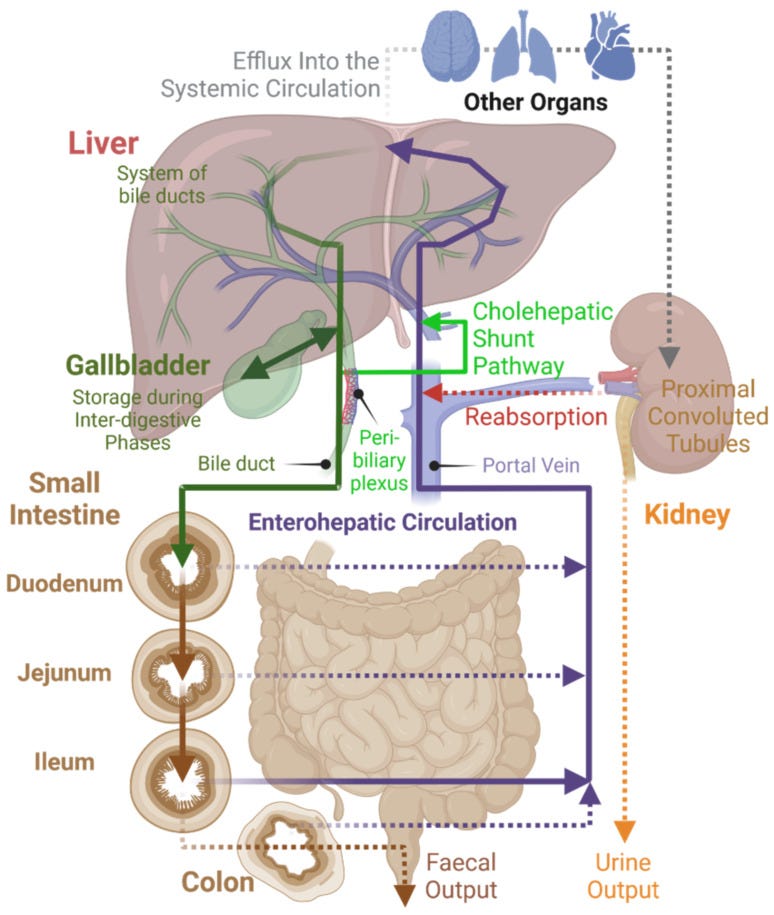
Enterohepatic circulation
Why “Detox” Products Miss the Point
The wellness industry treats detoxification as an event, something you do for a week in January, something that comes in a box with a start date and an end date. Your body treats detoxification as infrastructure. It is continuous, enzymatic, and dependent on protein intake, micronutrient status, bile flow, gut integrity, kidney function, and sleep
What actually supports hepatic detoxification is unglamorous.
Adequate protein provides the amino acid substrates that Phase II conjugation pathways require. Cruciferous vegetables contain compounds like sulforaphane that upregulate Phase II enzyme expression. Fiber binds bile-conjugated waste in the gut. Sleep supports the glymphatic system, a separate but related clearance mechanism in the brain.
Reducing overall toxic load by choosing cleaner food, filtering water, and being thoughtful about environmental exposures gives the system less to process.
None of that fits on a label. None of it looks good in a flat lay photograph. But all of it is real.
So, where does a plant fit into this machinery? There is one that has been interfacing with hepatic physiology for centuries, and it grows in the cracks of your sidewalk.

The rest of this article is for paid subscribers.
You just learned what hepatic detoxification actually looks like at the molecular level. Three phases, six conjugation pathways, and an entire export system that depends on bile, fiber, and a gut microbiome that most people never think about. Now we get into the plant.
The paid section covers Taraxacum officinale (dandelion root) and the four specific mechanisms through which it supports your liver’s existing detoxification infrastructure: bitter receptor activation and bile flow, hepatoprotection through taraxasterol and oxidative stress buffering, the kidney connection and diuretic action, and the prebiotic role of inulin in reducing enterohepatic recirculation. I also cover preparation methods, dosing, and safety considerations.
If you want to start incorporating dandelion into your daily routine while you read, my favorite coffee alternative: Dandelion Root & Chicory Coffee Alternative
Can Dandelion Root Really Cure Cancer? What the Evidence Shows

I’m sure many of you have seen a familiar image or headline floating around social media lately claiming that dandelion root cured colon cancer in two days.