



Hi friends, I’m so glad you’re back.
If you’re just joining us, last week we got into what fermentable fiber actually asks of the gut, and why “more grams the better” falls apart pretty quickly when you look at it under a microscope. The short version is that fiber lands differently from one gut to another because of four physiological pieces that vary between bodies, including how well your gut can move what you’re giving it, where your bacteria are actually living, whether your microbiome has the right species in the right numbers to handle the volume, and what kind of shape your gut wall is in when fermentation byproducts start showing up. When even one of those is off, the fiber that was supposed to help can leave you feeling pretty miserable instead.
If any of that is new to you, please pop back and read Part 1 first, as it’s the foundation for everything we’re doing today. (find it linked below!)
Today I want to bring this conversation home to where I actually live, which is the herbal piece of it. The herbal tradition has been working with fermentable fiber for centuries, and the way it’s been doing so looks almost nothing like what’s happening in the supplement aisle right now. The differences come down to a few key things:
Plants used in smaller amounts, not maximized into the highest gram count possible
Whole-plant preparations rather than isolated compounds in a tub
Bitters and digestive support woven in alongside the fiber-rich plant
A particular plant taken for a stretch and then paused, instead of added to a daily stack and never reassessed
Real attention to what a particular gut actually needs at a particular moment, rather than the same recommendation handed to everyone
The plants we’re going to walk through today have been used by herbalists, midwives, and ordinary people for hundreds of years, and the wisdom encoded in how they were used didn’t come out of nowhere, it came out of generations of careful observation about how plants actually behave in real bodies over time. The science we have now mostly confirms what the herbalists already knew, and our four plants are a really nice example of that.
Okay, let’s get into it, starting with a quick look at inulin.
Why Fiber Doesn't Work for Everyone (Part 1)

You're scrolling, maybe in bed, maybe on the couch, maybe waiting for coffee to brew. An influencer holds up a jar of chia pudding and tells you it has fourteen grams of fiber. A friend sends you a screenshot of her breakfast bowl, captioned with a small flex about hitting forty grams before lunch. Someone stitches a video about their fibermaxxing routine and lists every bar, powder, and psyllium scoop that made it into the blender. .
What Are Inulin and Fructans, anyway?
If you’ve spent any time in the gut health corner of the internet, you’ve probably seen the word inulin thrown around as if it explains itself. Even those of us in the herbalist community do this sometimes, especially when we’re talking about plants like dandelion and chicory (hint hint, we’ll get there in a minute), and the explanation often stops at “it’s food for the good bacteria.” That’s true, but it’s not the whole story, so let’s actually get into it.
Inulin is a type of soluble fiber that belongs to a larger family of compounds called fructans, which are essentially long chains of fructose molecules linked together in a way that the human digestive system simply can’t break down (Sheng et al., 2023). We just don’t have the enzymes for it. So, when you eat a food or a plant that’s rich in inulin, the inulin travels through your stomach and small intestine intact, no real action happening yet, and arrives in the colon ready to do its actual work.
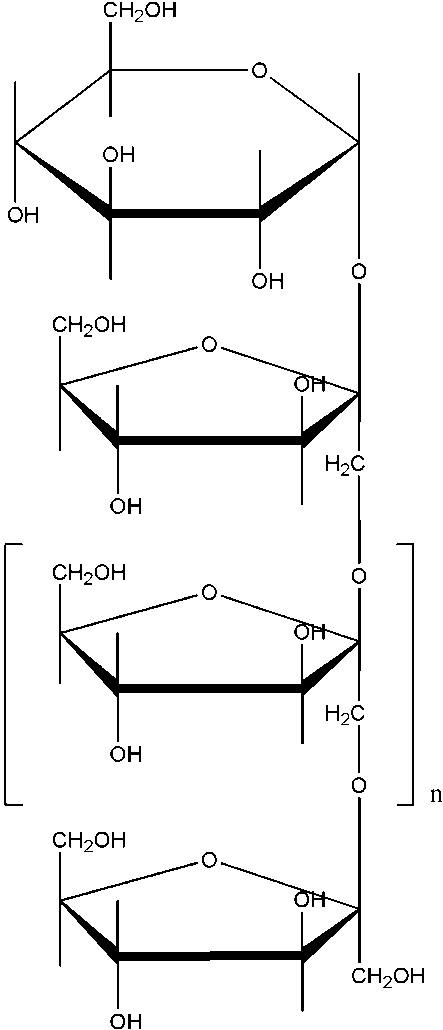
Structure of inulin, a linear fructosyl polymer linked by β-(2,1) bonds (n=3-65), attached to a terminal glucosyl residue by an α-(1,2) bond. (Meyer et al., 2015)
Where the Real Action Happens
The colon is where things get interesting, because the bacteria living there absolutely can break inulin down. They ferment it, and the byproducts of that fermentation are short-chain fatty acids, mostly acetate, butyrate, and propionate (Sheng et al., 2023). (We are pros on SCFAs by now!) These three molecules are responsible for a huge amount of fiber’s reputation as a gut health hero.
Butyrate in particular is the preferred fuel source for the cells lining your colon, which means a well-fed microbiome producing plenty of butyrate is actively nourishing the tissue that forms your gut barrier.
Propionate and acetate enter circulation and end up acting as signaling molecules in tissues all over the body, which is part of why fiber’s benefits show up in places that don’t seem obviously related to the gut, like cardiovascular health and metabolic regulation.
Another really important piece here is where the herbal tradition’s intuitions about these plants line up beautifully with what the modern science is now confirming. Inulin fermentation also helps maintain the integrity of the gut barrier itself, by promoting the expression of tight junction proteins (those molecular zippers that hold your gut wall cells together) and by encouraging your goblet cells to produce more of the protective mucus layer that sits between your bacteria and your tissue (Sheng et al., 2023).
On top of that, the SCFAs produced by inulin fermentation help regulate the immune cells living in your gut wall, nudging them toward a more tolerant, less inflammatory state. So, when we say a plant is supporting gut health, what we’re often actually saying is that the plant is feeding the bacteria that produce the molecules that build the barrier and calm the immune response.
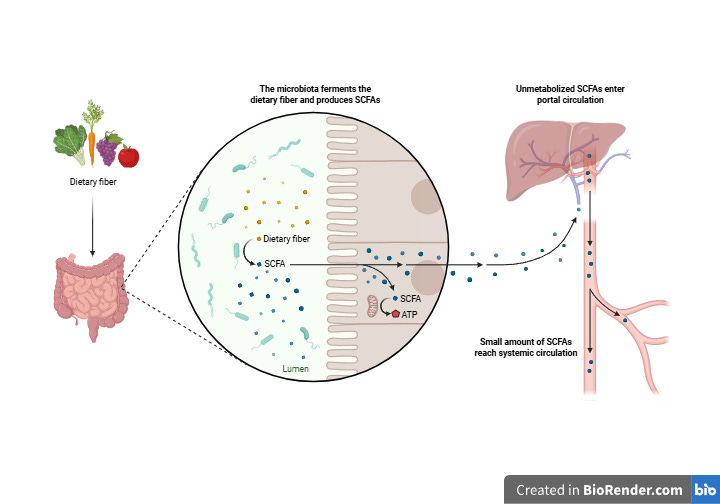
Created in BioRender
The Company the Molecule Keeps
Inulin is everywhere in the foods and herbs you already eat, including garlic, onion, asparagus, leek, ginger, Jerusalem artichoke, and many others (Sheng et al., 2023). What makes the herbal tradition’s relationship with inulin different from the supplement industry’s is the company the molecule keeps.
When you ingest inulin in chicory root, you’re also ingesting bitter compounds that prime the digestive system, polyphenols that have their own antioxidant and immune effects, and a host of other constituents that change how the inulin behaves once it hits your gut. This is exactly why herbalists have always vouched for whole-plant medicine over reductionist isolates, because the body evolved to process inulin alongside the rest of the plant, in concentrations that match what you’d actually find in nature, with all the supporting compounds in their original ratios.
This is also why the dose conversation gets interesting. Sheng et al. (2023) note that inulin consumption under 40 grams per day is generally considered safe for healthy adults, but they also flag that high-dose inulin can cause real problems for people with inflammatory bowel disease, allergies, or sensitive guts, and even in healthy populations, the most common side effects (bloating, gas, flatulence) are dose-dependent.
The supplement industry tends to encourage people to push toward the upper end of the tolerable range, because more is presumed to be better.
The herbal tradition has historically operated at the much lower end, where the inulin is one ingredient among many in a tea or a tincture or a roasted root preparation, and where the dose is calibrated to what a particular person actually needs in a particular moment.

Bringing It Forward
So, when we get into chicory, dandelion, and plantain in the next sections, I want you to keep this whole picture in mind.
These plants are delivering inulin in a form your body has spent a long time learning how to process, the SCFAs they produce are feeding your colonocytes and supporting your barrier and modulating your immune system, and the way these plants have been traditionally prepared and dosed (with all of their other compounds along for the ride) is a big part of why they tend to land more gently on the gut than the isolated supplement form does. There’s nothing mystical about any of this. It’s a more attuned relationship with the chemistry than what we get when we strip a single molecule out of a plant and put it in a powder.
Chicory (Cichorium intybus)
Most of us in the United States have probably encountered chicory without realizing it. The bright blue wildflower growing along the side of the road in late summer is chicory, and that bitter “coffee alternative” sold at health food stores is most likely roasted chicory root. The plant has been part of European and North American herbal traditions for centuries, and Felter and Lloyd noted in their 1898 King’s American Dispensatory that the root acts as a tonic, diuretic, and laxative, with the decoction used for liver-related complaints, skin eruptions, and what they called “engorgement of the liver.” That’s old language for what we’d now describe as sluggish hepatic function and bile flow, and it lines up beautifully with what the modern research is showing.
Chicory root is one of the most concentrated whole-food sources of fermentable fiber we have access to. The taproot is roughly one-third (!!!) inulin by composition, with nearly 90% of its dry weight coming from fiber overall (Puhlmann & de Vos, 2020). Alongside the inulin, the root contains pectin, hemicellulose, and a class of bitter compounds called sesquiterpene lactones that give chicory its signature flavor and prime your digestive secretions before the inulin ever reaches the colon (Puhlmann & de Vos, 2020). Puhlmann and de Vos titled their paper “Back to the Roots” for exactly this reason, because the whole chicory taproot has a fundamentally different effect on the gut than a tub of isolated inulin powder, even though they share the same primary fermentable fiber.

What the Research Shows
The clinical research on chicory has been encouraging. In a randomized, double-blind, placebo-controlled trial of 47 healthy adults, daily consumption of roasted chicory root extract for four weeks improved blood glucose, lipid metabolism, and bowel movement frequency (Nishimura et al., 2015). The participants weren’t doing anything wild, just drinking 300 milliliters of a chicory root extract drink daily, the kind of intake that actually fits into someone’s morning routine. The improved bowel movements make total sense if you remember what we walked through earlier, because the inulin is fermenting in the colon and the resulting SCFAs are supporting motility and stool hydration the whole way through. The glucose and lipid changes are coming from a similar place, since Bifidobacterium and Anaerostipes species ferment inulin into SCFAs that improve insulin sensitivity and tamp down inflammation (Alonso-Allende et al., 2024). It’s the same molecular conversation, happening in two different tissue conversations, all from one humble blue wildflower.
What I love about chicory specifically is that it’s a place where the herbal tradition and the clinical research really do meet in the middle. Felter and Lloyd were prescribing chicory decoctions for hepatic complaints in 1898 because they could see the effect on their patients sitting in front of them, even if they didn’t have the molecular vocabulary for what was happening. The modern researchers running these RCTs are now tracing those same effects all the way down to the specific bacterial genera doing the fermentation work, and what they’re finding is, essentially, that the Eclectics were right. The mechanism is more articulate now, but the clinical observation has held up across more than a century.
If you’ve ever had a chicory coffee blend, or made a decoction of roasted chicory root yourself, you’ve been participating in a centuries-old herbal practice that the modern research is now validating in clinical trials.
The herbal tradition has typically prepared chicory as a decoction of the dried roasted root (about an ounce of root to a pint of water, simmered) or as a tincture, with the bitter and hepatic actions being the main therapeutic targets (Felter & Lloyd, 1898). It pairs traditionally with dandelion, which we’ll get to next, since the two plants share an inulin-rich, bitter, hepatic action and have been used together in liver and digestive formulas for a long time. The doses have always been modest, a cup of decoction once or twice a day, nothing like the bulk-loading that a tub of isolated inulin powder invites.
The rest of this piece is for paid subscribers. Below the paywall, I cover dandelion's seasonal personality and how the inulin concentration in the root shifts dramatically depending on when it's harvested, plus the species-specific caveat about plantain that the wellness feed tends to overlook.
If you’ve been finding value in this work, please consider upgrading to support it. Paid subscribers also get access to the Materia Medica index (a growing reference of plants I’ve covered, organized for easy lookup) and the Body Systems index (a growing reference of physiology pieces, organized by system), both of which are building out into a real working library you can use alongside your own practice.
