


I’m sure many of you have seen a familiar image or headline floating around social media lately claiming that dandelion root cured colon cancer in two days.
It is the kind of post that spreads quickly, hopeful and dramatic, shared thousands of times. Suddenly this humble weed is being praised as a miracle cure.
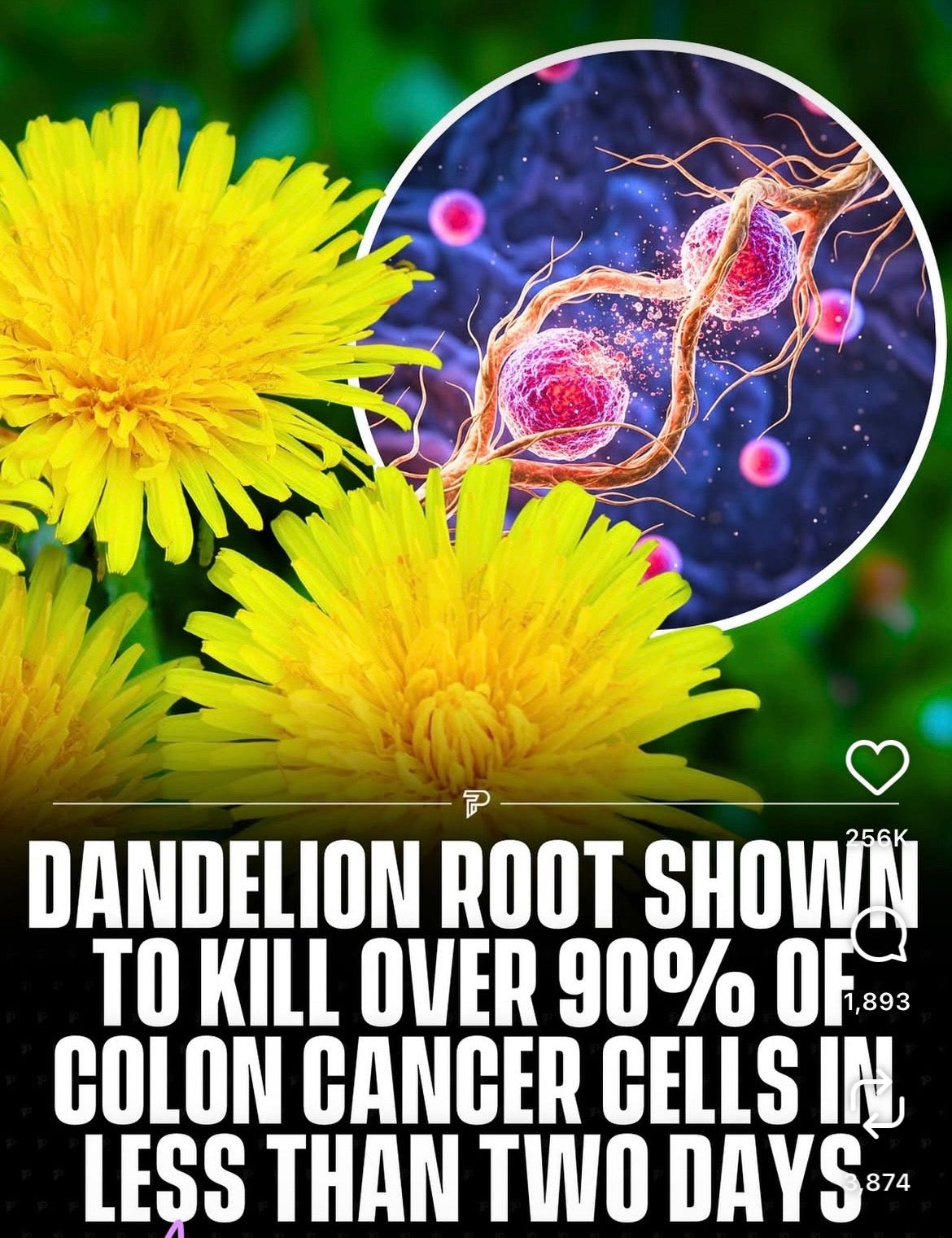
Taken from Instagram
And I understand why.
Those of us who love plant medicine feel a spark of excitement when an herb we respect steps into the spotlight. We want to see people reconnecting with nature, exploring alternatives, and finding hope where conventional medicine can feel limited. But not everything circulating online is rooted in truth, and some of it is deliberately distorted.
Propaganda exists in wellness spaces too.
The natural health world has its share of grifters, influencers, and self-proclaimed experts who cherry-pick studies or misquote laboratory research to sell “detox” kits and supposed cancer-curing protocols. It is easy to get swept up in their confidence, especially when their words sound spiritual or scientific. Practicing discernment is an act of protection for your mind, your wallet, and your health.
So, before we go any further, let’s take a step back.
Let’s meet Taraxacum officinale, the dandelion, for what it actually is: a remarkable and complex plant with genuine benefits and clear limitations. The truth, as always, is far more nuanced and more interesting than a viral post could ever capture.
Back in February of this year, I wrote an article on dandelion that asked an important question: Are we finally ready to listen? You can read the full piece here: Dandelions Have a Message for Us. Are We Finally Ready to Listen?

Dandelion: A Wild Weed with Serious Medicinal Power
Often dismissed as a stubborn weed, dandelion (Taraxacum officinale) is actually a powerhouse of nutrients, bioactive compounds, and therapeutic potential. Used for centuries in traditional medicine, this resilient plant is rich in compounds that support detoxification, regulate inflammation, aid digestion, strengthen immune function, and even offer antimicrobial protection.
And the best part? Every single part of the plant, including the root, leaves, flowers, and even seeds, holds medicinal value.
Even its name tells a story. Dandelion comes from the French dent de lion, meaning “lion’s tooth,” a nod to its jagged, lance-shaped leaves. But this plant has gone by many names across cultures: pissabed, Irish daisy, blow ball, lion’s tooth, bitterwort, priest’s crown, wild endive, puffball, clock flower, fortune-teller, and cankerwort. Each name reflects a moment in its long relationship with people and place.
Dandelion was not just folk medicine; it was once part of the United States National Formulary from 1888 to 1965, and its dried root appeared in the official United States Pharmacopoeia. That’s right, this so-called weed was once legitimate medicine. Maybe it is time we start seeing it that way again.
A Full-Body Herbal Ally
Dandelion thrives in nearly any environment and can be harvested from spring through fall. Its signature milky sap runs through every part of the plant. While its bitterness, courtesy of sesquiterpene lactones, might deter some, that very bitterness is what makes it so powerful for digestion and liver health. That is why we keep our bitters bitter, friends. Adding sweetness takes away this key benefit.
Beyond digestion, dandelion’s polyphenolic compounds, including chlorogenic acid, quercetin, chicoric acid, and hydroxycinnamic acids, give it a wide range of pharmacological actions, from antioxidant and anti-inflammatory to antimicrobial and immune-modulating.
Let’s take a closer look at where these claims about dandelion and cancer actually began, and what the science really shows.

The Research Behind the Viral Story
The viral claims trace back to Ovadje et al. (2016), published in Oncotarget. The researchers created a concentrated hot water extract of dandelion root, much stronger than what anyone could brew or find in a supplement. They tested this extract on two human colon cancer cell lines and one normal colon cell line to compare how each responded.
They measured several outcomes, including cell survival, programmed cell death, cell migration, mitochondrial function, oxidative stress, and changes in genes linked to cell survival or death. Once they confirmed effects in the lab, they moved on to mice. Healthy mice received the extract daily for 75 days to test safety, while another group with human colon tumor grafts was given the same dose to see if it slowed tumor growth.
To read the full results section of the study, click here.
What They Found
In petri dishes, the extract reduced the survival of colon cancer cells in a time and dose dependent way, while normal colon cells were mostly unaffected. This suggested some degree of selectivity, which researchers often look for in early herbal studies.
