



A few days ago I posted a Note. Here’s what it said:
Ashwagandha is not a vitamin.
Somewhere along the way, this root got rebranded as a daily chill pill. Something you toss back with your morning coffee and forget about. And now it’s in everything. Gummies. Protein powders. Gas station energy drinks. People are taking it the way they take vitamin D. Every single day, no questions, indefinitely.
But this plant does something specific. Ashwagandha stimulates thyroid activity. It nudges your thyroid to produce more hormone. If your thyroid is sluggish, that can be genuinely useful, under the right circumstances, with monitoring. If your thyroid is already doing its job? You are now revving a gland that was humming along just fine. Thyroid tissue does not like being pushed when it has nowhere to go. That’s how you end up jittery, wired, losing hair, and blaming it on stress while you reach for another gummy.
Adaptogens are powerful precisely because they shift things. That is the whole point. And an herb that can help you is an herb that can change you. Those are the same sentence. That’s worth sitting with before you make any plant part of your daily routine.
At the time of writing this, that Note is sitting at 330 likes and over 6,000 clicks, whatever clicks actually means on Substack. It got shared, screenshotted, sent to group chats. It started conversations. Some people wanted to know more. Some pushed back. Some had questions about their own use. That told me everything. A plant that this many people are taking and feeling strongly about deserves more than a Note. It deserves a proper look.
Because somewhere in the normalization, the plant itself got buried. What it actually does. How it moves through your body. Why every tradition that used it for thousands of years used it with intention, with assessment, with a reason to stop.
This is that proper look.
What we’re talking about here:
The Plant Before the Gummy · where ashwagandha comes from and how it was used for three thousand years before it became a checkout aisle impulse buy
What’s Actually in the Root · the phytochemistry, beyond the marketing
The Withanolide Family · the steroidal lactones doing most of the heavy lifting
Where Ashwagandha Enters the Body · thyroid, stress axis, nervous system, immune signaling
Why This Plant Doesn’t Do the Same Thing in Every Body · your enzymes, your microbiome, your stress axis, and why none of that is on the label
For paid subscribers:
What the Research Actually Says (and What It Doesn’t) · the cortisol studies, the duration gap, the thyroid blind spot, the liver signal
The Product Problem · KSM-66 vs. Sensoril vs. Shoden vs. the bottle at the store
Who This Plant is For · what appropriate use actually looks like, and when to stop
If ashwagandha is in your cabinet right now, keep reading. If you’re thinking about adding it, definitely keep reading.
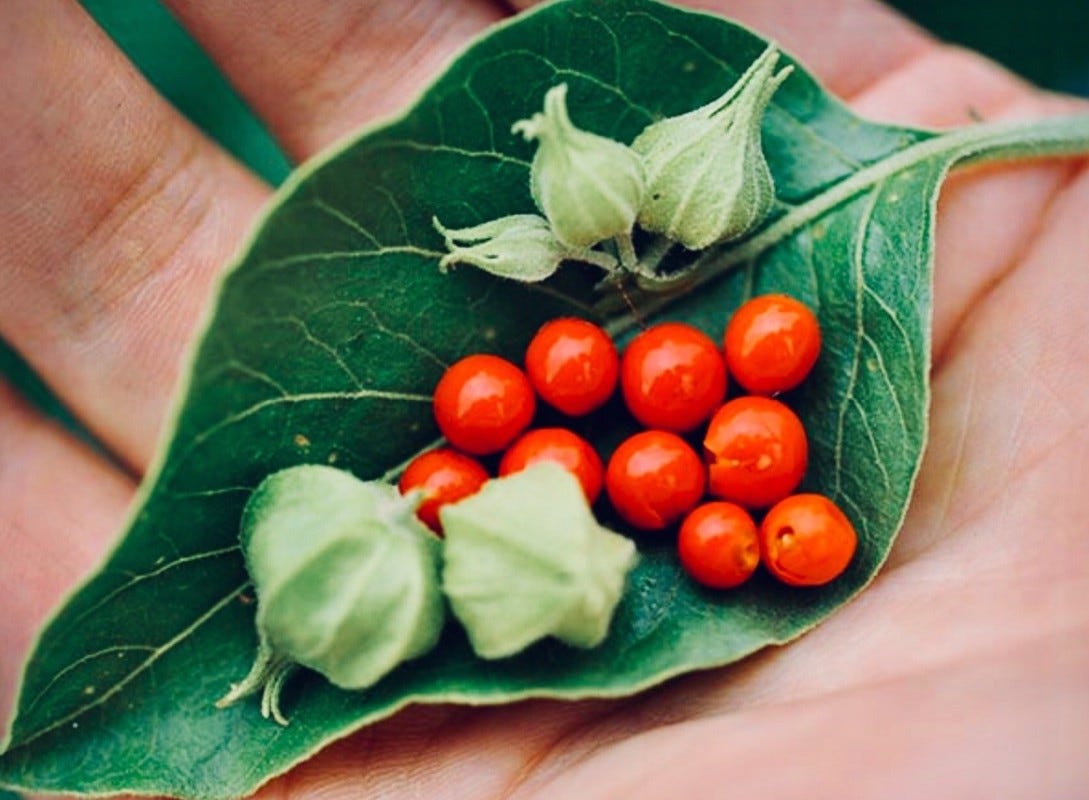
Withania somnifera
The Plant Before the Gummy
Withania somnifera belongs to the Solanaceae family. Tomatoes. Peppers. Deadly nightshade. A lineage known for biochemical intensity and for plants that tend to interact deeply with physiology. Ashwagandha sits within that tradition, and it has been in relationship with human bodies for more than three thousand years. Its history unfolds inside medical systems that approached plants as active contributors to health.
The earliest written records of ashwagandha appear in the foundational texts of Ayurveda. The Charaka Samhita, compiled around 100 BCE but rooted in much older oral teachings, describes the plant in detail, outlining its qualities, energetics, and applications. The Sushruta Samhita does the same. In both texts, ashwagandha is classified as a rasayana, a designation reserved for rejuvenative substances intended to support longevity and sustain vitality across the lifespan. Rasayana herbs were prescribed deliberately, matched to constitution, and observed over time.
A plant understood to restore the body was also understood to influence its internal equilibrium.
The Sanskrit name reflects how the tradition interpreted the root. “Ashwa” means horse, where “Gandha” means smell. The name acknowledges the root’s pungent aroma while also invoking the qualities associated with a horse: stamina, endurance, resilience. The plant was traditionally given to warriors, laborers, and the aging, to people living under sustained physical demand. The symbolic framing aligns closely with physiological themes of recovery, strength, and sustained output.
Classical Ayurvedic texts describe ashwagandha as bitter, astringent, and sweet in taste, with warming energetics and a sweet post-digestive effect. These descriptors functioned as clinical shorthand. Warming herbs were used where depletion, coldness, or stagnation shaped the presentation. Ashwagandha was understood to balance vata and kapha while requiring discernment in individuals with strong pitta.
These distinctions shaped dosage, timing, and duration, embedding the plant within a structured therapeutic context.
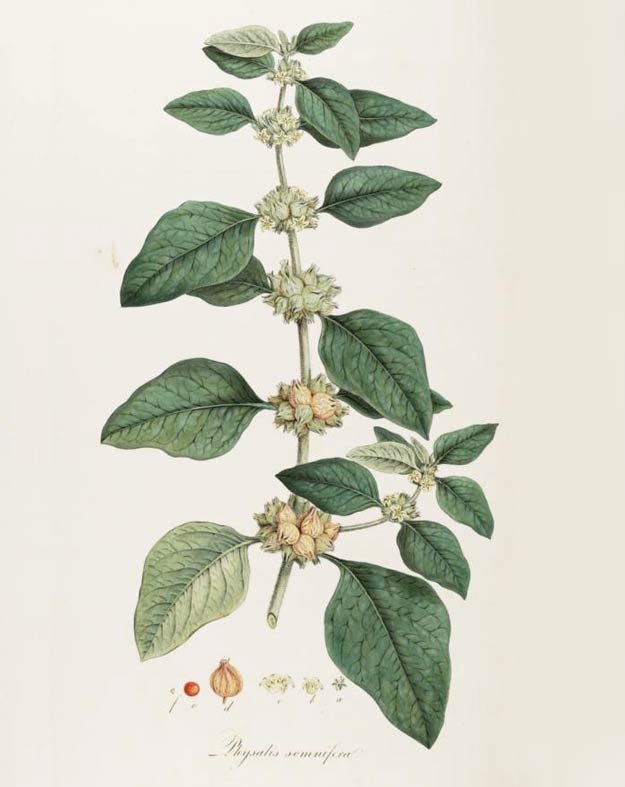
Movement Across Medical Traditions
Ashwagandha is native to a broad geographic range spanning India, the Middle East, and parts of North Africa. Trade routes carried it into the Unani medical tradition, where Greek and Islamic medical frameworks intertwined, and practitioners across the Middle East incorporated the root into their own preparations over centuries. Botanical knowledge traveled alongside other forms of exchange, gradually embedding itself in regional medical practice.
Ancient Greek writers grouped certain plants under the name struchnon, a category that included several Solanaceae species. At least eight early Hippocratic treatises reference plants in this group, primarily black nightshade, used as analgesics and diuretics in post-partum, hepatic, and inflammatory conditions. Theophrastus, writing at the end of the third century BCE, began distinguishing among these species. He described a domestic form, a sleep-inducing one (struchnon upnôtikon, now associated with Withania somnifera), and a mind-altering one (struchnon manikon). These distinctions represent an early attempt to correlate plant identity with physiological effect.
Alexander the Great’s expedition into India occurred shortly before Theophrastus was writing. Naturalists accompanying the campaign documented unfamiliar environments and medicinal practices, returning with specimens and recorded observations. Related Solanaceae species were already present in the Mediterranean, and knowledge of their uses appears to have circulated alongside the expanding exchange of botanical information. Descriptions of sleep-inducing plants within Greek texts and Ayurvedic accounts of Withania somnifera illustrate the gradual movement of medical knowledge across regions.
By the time Dioscorides discussed the plant centuries later, its sedative qualities were recognized in Mediterranean medicine. Practitioners compared it to poppy, noting that winter cherry produced gentler effects. The plant became incorporated into Mediterranean pharmacological thinking and continued to be used in contexts involving rest, recovery, and nervous system support.

Clusius, Carolus (1526-1609), Rariorum plantarum historia vol. 1. Antverpiae: Joannem Moretum, 1601
European botanical interest developed later. During the sixteenth and seventeenth centuries, botanical gardens and scholars began cataloging Withania somnifera, documenting it alongside other plants with established roles in longstanding medical traditions. By that time, ashwagandha had already been in continuous human use for millennia across multiple systems of medicine and across continents.
That is the plant the supplement industry eventually turned into a gummy.
What’s Actually in the Root
Ashwagandha contains a wide range of phytochemicals, including alkaloids, steroidal lactones, terpenoids, and phenolic compounds. These form the biochemical basis for how the plant interacts with human physiology.
Early phytochemical work on Withania somnifera began in the early twentieth century, when researchers first isolated compounds such as withaniol, somnirol, withanic acid, and a series of alkaloids from root and leaf extracts.
Subsequent studies identified additional alkaloids including somniferine, withanine, pseudowithamine, and related nitrogen-containing compounds, along with tropane derivatives such as tropine and cuscohygrine.
These molecules are part of the broader Solanaceae chemical profile, a family known for compounds that influence the nervous system, endocrine signaling, and cellular stress responses.
The plant also contains amino acids, sterols, sugars, and fatty acids, as well as phenolic acids such as caffeic and ferulic acid. These compounds contribute to antioxidant capacity, metabolic signaling, and tissue-level effects that extend well past any single molecule.
The presence of these different chemical classes is one reason extracts of the whole root behave differently from isolated fractions. Each preparation carries a slightly different chemical fingerprint depending on plant part, growing conditions, and extraction method. What reaches the body is always a mixture.
The Withanolide Family
The compounds most often discussed in modern research are the withanolides, a group of steroidal lactones that share a modified ergostane backbone. Structurally, they resemble endogenous steroid molecules. That resemblance is why they interact with hormonal signaling pathways, inflammatory cascades, and cellular stress mechanisms.
Dozens of withanolides have been identified in Withania somnifera, including withaferin A, withanolide A, withanolide D, withanone, and various withanosides.
These compounds differ slightly in side-chain orientation, hydroxyl placement, and epoxide configuration, and those small structural differences shape how they behave biologically. Some show stronger cytotoxic or anti-inflammatory activity in vitro. Others lean toward neuroprotective or endocrine effects.
The concentration of withanolides varies widely depending on geography, chemotype, plant age, and extraction method.
Leaves often contain higher levels of withaferin A.
Roots carry different withanolide profiles and glycosidic derivatives.
Standardized extracts usually focus on total withanolide percentage, though that number alone says little about the plant’s full activity, since individual withanolides carry distinct pharmacological properties.
The chemistry of ashwagandha reads like a biochemical network. Alkaloids, steroidal lactones, saponins, and phenolics each contribute different signals once the plant enters the body. The effects people feel from ashwagandha emerge from that layered chemistry, from the whole mixture arriving together.

Chemical structures of the main active compounds present in Ashwagandha (Withania somnifera) root.
Where Ashwagandha Enters the Body
Ashwagandha does not move randomly through the body. Its effects tend to gather in a few regulatory systems that govern metabolism, stress signaling, nervous system tone, and immune coordination. Once you see where it tends to land, its reputation becomes easier to place.
Thyroid Signaling
The thyroid sets the tempo for metabolic activity through secretion of triiodothyronine and thyroxine. These hormones influence mitochondrial output, protein turnover, reproductive signaling, and temperature regulation. When thyroid activity shifts, the change rarely stays contained.
Human data suggest that ashwagandha can increase circulating thyroid hormones in certain contexts. In a randomized, double-blind trial involving individuals with subclinical hypothyroidism, participants receiving 300 mg of root extract twice daily for eight weeks showed measurable increases in serum T3 and T4 alongside reductions in TSH.
By week eight, T3 levels had risen by more than forty percent relative to baseline, with parallel changes in T4 and corresponding feedback suppression of TSH.
Animal models show a similar pattern. In hypothyroid rats, administration of ashwagandha extract restored T3 and T4 concentrations toward normal ranges and improved thyroid histology, indicating active hormone synthesis within the gland. Findings across both human and animal work point toward increased thyroidal output with feedback adjustments through the hypothalamic–pituitary–thyroid axis.
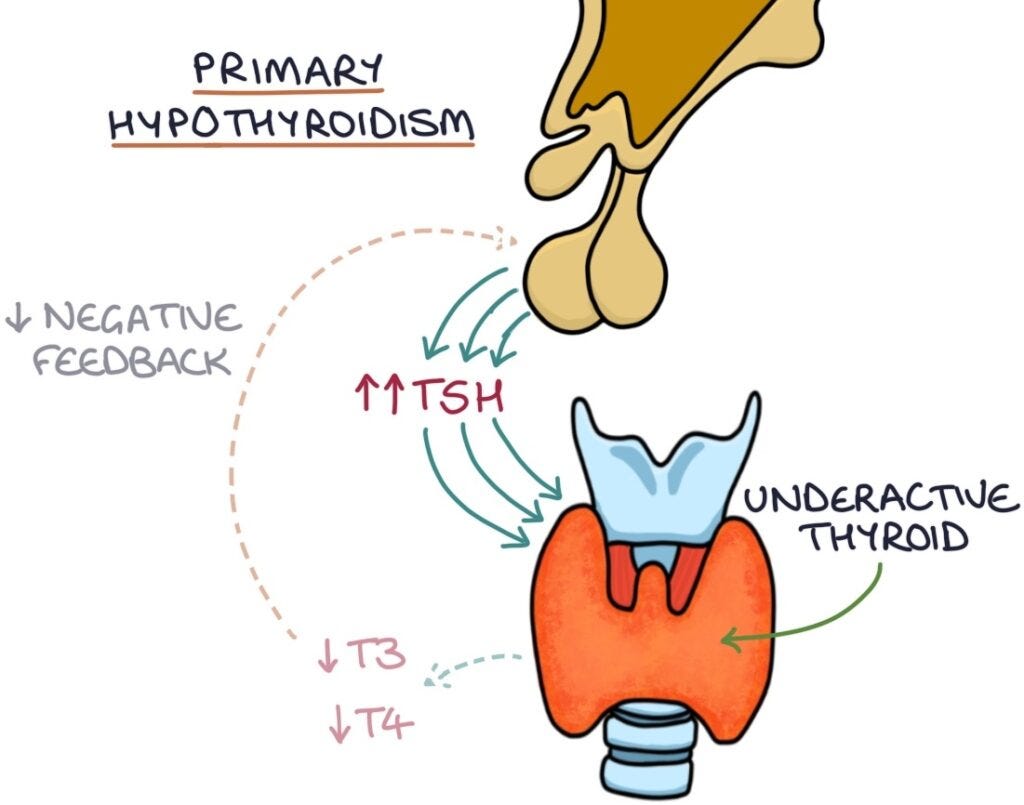
Reports of thyrotoxicosis in individuals taking high daily doses reinforce this pattern. The plant appears capable of increasing metabolic signaling, and when that signaling overshoots, the body responds accordingly.
Nervous System Tone
The nervous system effects of ashwagandha follow closely from its endocrine activity. Experimental models show modulation of inhibitory neurotransmission, including activity at GABA-associated receptors involved in anxiety regulation and sleep initiation. Animal studies demonstrate longer non-REM sleep phases and shorter sleep latency following administration of root extracts.
Human trials echo this pattern. In studies of adults with insomnia or chronic stress, supplementation improved sleep efficiency, reduced nighttime awakenings, and increased subjective restfulness. These shifts occurred alongside changes in cortisol and inflammatory markers, suggesting that the sleep effects reflect broader regulatory shifts rather than a single sedative pathway.
Immune Coordination
Ashwagandha also interacts with immune signaling networks. Studies in animals and humans show increased activity of natural killer cells, macrophages, and lymphocytes after supplementation. Small clinical trials report increases in immunoglobulins and enhanced NK cell cytotoxicity following sixty days of standardized extract intake.
At the molecular level, withanolides influence transcription pathways involved in inflammation and oxidative stress, including NF-κB and Nrf2 signaling. These pathways shape cytokine release, cellular defense responses, and tissue repair processes. Observed shifts in cytokine profiles suggest the plant participates in immune coordination across multiple layers of signaling.
Ashwagandha keeps showing up in systems that regulate pace, recovery, and resilience. Metabolic signaling. Stress response. Neural rest cycles. Immune surveillance. Those are the networks that decide how steady the body feels from day to day. When a plant engages those networks, it does not stay neutral. It becomes part of the conversation your physiology is already having with itself.
Stress Signaling
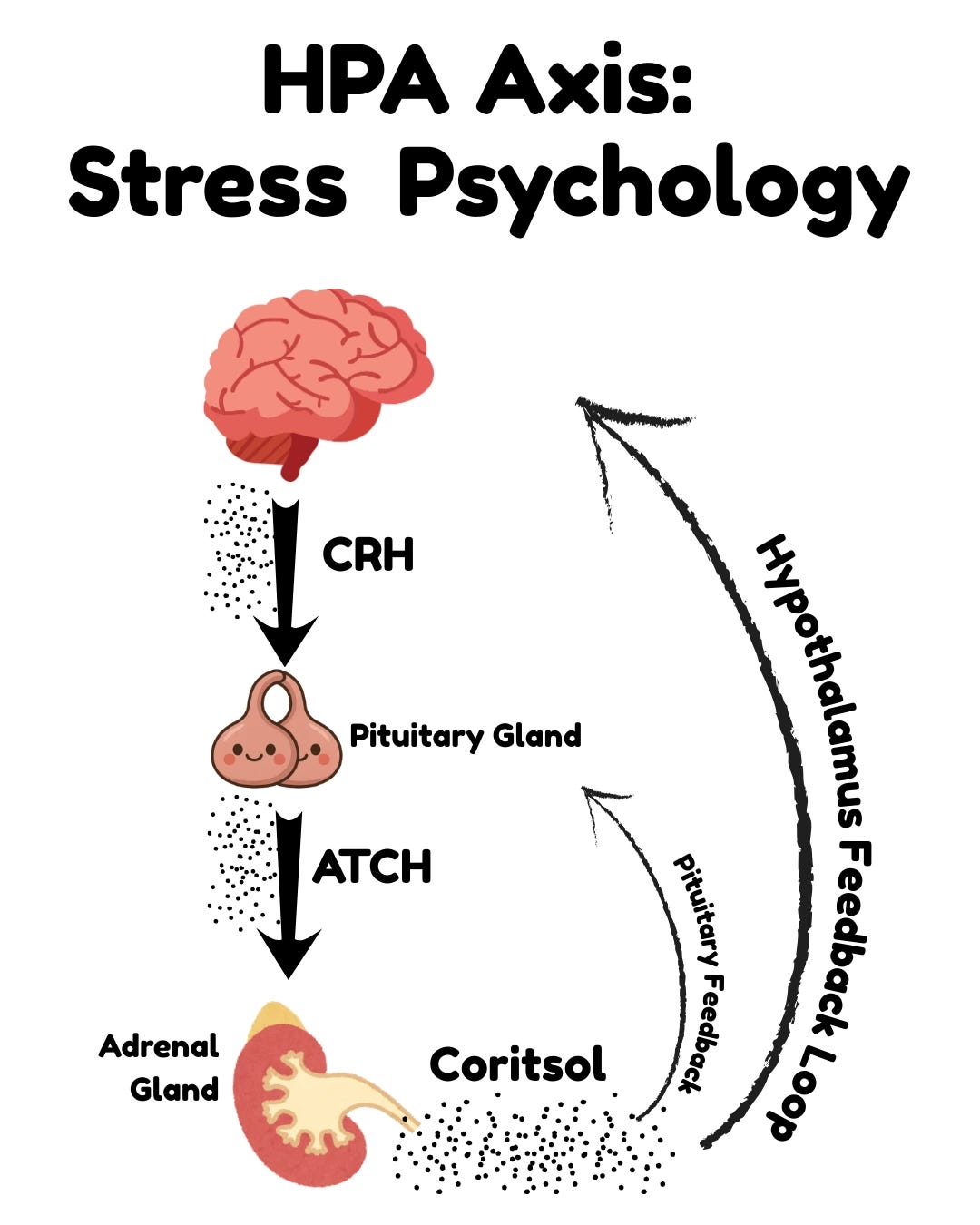
Ashwagandha also interacts with the system that coordinates the body’s response to stress. The hypothalamic–pituitary–adrenal axis governs cortisol rhythms, circadian timing, and the shift between alertness and recovery.
Several controlled trials have documented reductions in cortisol among participants taking standardized extracts. In one eight-week randomized study, individuals receiving between 250 and 600 mg of root extract daily showed significant reductions in serum cortisol along with improvements in perceived stress scores and sleep quality. Another trial reported roughly a twenty-three percent reduction in morning cortisol over sixty days.
Preclinical work suggests that these changes involve alterations in hypothalamic signaling and neurotransmitter pathways that regulate endocrine output. The plant seems to influence the threshold at which the stress response engages, which helps explain why its effects show up in both mood and physiology.
Why This Plant Doesn’t Do the Same Thing in Every Body
One of the most persistent assumptions in supplement culture is that a compound does one thing. You take it, it does the thing, end of story. Ashwagandha lowers cortisol. Ashwagandha supports thyroid. Ashwagandha helps with stress. These statements get repeated so often they start to sound like fixed properties of the molecule, as if the withanolides arrive in your body and execute a single predetermined program.
They do not. And this is where it gets interesting.
What ashwagandha does once it enters your system depends on at least three variables that are unique to you, operating simultaneously, and completely invisible on the label.
Your Enzymes
Every compound you ingest, whether it comes from a pharmacy or a plant, has to be metabolized. Your liver does the bulk of this work through a family of enzymes called cytochrome P450s. These enzymes determine how quickly a compound is broken down, how long it stays active in your system, and what it gets converted into along the way. They are, for all practical purposes, the customs office between what you swallow and what your blood actually sees.
Here is where it gets individual.
The genes encoding your CYP450 enzymes are polymorphic, meaning they exist in different variants across the population. Depending on which variants you carry, you may be a poor metabolizer, an extensive metabolizer, or an ultra-rapid metabolizer of any given compound.
This is well established in pharmaceutical pharmacology. It is equally true for herbal compounds, and it is dramatically underappreciated in the supplement world.
Ashwagandha's withanolides and withanosides act as substrates for CYP3A4, one of the most active drug-metabolizing enzymes in the human liver. A substrate is any compound that an enzyme recognizes, grabs, and chemically alters. Your liver uses CYP3A4 to break down roughly half of all pharmaceutical drugs currently on the market. When you swallow an ashwagandha capsule, the withanolides enter that same processing line. They occupy the same enzyme that would otherwise be metabolizing your birth control, your blood pressure medication, your antihistamine, your statin. Enzymes can only process so many molecules at once. If withanolides are occupying CYP3A4, other compounds waiting in line get processed more slowly, which means they stay active in your bloodstream longer and at higher concentrations than intended.
Recent research has shown that ethanol-based ashwagandha root extracts can also change how much CYP3A4 your liver produces in the first place (Raichura et al., 2025). The plant is not just standing in line. It is altering the size of the line.
The speed and efficiency of that machinery varies from person to person based on genetics.
Two people can take the same capsule, at the same dose, and end up with meaningfully different concentrations of active compounds circulating in their blood. One may clear the withanolides quickly and feel very little. Another may metabolize them slowly, allowing compounds to build and produce effects that were never intended at that dose. The product is identical. The pharmacy inside each body is not.
Your Microbiome
Before ashwagandha ever reaches your liver, it passes through your gut. And your gut is not a passive transit system. It is a metabolic organ in its own right, populated by trillions of microorganisms that actively break down, transform, and convert the compounds passing through. Think of it as a second processing facility that your supplement has to pass through before it even gets to customs.
The conventional assumption has been that most drug metabolism happens in the liver and that individual differences are mainly genetic. But current evidence suggests that only about 60% of individual variation in drug metabolism can be attributed to host genetics. Which means a full 40% of the variation is coming from somewhere else. The gut microbiome is emerging as one of the most significant players in that remaining space.
Gut bacteria produce enzymes like glycoside hydrolases, reductases, and esterases that can cleave herbal compounds into smaller molecules before they are absorbed. Sometimes these microbial metabolites are more bioactive than the parent compound. Sometimes they are less active. Sometimes they head in an entirely different pharmacological direction. The composition of your microbiome, shaped by your diet, your environment, your antibiotic history, and dozens of other factors, determines which of those enzymatic pathways are even available to you.
Research on personalized gut microbial drug metabolism has shown that two individuals can produce entirely different metabolic profiles from the same ingested compound, based solely on the bacterial populations present in their intestines. Applied to ashwagandha, this means the withanolide that reaches your bloodstream may be a different molecule, in a different concentration, than the one reaching someone else’s. The label says 600mg of KSM-66.
What your body actually receives is a conversation between that extract and the microbial ecosystem it lands in, and no two ecosystems are running the same process.
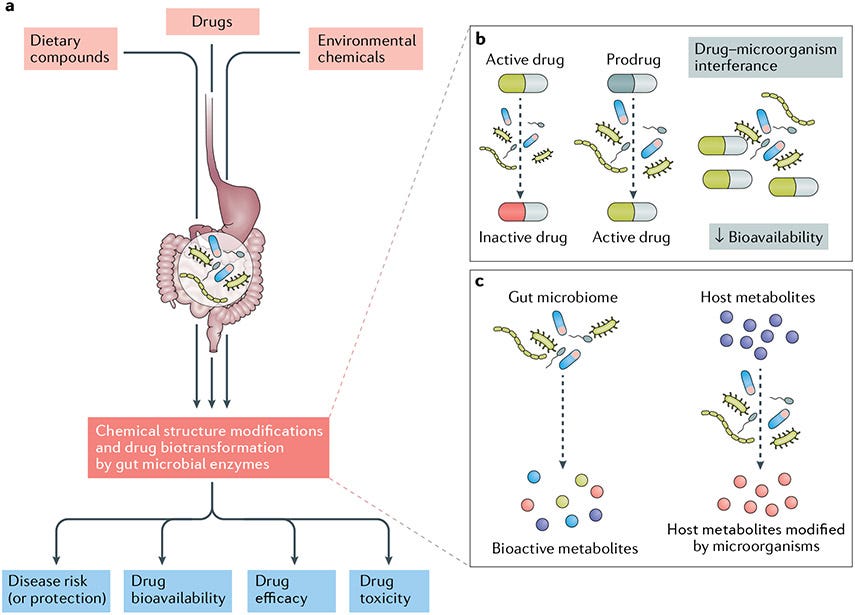
Bacteria and other microorganisms that inhabit the human gut can directly alter the chemical structures of many dietary components, environmental chemicals and pharmaceuticals. These biotransformations have the potential to affect drug bioavailability, pharmacokinetics, clinical efficacy and the development of adverse events.
Your Stress Axis
Once ashwagandha’s active compounds reach systemic circulation, they interact with the hypothalamic-pituitary-adrenal axis, the hormonal cascade that governs your stress response. This is where most of the marketed claims live.
Cortisol reduction. Stress resilience. Calm energy.
The research supports that adaptogens modulate HPA axis signaling through stress-response mediators including molecular chaperones (Hsp70), stress-activated kinases (JNK1), and neuropeptide Y. These are proteins your cells produce when they are under pressure. Adaptogens appear to lower the threshold at which those proteins activate, essentially training the stress system to respond more efficiently.
But here is the piece that never makes it onto the product page.
Your stress system is not a blank slate waiting for a supplement to optimize it. It is already set to a position. Your genetics shaped part of that position. So did your sex, your age, and your early life. A person who grew up in a chaotic household, or spent years in a high-cortisol job, or lived through prolonged illness has an HPA axis that has been remodeled by that exposure. The baseline is different. The signaling thresholds are different. The receptor sensitivity is different. Two people can have the same cortisol number on a lab panel and still be running completely different stress physiology underneath it.
When ashwagandha arrives at that system, it does not override what is already there. It interacts with it. An adaptogen pushing on a stress axis that has been running hot for years does something different than the same compound pushing on one that is intact and well-regulated. In the first body, the plant may be nudging a system that has lost its ability to downregulate on its own. In the second, it may be suppressing a response that was functioning fine without help.
Same capsule. Same dose. Different biology underneath. Different outcome.
This is why two people can take the same ashwagandha product and report completely opposite experiences. One feels calmer. The other feels wired. One sleeps better. The other starts waking at 3 a.m. The supplement did not malfunction. It did exactly what it does. The bodies it landed in were not in the same place.

Three Filters, One Capsule
These three layers operate simultaneously every time someone swallows an ashwagandha capsule. Your CYP450 enzyme variants determine how your liver processes the withanolides. Your gut microbiome determines what gets converted and absorbed before it even reaches the liver. And your HPA axis status determines what the surviving compounds actually do once they arrive at the stress system.
Three layers of individual variation. All of them invisible on the supplement label. All of them absent from the Instagram caption that says “this changed my life.” And all of them the reason your experience with this plant will never be a carbon copy of someone else’s.
This is why the question “does ashwagandha work?” is the wrong question. The more useful one, the one that actually respects the complexity of both the plant and the body receiving it, is: what is this plant likely to do in my body, given where my body is right now?
That question requires information: labs, history and context. It requires the kind of assessment that a supplement company will never ask you to do before checkout. And it is exactly the kind of question that ashwagandha, with everything it is capable of, deserves.
The rest of this article is for paid subscribers.
Everything above this line was the science. What the plant is, what it contains, where it lands in the body, and why it behaves differently depending on who is taking it. If that already changed how you think about ashwagandha, the free section did its job.
What comes next is the part I write for the people who stay. I go through the three most-cited clinical trials line by line and show you how small, short, and narrow they are compared to what the marketing implies. I walk through the product problem: why “ashwagandha” on two different labels can mean two completely different things in your bloodstream, and what to look for if you are going to buy it. I cover the thyroid and liver safety signals that are completely absent from the wellness conversation. I lay out what appropriate, structured use of this plant actually looks like, including what to test before you start and how to know when to stop.
I am glad you are here. Come on in.
If you are looking for an ashwagandha product I trust, I use and recommend Banyan Botanicals. They source organic ashwagandha root, their supply chain is transparent, and they operate within the Ayurvedic tradition this plant comes from. That matters to me after everything we just walked through. Use under the direction of your healthcare provider, and with the information I lay out in this post in mind.
This is an affiliate link. I receive a small commission if you purchase through it. It does not change the price for you, and it helps support this publication.
