


Aging is never just about skin.
It is a multi-layered process, an onion with many folds, that touches every part of our health and identity. Skin health is one layer, but beneath it lie changes in our hormones, metabolism, immunity, and even the way we make meaning of our lives. If this is a topic you’d like me to keep exploring in future articles, I’d love for you to let me know in the comments. We could peel back the layers together, one by one.
Skin aging is usually where the conversation starts, often because it’s the first sign we can see in the mirror. For most of us, the bombardment begins in our late twenties: memes from skincare influencers or estheticians declaring, “If you wore jelly sandals as a kid, it’s time for retinol,” or “If you spent your afternoons playing Sega Genesis, you’d better invest in a 10-step skincare routine.”
Honestly, I find that predatory. And I say this as someone who is also in the skincare field. It plays on fear, fear of something that is not only natural but inevitable. At the end of the day, youth is fleeting. No serum or supplement can stop the passage of time.
But what we can do is choose how we walk through it.
Instead of waging war against our lines and imperfections, what if we embraced them as part of our story? Herbalism, to me, offers this kind of gentle perspective: one rooted in nourishment, resilience, and respect for the body’s wisdom.
It is less about erasing time and more about supporting ourselves as we move through it, gracefully.
In this article, we’ll look at how different cultures have historically approached aging, what actually happens in our skin as the years pass, and where herbs can play a role in supporting resilience. I’ll share both the science and some simple, practical ways to bring herbal care into your own routine.
Make sure you make it all the way to the end as a little gift is waiting for you.
Source Unknown
A Historical Look at Plants and Aging
The desire to preserve youth and vitality is as old as human history. Across cultures, plants and oils have always been part of beauty and health rituals, and many of these traditions still echo in skincare today.
Mesopotamia (c. 3000 BCE). The Sumerians, Assyrians, and Babylonians crafted poultices and unguents from castor oil (Ricinus communis), anise (Illicium verum), cinnamon (Cinnamomum spp.), cardamom (Elettaria cardamomum), and myrrh (Boswellia sacra). These remedies were used to soothe the skin and to ward off “skin devils,” blending medicine, ritual, and early cosmetic care.
Ancient Egypt (c. 2000–30 BCE). Egyptian papyri describe oils and creams made from chamomile (Matricaria spp.), lavender (Lavandula spp.), rosemary (Rosmarinus officinalis), rose (Rosa spp.), aloe (Aloe barbadensis), moringa (Moringa oleifera), and sesame (Sesamum indicum). These were not only moisturizing and protective against the desert climate, but were also believed to hold spiritual power. Perfumes like the famous Kyphi carried both ritual and medicinal significance, and oils such as moringa were treasured enough to be buried in tombs for the afterlife.
Source Unknown
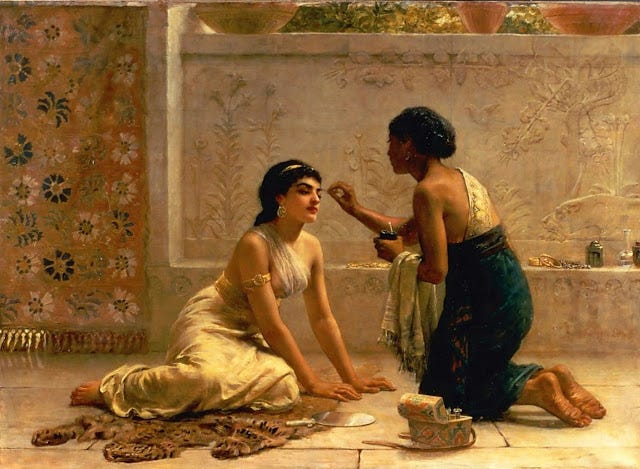
Cleopatra (69–30 BCE). Egypt’s last pharaoh remains a symbol of beauty in part because of her herbal rituals. She bathed in rose and lavender, applied aloe vera to keep her skin supple, and used rosewater for softness. These practices were more than cosmetic. They were tied to health, allure, and ritual self-care, a way to preserve vitality in a harsh environment.
Greece and Rome (c. 500 BCE–200 CE). The word cosmetic comes from the Greek kosmetos, meaning adornment. Greek and Roman women applied ointments of cypress, cedar, and resins. Rosewater and olive oil (Olea europaea) became staples for cleansing and moisturizing. Galen, the Roman physician, created one of the first recognizable “cold creams” from rosewater, almond oil (Prunus dulcis), and beeswax. The formula is strikingly close to what we would recognize as a modern moisturizer.
Medieval and Renaissance Europe (c. 1100–1600 CE). In monasteries, knowledge of plants for both medicine and beauty was preserved and recorded. The text De Ornatu Mulierum (around 1100 CE) described nearly one hundred plants used for beauty, from rosemary to saffron (Crocus sativus). By the Renaissance, distillation techniques brought perfumes and herbal waters like rosemary “Queen of Hungary’s Water” into daily life. Household manuals offered recipes for rose, lemon, and barley tonics, blending practicality with ritual.
Across these eras, plants were never just decoration. Oils, resins, and herbs were used for resilience, protection, and ritual care.
Today we talk about “anti-aging,” but the impulse behind it is ancient. Humans have always sought ways to support the skin through time, and plants have always been part of that story.
While these traditions speak to the timeless role of plants in beauty and vitality, modern science gives us a clearer picture of what’s actually happening in the skin.
How and Why Skin Changes Over Time
The skin is our largest organ, and it does much more than hold us together. It constantly negotiates with the outside world, taking in sunlight, air, pollutants, and the wear of daily life.
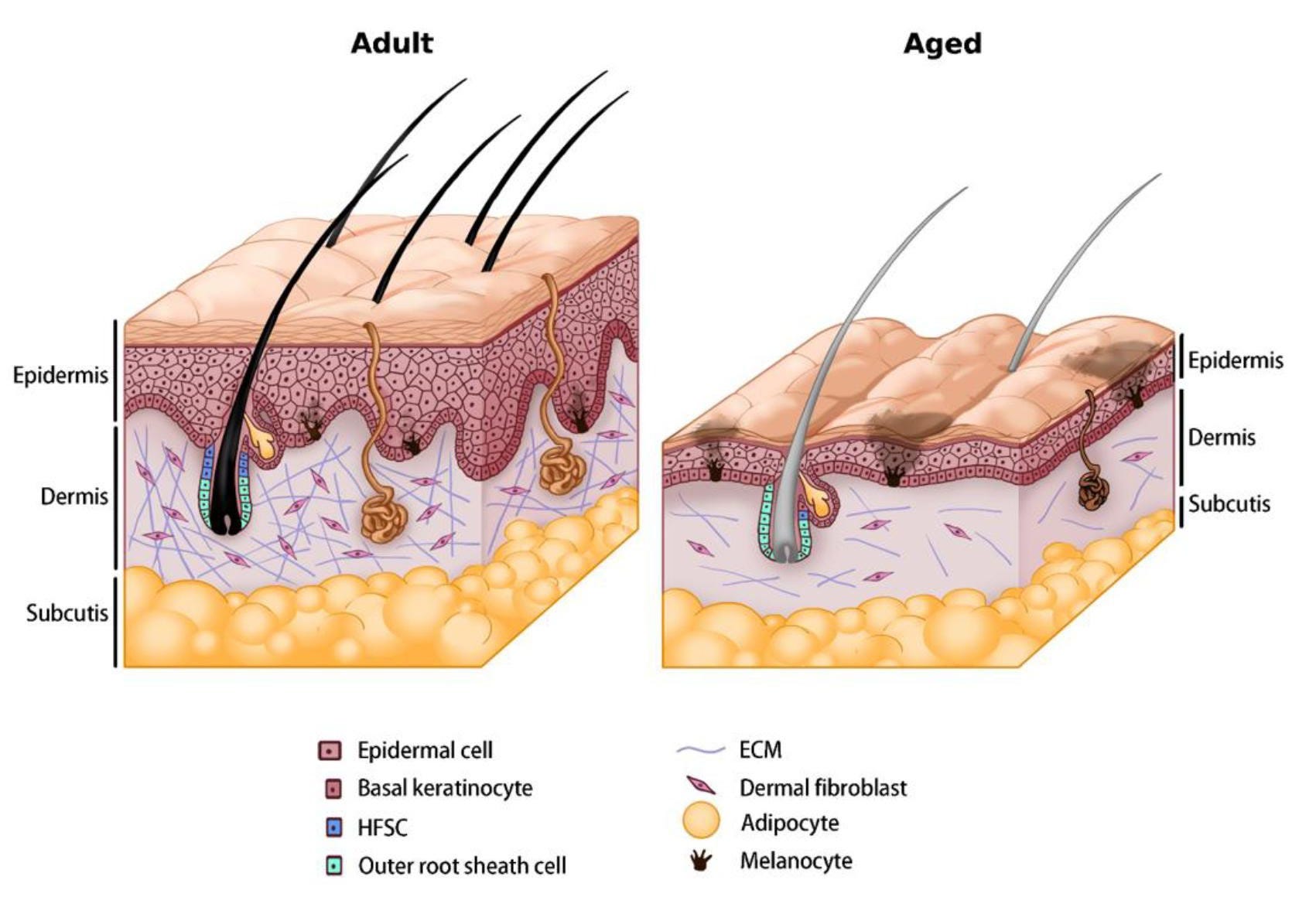
Because of this, aging happens along two parallel tracks: intrinsic aging, the natural program written into our biology, and extrinsic aging, the cumulative impact of environment and lifestyle. The two overlap, and together they shape the visible signs of time on our skin.
Source Unknown
Oxidative Stress and Free Radicals
One of the central players in skin aging is oxidative stress. Our cells naturally produce reactive oxygen species (ROS), which are free radicals that can damage proteins, lipids, and DNA. Normally, the body keeps these in check with its own antioxidants like superoxide dismutase, catalase, and glutathione.
As we age, this defense system weakens, ROS build up, and the balance tips toward damage. Environmental exposures such as UV light, smoking, and air pollution add even more ROS to the mix, accelerating what we see as wrinkles, uneven tone, and loss of elasticity.
Cellular Senescence: When Cells Retire Early
In response to accumulated stress and DNA damage, cells sometimes enter a state called cellular senescence. These are cells that no longer divide but do not die either.
At first, senescence serves a protective role. It helps with wound healing and prevents damaged cells from becoming cancerous. Over time, though, senescent cells accumulate, especially in skin cells like fibroblasts. Instead of quietly retiring, these cells release a cocktail of inflammatory signals known as the senescence-associated secretory phenotype (SASP). T
his mix of cytokines and enzymes degrades collagen, fuels chronic inflammation, and disturbs the skin’s balance. The result is thinning skin, uneven pigmentation, slower repair, and the gradual loss of youthful resilience.
Collagen Breakdown and the Extracellular Matrix
The dermis, the skin’s supportive middle layer, is rich in collagen and elastin, proteins that provide strength and bounce. With aging, ROS and inflammatory signals activate enzymes called matrix metalloproteinases (MMPs), which chop up collagen fibers.
At the same time, the pathways that normally stimulate new collagen production, like the TGF-β/Smad system, slow down. Fibroblasts, the cells that weave and repair collagen, become senescent and less effective. This combination of reduced production and accelerated breakdown leads to the hallmark signs of aging skin: wrinkles, sagging, and loss of elasticity.
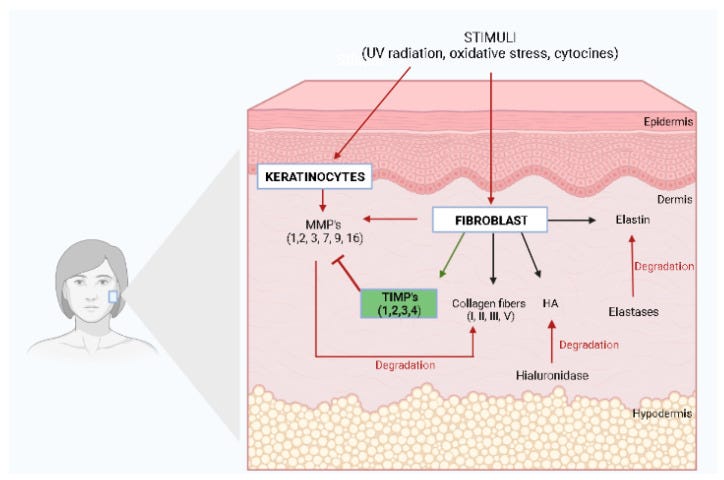
Extracellular Matric Components & Skin Elasticity
Fibroblasts and Their Neighborhood
Fibroblasts do not work in isolation. They communicate constantly with keratinocytes (the main cells in the epidermis) and melanocytes (pigment-producing cells). In youthful skin, these conversations keep everything balanced, from DNA repair to pigment production.
In aged skin, the dialogue falters. Senescent fibroblasts secrete signals that not only reduce collagen but also promote uneven pigmentation and impair keratinocyte repair, contributing to age-related cancers and discoloration.
Elastic Fibers and the Dermal-epidermal Junction
Elastic fibers, particularly the delicate oxytalan fibers in the upper dermis, help anchor the epidermis to the dermis. With intrinsic aging, these fibers thin and deplete. With photoaging, UV exposure accelerates their fragmentation, leading to solar elastosis, where clumps of disorganized elastic fibers build up.
At the same time, the basement membrane that separates and communicates between dermis and epidermis flattens and weakens. This makes the skin less resilient and more prone to sagging and pigmentation changes.
Glycosaminoglycans and Hydration
Another important shift occurs in the molecules that hold water in the skin: the glycosaminoglycans (GAGs), like hyaluronic acid. Unlike collagen, which turns over slowly, GAGs are constantly replenished. As we age, their levels and balance shift. The result is less hydration and plumpness.
Because GAGs have such short lifespans, treatments that restore them, whether through herbs, nutrition, or skincare, can often show quick visible changes, although sustaining them requires long-term balance.
In short: skin aging is not a single process but a web of interconnected mechanisms. Free radical damage, senescent cells, collagen breakdown, fibroblast dysfunction, and changes in the dermis all work together to shape what we see and feel on our skin. Understanding this complexity matters because it shows us where interventions, including herbs, might help buffer, slow, or ease the ride.
Knowing these mechanisms helps us see where plants can truly make a difference — not by stopping time, but by supporting the body’s natural systems.
Herbal Allies for Skin Health and Resilience
Once you understand how aging shows up in the skin — oxidative stress, senescent cells, collagen breakdown, and loss of elasticity — it becomes clear how plants can offer support.
These are not just surface-level beauty tricks. Many herbs contain compounds that interact directly with the pathways involved in skin resilience.
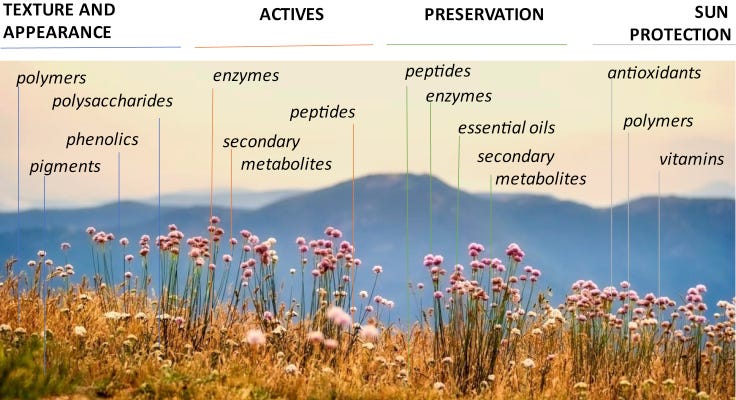
Schematic View of the Types of Phytomolecules that Plants Provide and the Activity They Can Deliver to Cosmetic Products
Collagen and Elastin Support
Certain plant compounds encourage collagen production or protect against its breakdown. Gotu kola (Centella asiatica) and green tea (Camellia sinensis) are two of the best known, but they are not alone.
Extracts from neem (Azadirachta indica), lady’s mantle (Alchemilla mollis), citrus fruits (Citrus junus, Citrus limon), and even potato (Solanum tuberosum) have been shown to increase collagen synthesis.
Plants such as Piper cambodianum and Bidens pilosa stimulate elastin production, helping the skin maintain its structure and bounce.

Herbs That Calm Inflammation and Protect Against Damage
Herbs rich in polyphenols and flavonoids help buffer the oxidative stress that accelerates aging.
Mangosteen (Garcinia mangostana) contains xanthones like α-mangostin that reduce UV-induced wrinkles and prevent thickening of the outer skin layer.
Loquat (Eriobotrya japonica) contributes triterpenoids such as ursolic and oleanolic acids, which support both collagen and hyaluronic acid production.
Milk thistle (Silybum marianum) and amla (Phyllanthus emblica) are also powerful antioxidant allies, with studies showing benefits for wrinkle reduction and improved skin tone.
Guarding the Skin’s Structure
Plants can also protect the skin by reducing the activity of enzymes known as matrix metalloproteinases (MMPs). These enzymes break down collagen and elastin, and their overactivity is a hallmark of photoaging.
Extracts from garlic (Allium sativum), magnolia bark (Magnolia officinalis), passionfruit (Passiflora tarminiana), sage (Salvia officinalis), and clove (Syzygium aromaticum) have all been shown to reduce MMP activity and preserve the skin’s scaffolding.

Supporting Skin Hydration Naturally
Another key to youthful skin is water balance. Extracts of cassia (Cassia fistula), Penthorum chinense, and sage (Salvia officinalis) have been linked to increased hyaluronic acid synthesis.
Clinical studies echo this.
Ferulic acid, a plant compound found in rice bran, oats, and other foods, has improved hydration, smoothness, and elasticity in human trials. Strawberry extract (Fragaria ananassa), especially when enriched with vitamin C, has also been shown to enhance hydration and skin tone.

Clinical Studies and Formulations
While much of the research is preclinical, human studies are beginning to validate what herbal traditions have long observed.
A topical blend containing green tea (Camellia sinensis), Japanese knotweed (Polygonum cuspidatum), ginkgo (Ginkgo biloba), artichoke leaf (Cynara scolymus), and Selaginella tamariscina showed improvements in skin structure, though not all results were statistically significant.
An oral preparation combining lingonberry (Vaccinium vitis-idaea) and amla (Phyllanthus emblica) improved elasticity, hydration, and skin thickness while reducing wrinkles.
Topical creams with thyme (Thymus vulgaris) reduced crow’s feet and nasolabial folds. Even plant hormones such as kinetin, first identified in plants, improved hydration and texture when used in cream form.

Moisturizers and Barrier Support
Plant oils and extracts also play a role in strengthening the skin’s barrier. Wheat germ oil (Triticum aestivum) improved hydration and radiance in a controlled trial.
A polysaccharide preparation from Anadenanthera colubrina, a South American tree, increased proteins such as filaggrin and aquaporin while reducing water loss through the skin.
These findings mirror long-standing herbal practices: using oils, infusions, and balms to restore suppleness and protect against the elements.
Aging is not something to be fought or feared. It is part of the human experience, written into every cell of our bodies.
Herbs don’t turn back the clock, but they can help us meet time with more ease. They buffer the stressors that wear on our skin, protect the structures that give it strength, and offer hydration and nourishment where we need it most. In short, plants help our skin do what it already knows: repair, renew, and adapt.
When we invite herbs into our lives in this way, they become more than remedies. They become reminders that our bodies carry wisdom, that change is natural, and that resilience is possible at every age.
I’d love to know: do you have favorite herbs or rituals that make you feel more at home in your skin? Share them in the comments, so we can learn from one another.
— Agy | The Buffalo Herbalist
PS. I’ve also created a one-page Herbs for Skin Resilience Guide, just for you! Consider it a little gift, a sneak peek into what members of The Buffalo Herbalist Community receive each week. If this type of study material is something you’ve been looking for, please consider upgrading your subscription. I’m so thankful you’re here.
You can download your free PDF here.

Bibliography:
Costa, E. F., Magalhães, W. V., & Di Stasi, L. C. (2022). Recent Advances in Herbal-Derived Products with Skin Anti-Aging Properties and Cosmetic Applications. Molecules, 27(21), 7518. https://doi.org/10.3390/molecules27217518
Shin, S. H., Lee, Y. H., Rho, N., & Park, K. Y. (2023). Skin aging from mechanisms to interventions: focusing on dermal aging. Frontiers in Physiology, 14. https://doi.org/10.3389/fphys.2023.1195272
González-Minero, F. J., & Bravo-Díaz, L. (2018). The use of plants in Skin-Care products, cosmetics and fragrances: past and present. Cosmetics, 5(3), 50. https://doi.org/10.3390/cosmetics5030050
Bouissane, L., Elfardi, Y., Khatib, S., Fatimi, A., Pereira, C., & Cruz-Martins, N. (2025). Medicinal plants and their derivatives for skin and hair: a Mediterranean perspective of women care. Archives of Dermatological Research, 317(1). https://doi.org/10.1007/s00403-025-04202-1
Faccio, G. (2020). Plant complexity and cosmetic innovation. iScience, 23(8), 101358. https://doi.org/10.1016/j.isci.2020.101358
Oh I LOVE this, thank you!!!!