


I recently came across a post claiming that about 82% of herbalism books on Amazon are written by AI. I had to read it twice. Not only is that a little horrifying for the environment, it is also heartbreaking for the craft itself. Herbalism is meant to be lived, studied, practiced, and passed from human hands and voices, not generated by a machine that has never smelled valerian or watched calendula turn a jar of oil gold.
As someone who sees herbalism as a living form of medicine, I find this trend deeply concerning. Many of these AI-written books are disguised as credible, often claiming to be authored by people with PhDs or clinical credentials.
That means people who are earnestly looking to learn about plants and take charge of their own health could end up reading misinformation presented as authority.
And then there are the foraging guides. If you have read my Poisonous Look-Alikes article, you know how seriously I take plant identification and safety. The thought of someone trusting an AI-generated guide while out in the wild feels like a disaster waiting to happen.
So, I decided to do something simple and more human. I want to share the five books that I reach for almost every day. These are the ones that live on my desk, covered in pencil marks and tea stains, and they have shaped how I think, practice, and teach herbalism. They cover everything from foundational knowledge and medicine making to clinical safety and practical reference work.

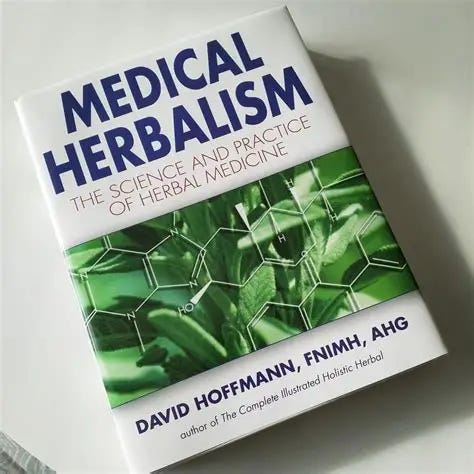
1. Medical Herbalism by David Hoffmann
If there is one book that bridges the worlds of traditional herbal wisdom and biomedical understanding, this is it. Medical Herbalism is a true cornerstone for anyone who believes, as I do, that understanding the science of herbalism is key to practicing it responsibly and effectively.
It reads like a textbook, but in the best possible way. Hoffmann walks you through anatomy and physiology in a way that connects the dots between herbs and body systems, making herbalism feel both practical and deeply logical. It is the book that helps you understand why herbs work the way they do, not just that they do.
For those who love detail, there is an incredibly thorough section on phytochemistry that explores what, exactly, makes these plants so therapeutically active. It is not light reading, but if you are the kind of learner who wants to know what compounds are responsible for an herb’s effects, this section is endlessly rewarding.
Toward the end of the book, you will find a well-organized materia medica arranged by the Latin names of the plants. I love this feature because it turns casual browsing into a self-quiz. I often find myself flipping through to test my recall or discover a new nuance about an herb I thought I already knew well.
This is the book I recommend to anyone who is ready to move beyond quick online answers and really understand how herbalism fits within the living systems of the body. It gives you the language, the logic, and the framework to think like a practitioner.
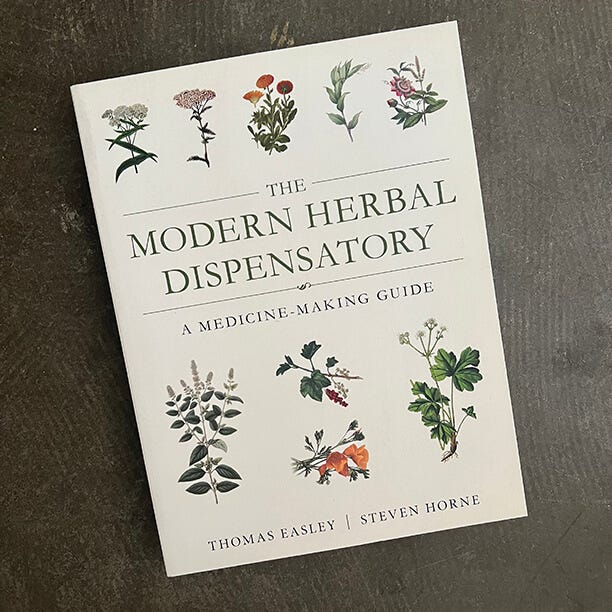
2. The Modern Herbal Dispensatory: A Medicine-Making Guide by Thomas Easley & Steven Horne
This book is one of my most-used references when I am preparing medicine or reviewing formulation notes. It is practical, detailed, and gives you the kind of clear, structured information that helps you feel confident in your work.
What I love most about it is how it covers indications, energetics, dosage, and sourcing in a way that supports real-world practice. It helps you think about which form of a plant to use, how much to give, and what energetic profile each preparation might best serve. It is the kind of information that fills the gaps between theory and hands-on experience.
The step-by-step instructions for tinctures, glycerites, percolations, oxymels, salves, and syrups are thorough and easy to follow. It is just as useful for small-batch home medicine makers as it is for practitioners creating formulas for clients. The dosage guidance is especially valuable for understanding how to scale preparations safely and effectively.
There is also a helpful section listing where to source herbs and supplies, which can be a lifesaver for anyone just getting started or building their home apothecary. It is straightforward, not ethical commentary, but a genuinely useful resource when you need to find quality materials.
Overall, The Modern Herbal Dispensatory is one of the best practical guides to keep beside your workspace. It is the book that reminds you that good herbalism is built not only on knowledge, but on well-made medicine.
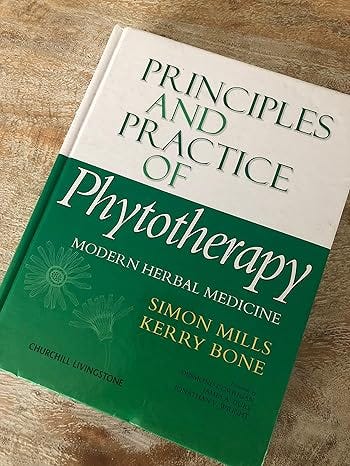
3. Principles and Practice of Phytotherapy by Simon Mills & Kerry Bone
This book feels like the bridge between herbalism and modern clinical science. It is dense in the best possible way and written with the kind of care that reflects decades of hands-on practice. When people ask me for a resource that brings research and tradition together without losing the heart of either, this is the one I recommend.
Mills and Bone take you deep into the mechanisms of plant medicine. They explain how herbs work in the body, exploring pharmacology, pharmacokinetics, and the physiological processes each herb can influence. It is the kind of book that helps you connect the dots between a plant’s chemistry and its therapeutic actions. It teaches you to think critically and apply what you learn in context, which is what separates good herbalism from guesswork.
The clinical monographs are one of the most valuable parts of the book. Each one includes historical background, key constituents, actions, clinical applications, and relevant research. The authors also share their therapeutic reasoning, showing how and why certain herbs are chosen for specific conditions Every entry is thoroughly referenced, allowing you to trace the studies behind each claim and explore the original research if you want to go even deeper. For anyone who romanticizes the science of herbalism right along with me, this section feels like a treasure. It satisfies the mind as much as the heart, giving you space to explore both evidence and intuition in equal measure.
One of my favorite features is the section that lets you look up specific conditions. You can find herbal strategies and research summaries for everything from digestive and endocrine concerns to cardiovascular or respiratory issues. It is incredibly helpful when you want to deepen your understanding of how to approach a particular pattern or symptom from a clinical perspective.
There is also a well-written section on safety and herb-drug interactions that I always appreciate. The information is clear and balanced, helping you distinguish between what is theoretical and what truly matters in practice.
This is not a book you read once and put away. It is a text you study, highlight, and return to as your knowledge expands. It gives herbalism the scientific and clinical depth it deserves while still honoring its traditional roots.
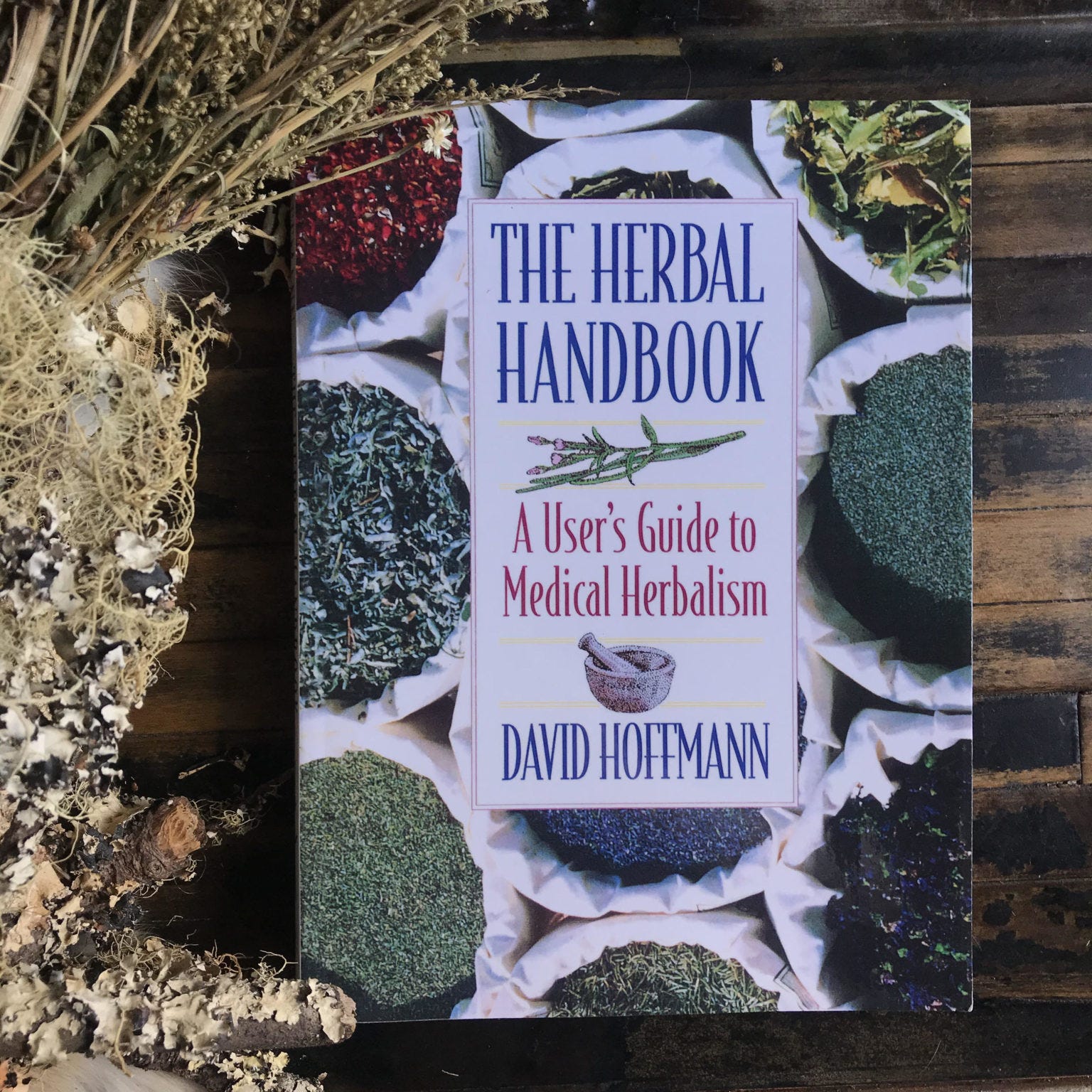
4. The Herbal Handbook by David Hoffmann
This book has always felt like a smaller, friendlier version of Medical Herbalism. It carries the same wisdom and structure, but in a way that feels more approachable. If you have ever opened Medical Herbalism and felt a little intimidated by its depth, this is where I would start instead.
The Herbal Handbook reads like a conversation with a seasoned herbalist. It offers concise materia medica entries, preparation guidance, and practical ways to apply herbs for common conditions. The writing feels grounded and clear, reminding you that herbalism is not about memorizing long lists, but about learning to work with plants in a thoughtful and consistent way.
I love this book for its simplicity. You can pick it up when you have a few quiet minutes and still walk away having learned something valuable. It is small enough to carry, yet full of insight. The kind of book that invites you to return to it often.
Where Medical Herbalism builds your foundation in physiology and science, The Herbal Handbook helps you live that knowledge. It is a bridge between study and practice, and a comforting reminder that herbalism is learned in layers, one plant and one experience at a time.
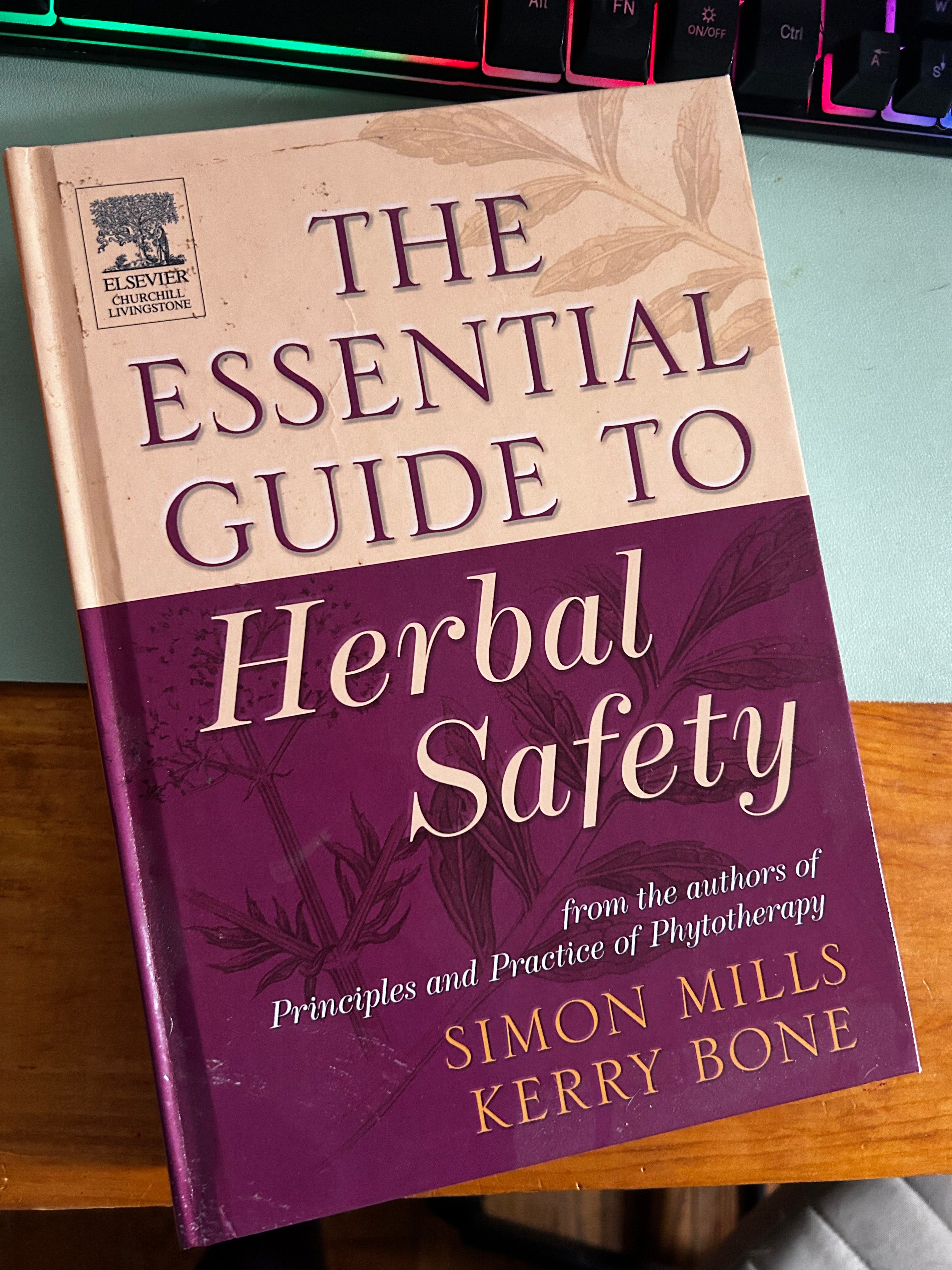
5. The Essential Guide to Herbal Safety by Simon Mills & Kerry Bone
Every herbalist should have at least one book dedicated entirely to safety, interactions, and responsible practice. For me, this is the one. The Essential Guide to Herbal Safety is a reference I return to constantly, both in my own work and when teaching students how to think critically about risk, evidence, and context.
Mills and Bone approach the topic with a balance that feels both scientific and human. They organize safety data in a way that makes it easy to understand what is theoretical, what is well-documented, and what is still being studied. The tone never leans into fear or absolutism; instead, it invites you to make informed, responsible decisions.
Inside, you’ll find detailed monographs on hundreds of herbs, with information on adverse effects, dosing considerations, herb-drug interactions, pregnancy and lactation safety, and toxicity profiles. It is written for clinicians, but accessible enough for dedicated students who want to understand how herbal medicine fits safely within the larger landscape of health care.
What I appreciate most about this book is its clarity. When questions come up about a potential interaction or contraindication, I can open it and find sourced, realistic information that helps me respond with confidence.
It reminds me that good herbal practice is not only about what we give but about knowing when not to.
If you are serious about herbalism, this book deserves a permanent spot on your desk. It reinforces that safety is not the opposite of creativity in herbal work—it is what makes creativity sustainable.
These five books have shaped my studies and my practice more than anything else I have read, but they are not the only valuable texts out there. There are so many beautiful and insightful herbal books that can enrich your learning, deepen your curiosity, and help you find your own rhythm with the plants.
I would love for you to share your favorite herbal book in the comments so that others can discover new authors, new voices, and new ways of thinking.
This recent conversation about AI taking over the herbalism book world has also been a reminder for me. It has made me want to write the book I have been carrying around in my mind for years. I know I need to get out of my own way and finally begin. It feels both daunting and exciting to imagine adding my own work to the shelves that have taught me so much.
Thank you for being here and for learning alongside me. Your presence in this community allows me to keep writing, researching, and teaching in a way that feels meaningful. If you enjoyed this post and want to continue exploring the deeper side of herbal medicine with me, I invite you to subscribe and stay connected.
There is so much more I want to share with you.
Until next time,
— Agy | The Buffalo Herbalist

Yaaaa, the AI generated herbalism content is engulfing hard copy publishing as well as the web, the search engines, etc. A lot of the books are fluff, with not enough info to be of any use. Your pack of 5 books is a pretty good selection.
The American Herbal Products Association (about 350 member companies) put out a Botanical Safety Handbook that has data on about 500 herbs. It's published by CRC press, which has put out reference books in lots of different fields. I have the 2013 edition, and would like a newer one, because tons has been discovered about the transport and metabolism of molecules since then.
For anyone who's ready to take a bite into the phytochemistry, Lisa Ganora put out a fairly readable book called Herbal Constituents.
Thank you, this very important to know now days. 🙏💯🙌✨️